

Our Child and Adolescent Psychiatry Fellowship curriculum ensures all fellows have a broad set of training experiences that include traditional mental health practice settings as well as innovative care delivery approaches. Because the program is educationally driven without service-dependent experiences, fellows can select specific clinical settings or patient populations to fulfill program and RRC requirements.
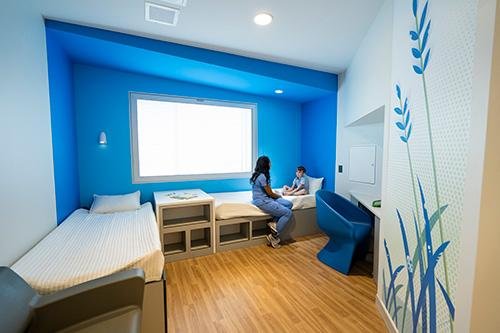
In the first year, the fellows focus on acute care in the inpatient, partial hospitalization, and inpatient pediatric consultation settings, all through a family-centered lens on interdisciplinary teams. On these rotations, fellows hone skills in developmentally-specific assessment and the broad array of interventions including psychopharmacologic and therapeutic approaches.
First-year fellows also begin their longitudinal outpatient therapy experience that continues throughout the fellowship. Through training experiences and didactics, fellows develop an appreciation of typical development, developmentally-specific presentations of psychopathology as well as an understanding of adaptation to illness.
The second year focuses on longitudinal outpatient care, including therapy, team-based outpatient care in a multidisciplinary practice, crisis evaluations, early childhood mental health, and an elective longitudinal experience. Fellows develop a strong basis of psychopharmacologic skills and therapeutic approaches across a diverse set of clinical sites.Because our program is small and educationally driven, substantial tailoring to individual interests is possible within the scope of the RRC requirements.
Call Schedule
Because our clinical services run independently of fellows, call is solely for training purposes.
- First year fellows are required to take 1 weekend of call during each of the 3 inpatient rotations. This does not involve overnight call.
- Second year fellows are not required to take call.
- Optional moonlighting opportunities are available at a competitive rate.
Didactics
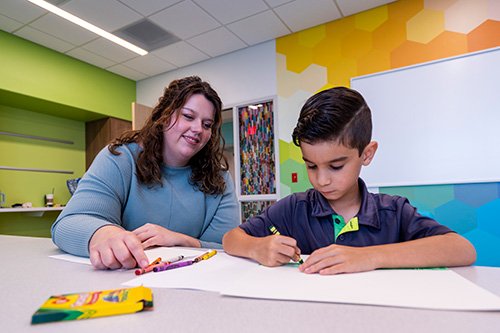
Our fellows have a protected half-day of didactics every week throughout their training.
Our curriculum is immersive, with one core theme per month. Didactics each month include historical background, assessments, hallmark studies, and pharmacological and non-pharmacological treatment options related to the core theme.
For example, in July 2025 our core theme is 'typical development' and the didactics for this month are titled:
- History of Childhood; Temperament
- Attachment; Developmental milestones assessment
- Jean Piaget's theory of cognitive development
- Erik Erikson's theory of psychosocial development
- Kohlberg's and Gilligan's theories of moral development
- Vygotsky's and Bandura's theories of social learning
- Theories of racial identity development
- Impact of culture on child development
Practical application of these important theories is discussed to make the information relevant for our fellows when they provide patientcare.
For August 2025, our core theme is 'child and adolescent mood disorders' and the didactics for this month are titled:
- Diagnosis, rating scales, comorbidities and course of illness of depressive disorders
- Diagnosis, rating scales, comorbidities and course of illness of bipolar disorders
- Hallmark articles (treatment of adolescent depression study TADS, treatment of resistant depression in adolescents TORDIA, treatment of adolescent suicide attempers TASA, treatment of early age mania TEAM, clinical outcomes of bipolar youth COBY, and collaborative lithium trials CoLT)
- Pharmacological treatments
- Interventional treatments (ECT, TMS, ketamine)
- Cognitive behavior therapy for depression and suicidality
- Dialectical behavioral therapy for depression
- Interpersonal psychotherapy for depression
- Mentalization based therapy (MBT)
- Risk assessments in the ED
We also have regular Quality Improvement didactics and journal club that are sprinkled throughout the didactic curriculum. Outside of the half day per week for didactics, our fellow also attend monthly mortality and morbidity conference and grand rounds.
Other Educational Opportunities
- Child Psychiatry Grand Rounds: Monthly scholarly presentation by local or outside presenter.
- Schwartz Rounds: Quarterly interdisciplinary rounds focused on improving and supporting communication and compassionate health care to patients and families.
- Clinical Skills Verification: Annual scheduled time for CSV's for the whole program in addition to CSV opportunities in each rotation.
- Psychiatry Grand Rounds (optional): Monthly scholarly presentation by local or outside presenter.
- Pediatrics Grand Rounds (optional): Weekly scholarly presentation by a local or outside presenter.
- Insights into Autism (optional): Annual regional conference with national speakers focused on the needs of children and families with Autism Spectrum Disorder
- AACAP National Meeting attendance encouraged.
- AACAP Advocacy Day Meeting attendance encouraged.
