

The mission of our Pediatric Residency Program is twofold, to improve the lives of children and to educate the next generation of leaders in children's health.
Explore the CHKD Health System
Children’s Hospital of The King’s Daughters is Virginia’s only freestanding children’s hospital and serves as the primary pediatric teaching affiliate of Eastern Virginia Medical School at Old Dominion University.
About the Program
The Pediatric Residency Program at Children's Hospital of The King's Daughters (CHKD) provides comprehensive training across the full spectrum of pediatric medicine within a supportive, child-focused learning environment. With few fellows, residents play a central role in patient care, procedures, and clinical decision‑making while benefiting from close faculty mentorship. Graduates leave well prepared for careers in primary care, fellowship training, academic pediatrics, or community‑based practice.
Residents receive broad clinical exposure through a wide range of pediatric subspecialities, including: Adolescent Medicine; Allergy and Immunology; Anesthesiology; Cardiology; Child Abuse Pediatrics; Child Psychiatry and Psychology; Community Health and Research; Critical Care; Dermatology; Developmental Disabilities; Education; Emergency Medicine (Level I Pediatric Trauma Center); Endocrinology; Gastroenterology; General Pediatrics; Infectious Diseases; Hematology‑Oncology; Hospital Medicine; Metabolism and Genetics; Nephrology; Neurology; Otolaryngology; Palliative Medicine; Pathology; Physical Medicine and Rehabilitation; Perinatal Medicine; Pulmonary; Rheumatology; Sleep Medicine; and Sports Medicine.
As a regional tertiary referral center for Eastern Virginia and northeastern North Carolina, CHKD offers residents experience caring for a diverse and medically complex patient population across inpatient, outpatient, and consultative settings.
A unique component of training includes experience at the Children’s Pavilion, CHKD’s dedicated pediatric behavioral health hospital and outpatient center, located on the main CHKD campus. Residents gain valuable exposure to the assessment and management of children and adolescents with acute and chronic mental health needs through integrated, family‑centered behavioral health care.
Educational experiences emphasize Advocacy, Research, and Professional Development, supporting residents’ growth as clinicians, scholars, and future leaders. Two integrated training tracks—Primary Care and Global Health—are available, with application during the intern year.
Interested in doing a visiting rotation with us? At Children’s Hospital of The King’s Daughters, we warmly welcome VSLO students as valued members of our clinical learning community, with a strong emphasis on mentorship, hands-on learning, and meaningful engagement with residents and faculty. You’ll find a supportive, inclusive environment designed to help you grow, contribute, and explore pediatrics.
Visiting Student Guidelines & Application

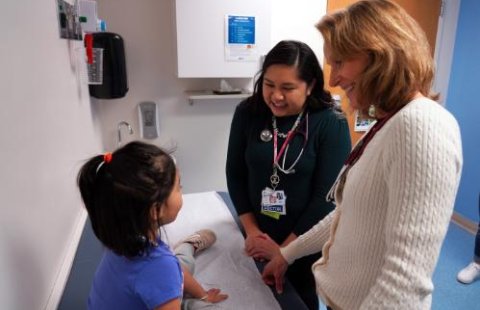

Specialized Tracks
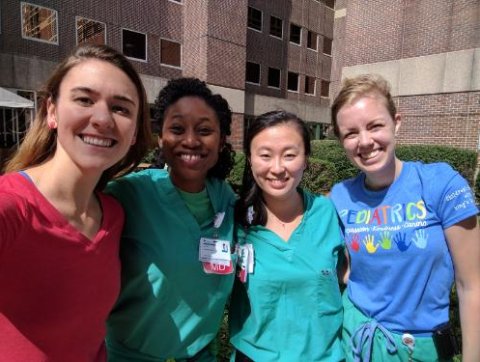
Primary Care Track
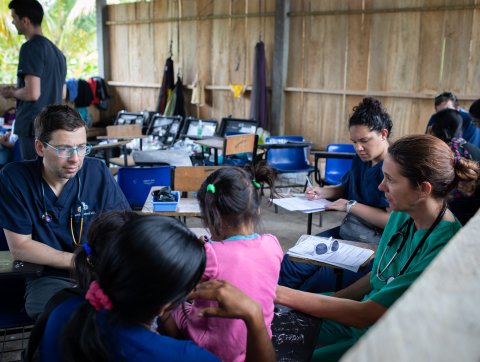
Global Health Track
Individualized Curriculum Opportunities
Individualized Curriculum Opportunities allow residents to tailor their training to align with their interests, career goals, and evolving professional identities. These opportunities include a combination of structured experiences that are integrated into the residency curriculum and additional options that residents may choose based on personal interests or career plans. Through this flexible framework, residents are supported in developing focused skills, exploring subspecialty or scholarly interests, and designing a training experience that is both comprehensive and personalized.
The Advocacy Curriculum is designed to define advocacy and the pediatrician’s role in supporting children and families at the individual, community, state, and national levels. Through this curriculum, residents develop confidence and comfort engaging in advocacy activities by learning and practicing practical advocacy skills. Advocacy time can be scheduled during the Individualized Curriculum, allowing residents to intentionally engage in advocacy work alongside their clinical training. Opportunities include community-based engagement activities, educational sessions, and skill‑building activities that emphasize collaboration within broader systems of care and policy. The curriculum highlights how pediatricians contribute to networks that support children’s health beyond individual patient encounters.
The Advocacy Curriculum also includes focused learning in:
- Current and emerging child health policies in Virginia
- Understanding legislation and the policy‑making process
- Key child health topics
- Practical advocacy skills, including meeting with elected representatives, negotiation strategies, and op‑ed writing
- Effective communication on behalf of patients and populations
This curriculum supports residents in understanding advocacy as an integral and professional dimension of pediatric practice, applicable across a wide range of clinical and community settings.
Two educational pathways were developed to provide residents with a strong foundation in counseling nursing mothers and to promote breastfeeding education across clinical and professional settings. These pathways are designed to support residents in developing the knowledge, skills, and confidence needed to effectively assist breastfeeding infants and their families.
The program covers the anatomy and physiology of lactation, common challenges in breastfeeding, and clinical problem‑solving related to lactation support. Residents learn to assess infant weight gain, milk transfer, and latch, and to manage medical issues that may arise in the context of breastfeeding. Educational experiences also include exposure to the CHKD Milk Bank, offering insight into donor milk programs, safe milk handling, and the role of milk banking in supporting vulnerable infants and families.
Macon & Joan Brock Virginia Health Sciences at Old Dominion University and CHKD provide a robust environment for pursuing research and scholarly excellence. Our residents engage in a diverse range of projects, spanning basic science, translational models, and department-level quality improvement (QI) initiatives. Under the guidance of dedicated faculty mentorship, residents are empowered to develop and lead projects both individually and in collaborative groups. These scholarly works are frequently showcased at our annual Pediatric Research Day. To complement the extensive resources provided by the University Libraries, our program offers specialized support in the following areas:
- Project & Protocol Design: Expert guidance in framing research questions and methodologies.
- Regulatory Compliance: Assistance with IRB and IACUC submissions and oversight.
- Data Management: Support for REDCap database design and management.
- Statistical Analysis: Access to professional data and staff statistician.
- Scientific Communication: Assistance with abstract composition and poster design.
- Financial Support: Stipends for conference travel and presentations.
- Research Infrastructure: Access to dedicated lab space, technical staff, and potential assistance with project supplies.
With an entire division dedicated to community health, our Residents are able to design and evaluate programs to ensure the health and safety of kids and teens. These programs aim to promote community health and influence positive change. Target areas include:
- Substance use and drug policy
- Tobacco and air quality
- Vaping and youth
- Motor vehicle safety
- Obesity
- Global Health
- Maternal, infant and child health
- Health disparities
Moreover, the division empowers residents to participate in three local collaboratives aimed at sustaining community health:
- Consortium for Infant and Child Health (CINCH)
- Easter Shore Healthy Communities (ESHC)
- Minus 9 to 5
Professional Development is intentionally woven throughout residency training to prepare residents for successful, fulfilling careers in pediatrics. Through structured mentorship, skills‑based workshops, and guided career planning, residents develop competencies in communication, leadership, career decision‑making, and professional growth. Whether pursuing primary care, fellowship training, or other career paths, residents receive practical guidance and individualized support to help them transition confidently from residency to independent practice.
The Leadership Curricula equips residents with the skills needed to become effective leaders in medicine. Through the Leadership Series and Senior Resident Workshop, residents develop core competencies in patient communication, conflict resolution, delivering difficult news, task management, emotional intelligence, and team leadership. The curriculum also provides structured career guidance tailored to individual goals, including preparation for primary care or fellowship pathways, with practical instruction in interviewing, contract negotiation, and effective professional communication.
In July 2024, we expanded our Quality Improvement (QI) curriculum with the implementation of Phase II, building on a strong foundation established during the intern year. Phase I includes a dedicated 4‑hour workshop for interns that introduces core QI principles and methodologies, ensuring all residents begin training with a shared baseline in quality improvement.
Phase II is a longitudinal, 18‑month curriculum in which PGY‑2 and PGY‑3 residents work collaboratively on a quality improvement project within their Y‑block cohort. During this phase, residents actively apply and reinforce concepts introduced during the intern workshop while gaining practical experience designing, implementing, and evaluating QI initiatives aligned with their interests and clinical environments.
In addition, the program includes a Root Cause Analysis (RCA) workshop for all residents and offers increasing opportunities to participate in health system RCAs and Action Cause Analyses (ACAs). These experiences prepare residents to engage meaningfully in systems‑based improvement work and equip them with skills essential for leadership, patient safety, and continuous improvement throughout their careers.
The Advocacy Curriculum is designed to define advocacy and the pediatrician’s role in supporting children and families at the individual, community, state, and national levels. Through this curriculum, residents develop confidence and comfort engaging in advocacy activities by learning and practicing practical advocacy skills. Advocacy time can be scheduled during the Individualized Curriculum, allowing residents to intentionally engage in advocacy work alongside their clinical training. Opportunities include community-based engagement activities, educational sessions, and skill‑building activities that emphasize collaboration within broader systems of care and policy. The curriculum highlights how pediatricians contribute to networks that support children’s health beyond individual patient encounters.
The Advocacy Curriculum also includes focused learning in:
- Current and emerging child health policies in Virginia
- Understanding legislation and the policy‑making process
- Key child health topics
- Practical advocacy skills, including meeting with elected representatives, negotiation strategies, and op‑ed writing
- Effective communication on behalf of patients and populations
This curriculum supports residents in understanding advocacy as an integral and professional dimension of pediatric practice, applicable across a wide range of clinical and community settings.
Two educational pathways were developed to provide residents with a strong foundation in counseling nursing mothers and to promote breastfeeding education across clinical and professional settings. These pathways are designed to support residents in developing the knowledge, skills, and confidence needed to effectively assist breastfeeding infants and their families.
The program covers the anatomy and physiology of lactation, common challenges in breastfeeding, and clinical problem‑solving related to lactation support. Residents learn to assess infant weight gain, milk transfer, and latch, and to manage medical issues that may arise in the context of breastfeeding. Educational experiences also include exposure to the CHKD Milk Bank, offering insight into donor milk programs, safe milk handling, and the role of milk banking in supporting vulnerable infants and families.
Macon & Joan Brock Virginia Health Sciences at Old Dominion University and CHKD provide a robust environment for pursuing research and scholarly excellence. Our residents engage in a diverse range of projects, spanning basic science, translational models, and department-level quality improvement (QI) initiatives. Under the guidance of dedicated faculty mentorship, residents are empowered to develop and lead projects both individually and in collaborative groups. These scholarly works are frequently showcased at our annual Pediatric Research Day. To complement the extensive resources provided by the University Libraries, our program offers specialized support in the following areas:
- Project & Protocol Design: Expert guidance in framing research questions and methodologies.
- Regulatory Compliance: Assistance with IRB and IACUC submissions and oversight.
- Data Management: Support for REDCap database design and management.
- Statistical Analysis: Access to professional data and staff statistician.
- Scientific Communication: Assistance with abstract composition and poster design.
- Financial Support: Stipends for conference travel and presentations.
- Research Infrastructure: Access to dedicated lab space, technical staff, and potential assistance with project supplies.
With an entire division dedicated to community health, our Residents are able to design and evaluate programs to ensure the health and safety of kids and teens. These programs aim to promote community health and influence positive change. Target areas include:
- Substance use and drug policy
- Tobacco and air quality
- Vaping and youth
- Motor vehicle safety
- Obesity
- Global Health
- Maternal, infant and child health
- Health disparities
Moreover, the division empowers residents to participate in three local collaboratives aimed at sustaining community health:
- Consortium for Infant and Child Health (CINCH)
- Easter Shore Healthy Communities (ESHC)
- Minus 9 to 5
Professional Development is intentionally woven throughout residency training to prepare residents for successful, fulfilling careers in pediatrics. Through structured mentorship, skills‑based workshops, and guided career planning, residents develop competencies in communication, leadership, career decision‑making, and professional growth. Whether pursuing primary care, fellowship training, or other career paths, residents receive practical guidance and individualized support to help them transition confidently from residency to independent practice.
The Leadership Curricula equips residents with the skills needed to become effective leaders in medicine. Through the Leadership Series and Senior Resident Workshop, residents develop core competencies in patient communication, conflict resolution, delivering difficult news, task management, emotional intelligence, and team leadership. The curriculum also provides structured career guidance tailored to individual goals, including preparation for primary care or fellowship pathways, with practical instruction in interviewing, contract negotiation, and effective professional communication.
In July 2024, we expanded our Quality Improvement (QI) curriculum with the implementation of Phase II, building on a strong foundation established during the intern year. Phase I includes a dedicated 4‑hour workshop for interns that introduces core QI principles and methodologies, ensuring all residents begin training with a shared baseline in quality improvement.
Phase II is a longitudinal, 18‑month curriculum in which PGY‑2 and PGY‑3 residents work collaboratively on a quality improvement project within their Y‑block cohort. During this phase, residents actively apply and reinforce concepts introduced during the intern workshop while gaining practical experience designing, implementing, and evaluating QI initiatives aligned with their interests and clinical environments.
In addition, the program includes a Root Cause Analysis (RCA) workshop for all residents and offers increasing opportunities to participate in health system RCAs and Action Cause Analyses (ACAs). These experiences prepare residents to engage meaningfully in systems‑based improvement work and equip them with skills essential for leadership, patient safety, and continuous improvement throughout their careers.
