
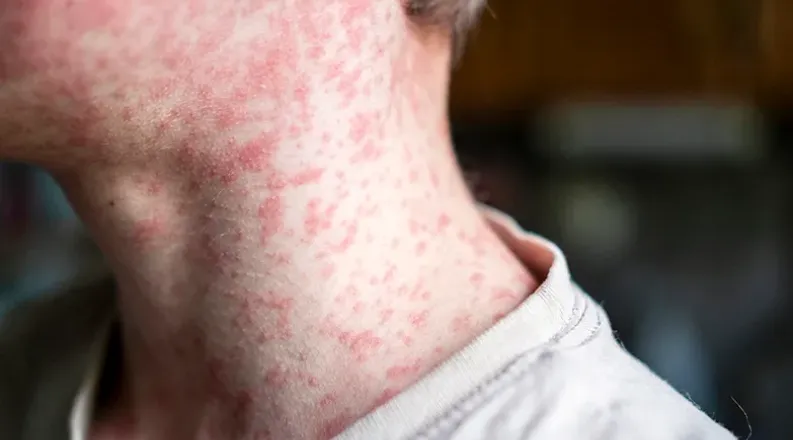


Measles is making a comeback. There are more than 1,200 cases reported across the country and the Virginia Department of Health recently reported the state’s third case of 2025 in a child from the Northwest Region who had traveled overseas. It’s part of a growing national concern, as measles—once eliminated in the U.S.—is reappearing in communities with low vaccination rates.
So, what’s driving the surge?
“It’s happening in parts of the country where not enough people are vaccinated,” said Dr. Cayleigh Blumrick, an infectious disease specialist and Assistant Professor in the Department of Medicine at Macon & Joan Brock Virginia Health Sciences EVMS Medical Group at Old Dominion University. “When you mix a highly contagious virus with a pocket of unvaccinated children, it can spread pretty quickly.”
And measles spreads with alarming ease. Unlike some viruses that require close or prolonged contact, measles can linger in the air for up to two hours after an infected person has left the room.
“It only takes a very small amount of the virus to cause full-blown illness,” Dr. Blumrick explained. “You don’t have to touch anything or even be near the person for very long.”
The virus isn’t just inconvenient—it can be dangerous. Especially for young children and people with weakened immune systems. Complications can include pneumonia, brain swelling, hearing loss, and in some cases, death. There’s another lesser-known threat too: measles can wipe out your body’s immune memory, weakening protection against other infections you've already fought off.
But the good news? It’s largely preventable.
“A complete MMR vaccine series—just two doses—is 97% effective in preventing measles,” said Dr. Blumrick. “It’s the best tool we have to stop outbreaks before they start.”
She urges parents and community members not to wait. “The MMR vaccine is safe, it’s effective, and it’s widely available. Most pharmacies and primary care offices offer it,” she said.
If you’re unsure whether you or your child is protected, or if you think you’ve been exposed, don’t panic—but do act. “Call your primary care provider,” Dr. Blumrick advised. “They can help you figure out next steps, including testing or catching up on vaccinations.”
With cases rising across the country, staying protected isn’t just about individual health—it’s about protecting your whole community.

PO Box 1980
VA 23501