


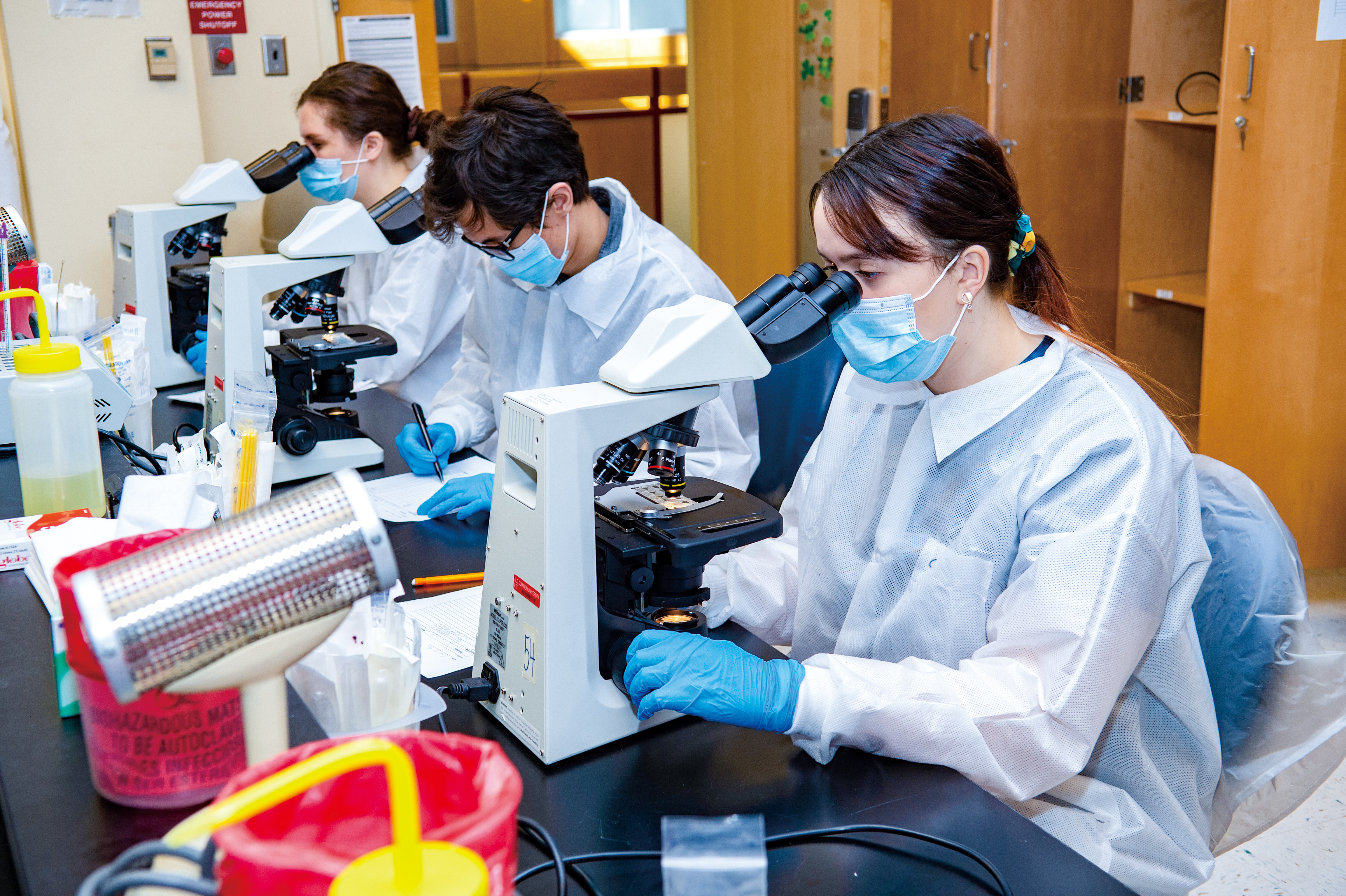
The VHS Biomedical Sciences - Medical Program is a one-year, pre-professional (post-baccalaureate) master’s degree program designed for students who wish to matriculate into medical school.
The curriculum, which mainly consists of medical school courses taken with first year medical students, also has a medical preparation course aimed at improving students’ interview skills and knowledge about other players in the healthcare field with whom they would interact as a physician.
The program provides an opportunity for highly motivated students to improve their academic credentials by demonstrating their academic abilities in a rigorous medical school environment. For this reason, it is particularly suitable to help students make themselves more competitive applicants to allopathic and osteopathic medical programs.
Get a full program overview, and learn more about admissions and the course curriculum in the academic course catalog.


Hear from a Graduate
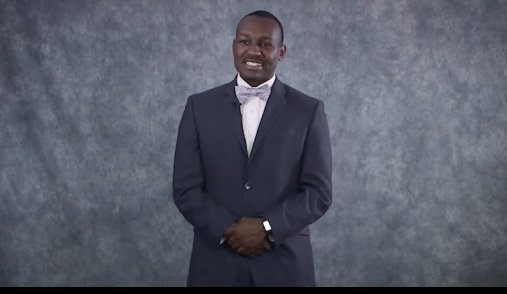
“In five years, I hope to see myself graduating from the Med Master's program and then going on to residency. I just love my time here, and everybody has been very helpful in helping me pursue my dreams.”
Stafford Brown, Medical Master's ’18 | MD Class of ’22
Why Our Program?
There are many different types of post-baccalaureate programs across the country that can help prepare students to matriculate into medical school. Our program is an academic record-enhancing program designed for students who need to show medical schools that they can handle the rigor of medical school despite their undergraduate GPA. The program is also appropriate for career changers and non-science majors who have already taken the MD prerequisite courses.
Since 1995, the Biomedical Sciences - Medical program has helped 65% to 94% of our students successfully place themselves in the entering classes of allopathic and osteopathic medical schools across the nation. Please note: the percentages below are running totals, not first-year numbers. For example, the Class of 2020 percentage includes those who were accepted directly after the program as well as the following 3 years.
| Graduating Year | Current Acceptance Rate into MD or DO School |
| 2020 | 94% |
| 2021 | 92% |
| 2022 | 87% |
Our program offers a rigorous medical curriculum, with four courses taken with first-year medical students, and help with the non-academic aspects of the MD application. The Biomedical Sciences - Medical is highly respected by medical schools. We have multiple levels of staff to support, mentor and counsel students in a cooperative learning environment with a cohesive faculty.
The Biomedical Sciences - Medical program offers:
- Personalized review and suggestions for all applicants before admissions committee review
- Majority of classes are taken with medical students
- Practice medical interviews and feedback
- Multiple sessions with standardized patients
- Assistance with medical school applications
- Volunteer/community service opportunities
- Program letter of recommendation from faculty advisor
- A 'Big Sib' program that pairs a MM graduate/first-year medical student mentor with each incoming student
- Support for diversity and inclusivity within the student body
- Guaranteed interviews with VCOM, WVSOM, & Liberty if certain benchmarks are met
Unique to our two-year program:
- Structured community engaged learning activities
- MCAT test preparation
- Summer research opportunities
Applying to medical school is often a multi-year process requiring dedication, perseverance and a well-conceived application strategy. While many applicants will be able to gain acceptance to a medical school at the end of their post-bacc year, others will require another year and application cycle to complete the process.
Program Benefits
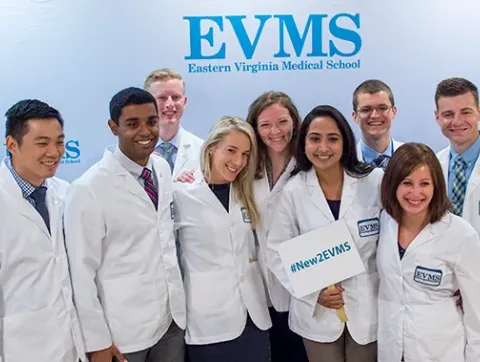
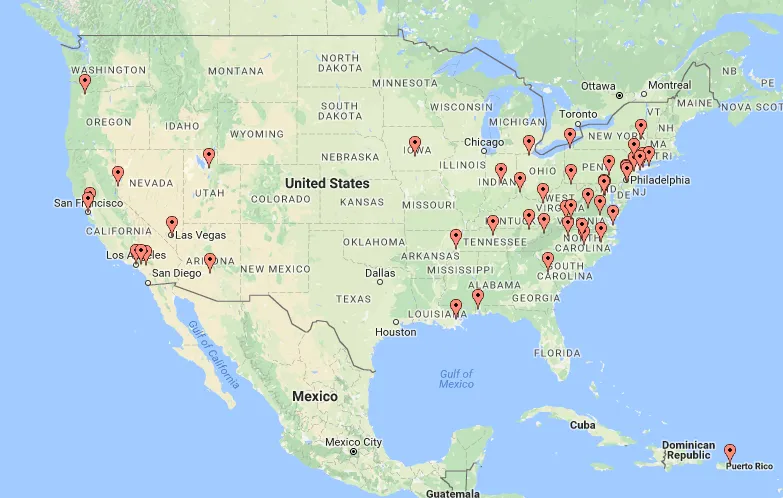
Track Record of Success
In recent years, the Biomedical Sciences - Medical program has helped more than 85% of our students matriculate into more than 60 medical schools across the country.
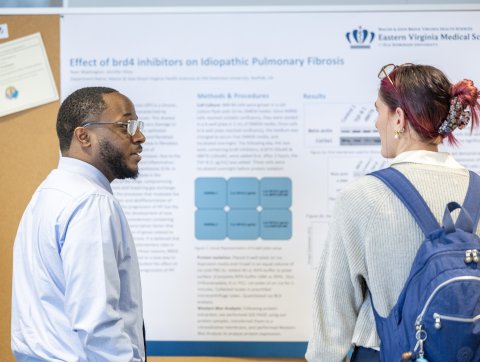
Comprehensive Advising and Student Support
The Biomedical Sciences - Medical program faculty and staff are dedicated to optimizing the success of our students.
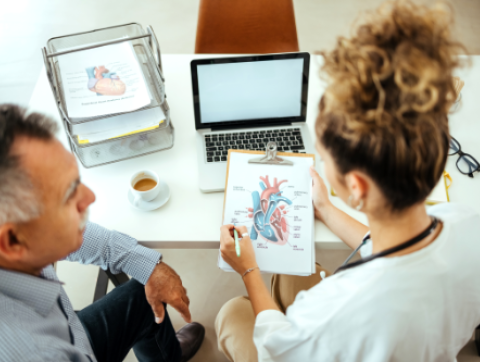
Standardized Patient Encounters
The program's students practice critical patient-interaction skills through the use of simulated clinical interactions with our world-renowned Standardized Patient program.
Technical Standards
The abilities and skills candidates and students must possess in order to complete the education and training of the Biomedical Sciences - Medical program are referred to as “Technical Standards.” These abilities and skills are essential for entry into most professional practice settings associated with this degree program.
- 1.01 Demonstrate sufficient attention and accuracy in observation skills (visual, auditory, and tactile) in the lecture hall, laboratory and/or online settings.
- 1.02 Indicators include, but are not limited to, this example:
- a. Accurate visualization and discrimination of text, numbers, patterns, graphic illustrations, and other imaging texts.
- 2.01 Demonstrate effective communication skills with healthcare professionals, and with people of varying cultures, ethnicities and personalities.
- 2.02 Indicators include, but are not limited to, these examples:
- a. Clear, efficient and intelligible articulation of spoken English language.
- b. Legible, efficient and intelligible written English language.
- c. Accurate and efficient English language reading skills.
- d. Accurate and efficient expressive and receptive communication skills.
- e. Ability to accurately follow oral and written directions.
- 3.01 Demonstrate critical reasoning skills, including, but not limited to, intellectual, conceptual, integrative and quantitative abilities.
- 3.02 Indicators include, but are not limited to, these examples:
- a. Demonstrate ability to measure, calculate, reason, analyze, integrate and synthesize information.
- b. Demonstrate ability to acquire, retain and apply new and learned information.
- 4.01 Perform demonstrations and experiments in the basic sciences.
- 4.02 Observe a patient accurately, both at a distance and close at hand; this ability requires the functional use of vision and somatic sensation.
- 4.03 Speak, hear, and observe patients in order to elicit information, describe changes in mood, activity, and posture, and perceive nonverbal communications.
- 4.04 Communicate effectively and efficiently in oral and written form.
- 4.05 Execute movements reasonably required to provide patients with general care and emergency treatment.
- 4.06 Students should also have sufficient motor function to elicit information from patients by palpation, auscultation, percussion and other diagnostic techniques.
- 4.07 The ability to solve problems, a skill which is critical to the practice of medicine, requires the intellectual abilities of measurement, calculation, reasoning, analysis and synthesis. In addition, a student must possess the emotional health required for full utilization of his or her intellectual abilities, the exercise of good judgment, the prompt completion of all responsibilities required for the diagnosis and care of patients, and the development of mature, sensitive, and effective relationships with patients.
- 4.08 All students of medicine must possess the intellectual, ethical, physical, and emotional capabilities required to undertake the full curriculum and to achieve the levels of competence required by the faculty.
- 5.01 Demonstrate the behavioral and social attributes vital to participation in a professional program and service as a practicing laboratory professional.
- 5.02 Indicators include, but are not limited to, these examples:
- a. Possess the emotional health required for full utilization of mental faculties (judgment, orientation, affect, and cognition).
- b. Ability to develop mature and effective professional relationships with faculty, patients, the public, and other members of the healthcare team.
- c. Possess personal qualities that facilitate effective therapeutic interactions (compassion, empathy, integrity, honesty, benevolence, confidentiality).
- d. Demonstrate impartial motives, attitudes, and values in roles, functions, and relationships.
- e. Ability to monitor and react appropriately to one’s own emotional needs and responses.
- f. Display appropriate flexibility and adaptability in the face of stress or uncertainty associated with laboratory experiments.
- g. Compliance with standards, policies, and practices set forth in the Student Handbook and the program handbook.