MONKEYPOX
Monkeypox is a contagious rash illness caused by the mpox virus. It's primarily spread by close personal contact with someone who has mpox, including sexual and intimate contact.
More information on the monkeypox is available:
VDH Monkeypox webpage Mpox – Disease Prevention
CDC Monkeypox webpage Monkeypox | Monkeypox | CDC
Preventing mpox
Get vaccinated!
- The JYNNEOS vaccine is recommended for prevention of monkeypox. Getting both doses provides the best protection. You should get two doses 4 weeks apart.
- Even if it has been longer than 4 weeks since you got the first vaccine dose, you should get the second dose as soon as possible.
- If you are a close contact of someone who's been diagnosed with monkeypox, you should get vaccinated as soon as possible after exposure to someone with monkeypox. Get vaccinated if you were exposed less than 14 days ago, ideally within 4 days, for the best chance to prevent the disease or make it less severe if you do get monkeypox.
- If you previously recovered from monkeypox, you do not need the vaccine.
- Check with your healthcare provider if the monkeypox vaccine is recommended for you.
- Contact your healthcare provider, local pharmacy, or local health department for monkeypox vaccine availability.
Lower your risk of monkeypox during sex or at a social gathering
- If you are at risk for monkeypox but haven't received your two-dose vaccine yet, consider temporarily changing activities that involve close personal contact (such as sex).
- Avoid any rash you see on others and consider minimizing skin-to-skin contact. This is particularly important at a rave, party, or club where there is minimal clothing and where there is direct, personal, often skin-to-skin contact.
- Condoms (latex or polyurethane) may protect your anus (butthole), mouth, penis, or vagina from exposure to monkeypox. However, condoms alone may not prevent all exposures to monkeypox since the rash can occur on other parts of the body.
- Learn more about safer sex, social gatherings, and monkeypox.
Avoid close, skin-to-skin contact with people who have a rash that looks like monkeypox and animals that carry the virus
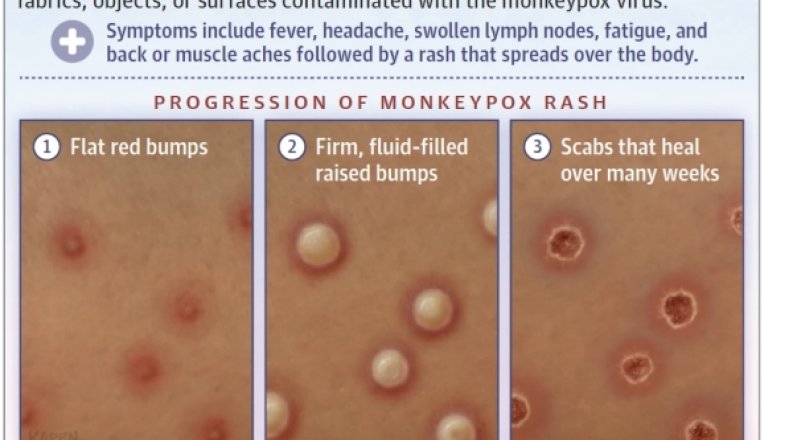
This might include skin with what appears to be a rash, pimples, blisters, or scabs.
- The rash might appear on the hands, feet, chest, face, or mouth and other areas like on the genitals (penis, testicles, labia, vagina). Do not touch the rash or scabs of a person with monkeypox.
- Do not kiss, hug, cuddle, or have sex with someone with monkeypox.
- Avoid direct contact with someone who may have monkeypox, including kissing, hugging, and massage.
Avoid contact with animals where monkeypox occurs regularly
- In areas where monkeypox is endemic (found regularly), particularly in Central or West Africa, avoid contact with live or dead wild animals that can carry the virus that causes monkeypox, such as rodents and primates. Direct contact with infected animals can spread the virus.
Avoid contact with objects and materials that a person with monkeypox has used
- Do not share eating utensils, dishes, plates, or cups with a person with monkeypox.
- Do not handle or touch the bedding, towels, or clothing of a person with monkeypox.
- If you or someone you live with has monkeypox, clean and disinfect your home
Wash your hands often.
- Wash your hands often with soap and water, or use an alcohol-based hand sanitizer, especially before eating or touching your face and after you use the bathroom.
- Handwashing is one of the best ways to protect you, your family, and your friends from getting sick.
- Medical treatments are not recommended for everyone who has symptoms of mpox.
- Over the counter (OTC) medicines can help to ease your symptoms. See below for some examples.
- Ask your provider or pharmacist for help choosing OTC medicines. Read and follow all instructions on the medicine box and package insert.
- Stay hydrated. Drink plenty of water and other fluids, especially if you have diarrhea.
- Wash your hands often.
- Keep rash and sores clean and dry to prevent the sores from becoming infected.
- Try not to touch, scratch, or shave the rash to prevent virus spreading to others. Don't lance (pop) or scratch lesions from the rash.
- Visit the American Academy for Dermatology’s (AAD) information sheet for tips on taking care of your skin.
- Medicines such as ibuprofen and acetaminophen can help reduce pain, swelling, and fever. It is important to follow the recommended dosage and interval for each medicine.
- Advil and Motrin are brand names for ibuprofen.
- Tylenol is the brand name for acetaminophen.
- Antihistamines (such as Benadryl), calamine lotion, petroleum jelly, and cooling lotions can provide temporary itch relief.
- Warm oatmeal baths or sitz bath can reduce itching and pain.
- Dibucaine ointment or lidocaine gel may also provide temporary relief. These are for external use only.
- Take docusate (such as Colace), a stool softener, to reduce pain when you go to the bathroom.
- Rinse your mouth with clean salt water at least four times per day to keep mouth sores clean. You can also use a mouthwash with no alcohol (such as Listerine Zero Alcohol).
- Suck on ice chips or ice pops and drink water to stay hydrated.
- Use patches that cover the sores and benzocaine gels to reduce mouth pain.
If you Get Sick
General Treatment
Treatment for Pain and Itching
Treatment for Mouth Sores
Learn more about taking care of yourself when you have mpox on CDC's website.