
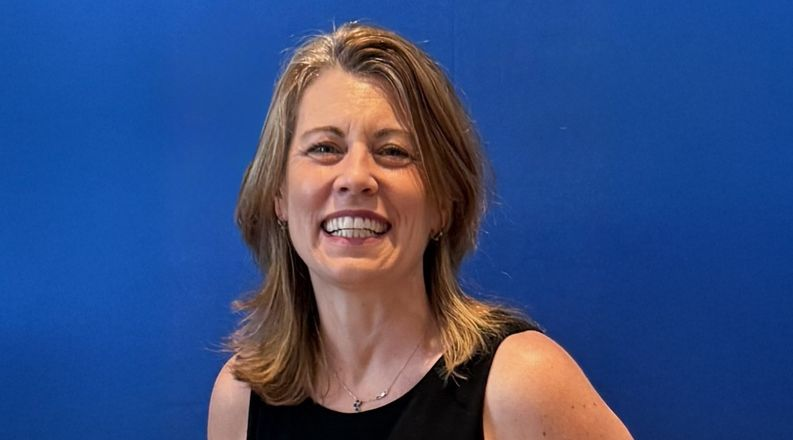


The impact of clinical nurse specialists (CNS) can be seen in many ways: fewer hospital-acquired pressure injuries, stronger goals-of-care conversations, better documentation during code blues and nurses empowered to advocate for their patients.
Macon & Joan Brock Virginia Health Sciences Ellmer School of Nursing at Old Dominion University alumna Erin Smith, D.N.P., APRN (M.S.N. ’18, D.N.P. ’20), has seen that impact unfold throughout her career, using her CNS training to turn opportunities for improvement into tangible results.
"Clinical nurse specialists have always been the nurses who fueled my passion for the nursing profession," said Dr. Smith, a clinical nurse specialist at Sentara Norfolk General Hospital. "I admired the desire to always improve and support nursing as a profession, rather than a job."
That commitment has shaped a career spanning clinical practice, education, ethics, quality improvement and advanced practice. In September 2025, Dr. Smith transitioned from the intensive care unit at Sentara Leigh Hospital to Sentara Norfolk General Hospital, where she focuses on preventing pressure injuries and falls.
In this role, she has helped reduce hospital-acquired pressure injuries by 40% in less than a year and co-led a $25,000 nurse-driven goals-of-care study that resulted in a significant reduction in 30-day readmissions and an estimated $185,000 in savings over 12 weeks. She also led a computer software-based code blue documentation initiative that is now used systemwide to capture quality data about response times when a patient goes into cardiac or respiratory arrest — information that was previously recorded on paper.
Her work has also included direct patient care. Dr. Smith served as an advanced practice provider in a local clinic, managing chronic conditions, prescribing medications and facilitating referrals and diagnostic testing, an opportunity that allowed her to practice within the full breadth of her CNS training.
That versatility is one of the reasons she believes the role deserves greater recognition. She saw firsthand how a clinical nurse specialist could bridge advanced practice, collaboration and direct patient care during her preceptorship at Carilion Roanoke Memorial Hospital.
“When I met Phyllis Whitehead, PH.D., CNS, a palliative care clinical nurse specialist at Carilion Roanoke Memorial Hospital, I fully appreciated how one could work with nurse practitioners, MDs, pharmacy and others and still provide advanced-practice direct care,” Dr. Smith said. “She truly opened my eyes to how great the role could be.”
Yet, the potential of clinical nurse specialists is not always widely understood. Organizational structures and variations in state practice environments can limit how clinical nurse specialists use their full scope of training.
Recognizing that greater awareness and broader opportunities are essential to the future of the profession, Dr. Smith has made advocacy a central part of her work. She currently serves as legislative chair of the Virginia Association of Clinical Nurse Specialists and on national and state nursing advocacy committees.
Chelsea Weaks, D.N.P. (B.S.N. ’19, D.N.P. ’23), director of the CNS program at the Ellmer School of Nursing at Old Dominion University, sees that advocacy as essential to the profession’s future. Clinical nurse specialists are uniquely prepared to look beyond individual patients and lead change across organizations and healthcare systems.
“We use our nursing expertise, evidence-based practice, patient care experience and leadership skills to drive change to improve our patients’ experience and care,” Dr. Weaks said.
As healthcare continues to evolve, Dr. Weaks sees an opportunity to expand awareness. Clinical Nurse Specialists are everywhere; you just have to look,” she said. “In the next 10 years, I hope the CNS role is better understood and embraced across the nation.”
Dr. Smith is helping make that future visible, one patient, nurse and system-level improvement at a time. Her career demonstrates what can happen when clinical specialists are empowered to practice at the top of their training — and when their expertise is recognized as a catalyst for meaningful change.

PO Box 1980
VA 23501