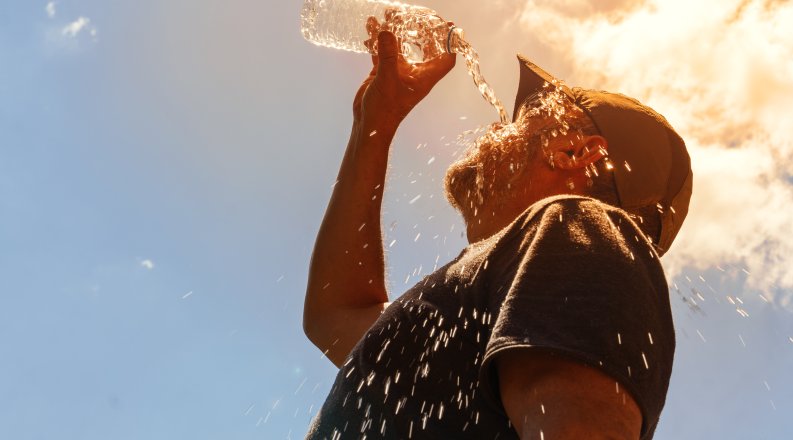


Your body is built to handle the heat — until it isn't. When a high-pressure weather system lingers and traps warm air, a heat dome forms and essentially bakes the surface like an oven, often lasting several days.
Sweating is your body's natural defense against the heat. But when high temperatures last for multiple consecutive days, that cooling system becomes overwhelmed causing heat exhaustion and heatstroke.
“Cooling down in the evening is key,” said Gordon Theisz, MD, FAAFP, associate professor of family and community medicine at Macon & Joan Brock Virginia Health Sciences EVMS Medical Group at Old Dominion University. “Staying in the heat puts more stress on the body. The higher the outside temperature, the harder it is for the body to lose that heat and lower its own temperature.”
Those most vulnerable to extreme heat — athletes, laborers, members of the military, older adults, young children and people with chronic illnesses — will need to take special care. Extreme heat can also increase risk of pregnancy complications.
Heat exhaustion often occurs before heatstroke. By learning the signs and symptoms, you may be able to prevent irreversible damage.
“The key is early treatment,” said Dr. Theisz. “The body is quite plastic. It can recover from a lot of things. But neurologic damage can be permanent, or can have a long, long recovery, if at all.”
Dr. Theisz offers these tips for staying safe during extreme heat:
Signs of heat exhaustion include dizziness; fatigue; headache; nausea; changes in vision; hot, flushed skin; and muscle aches.
How to treat heat exhaustion:
"If the person is not recovering from symptoms, such as muscle aches, headache, nausea or fatigue with these standard measures,” said Dr. Theisz, "then it is really important to see a medical provider. Heatstroke is a serious life-threatening condition.”
Signs of heatstroke include hot, dry skin; irritability; confusion; slurred speech or clumsy movements; and elevated body temperature/fever.
What to do if you suspect a heatstroke:
For more information on staying safe in the heat dome and to make an appointment with one of our providers at EVMS Family & Community Medicine, contact us at 757.446.5955.

PO Box 1980
VA 23501