
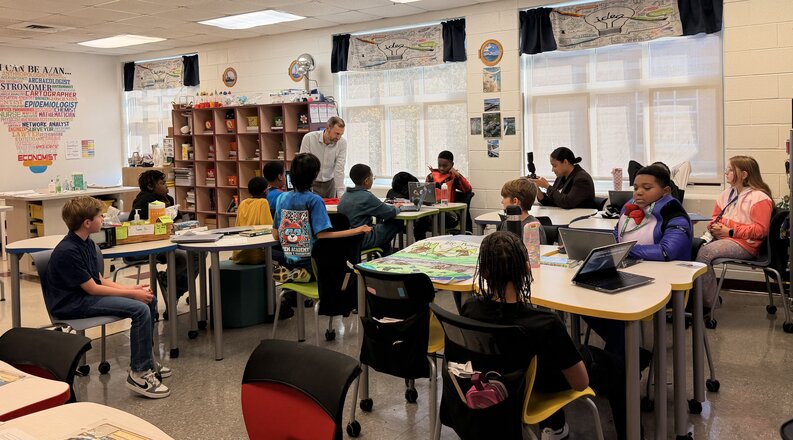


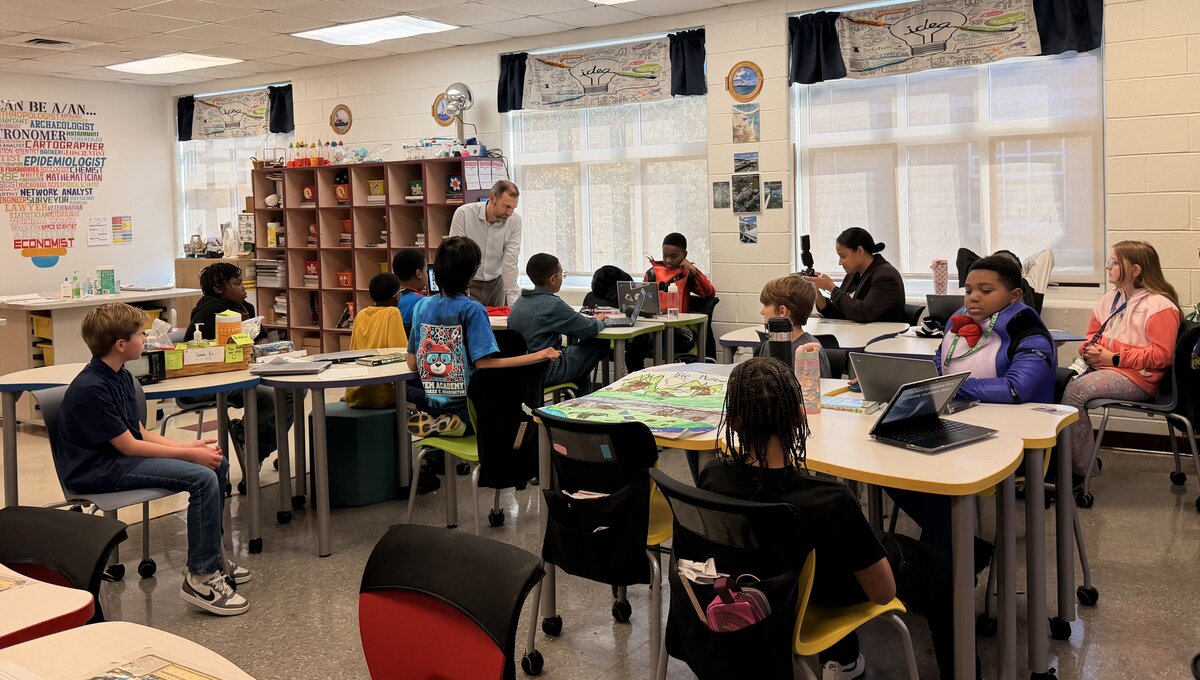
Virginia’s First Gentleman Adam Spanberger visited the STEM Academy at Booker T. Washington Elementary School (SABTW), Virginia’s only K–5 College Partnership Lab School, to see how its approach to learning fosters curiosity, collaboration, and connections to real-world challenges.
During the October 30 visit, the day before Halloween, students added a festive touch by presenting their projects in costumes. Spanberger explored classrooms and learning spaces, met students, and heard directly from them about how they apply their learning through hands-on projects, teamwork, and community experiences.
In the Innovation Den, fourth graders presented models they created as third graders last school year through “From Farm to Peanut Butter,” a project developed through a community partnership with Birdsong Peanuts. Students explained how their models represented different parts of peanut processing and the journey from farm to finished product.
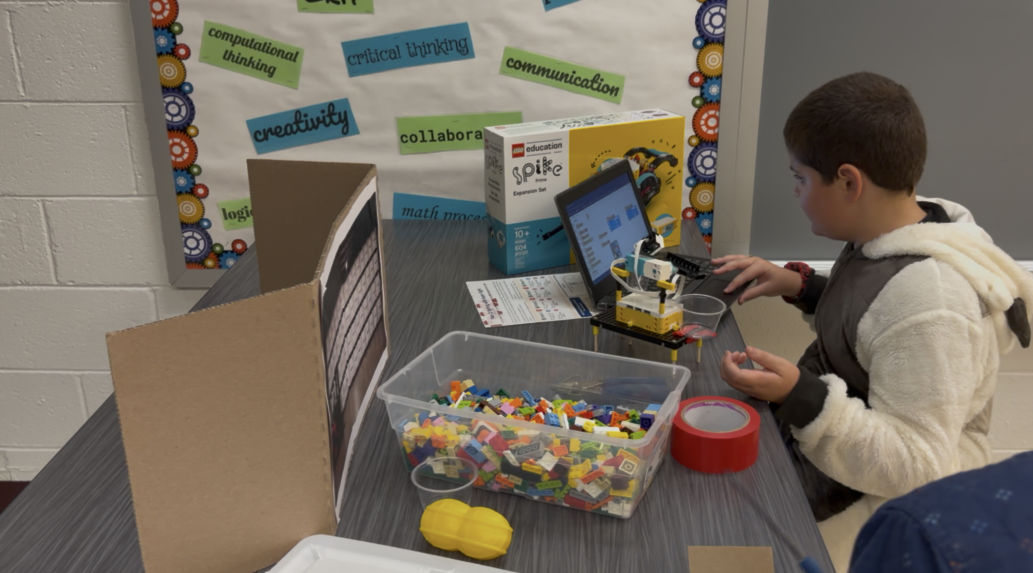
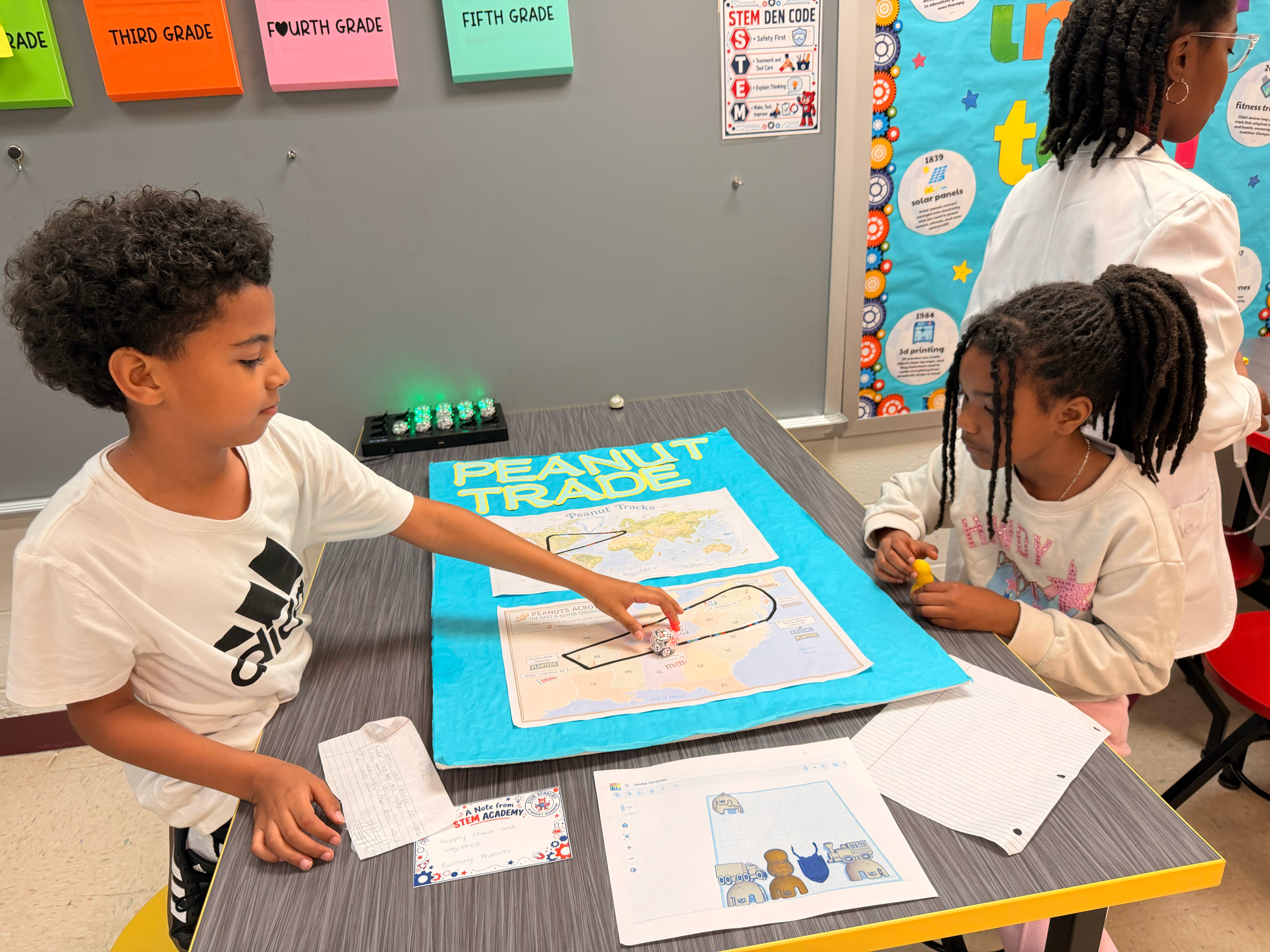
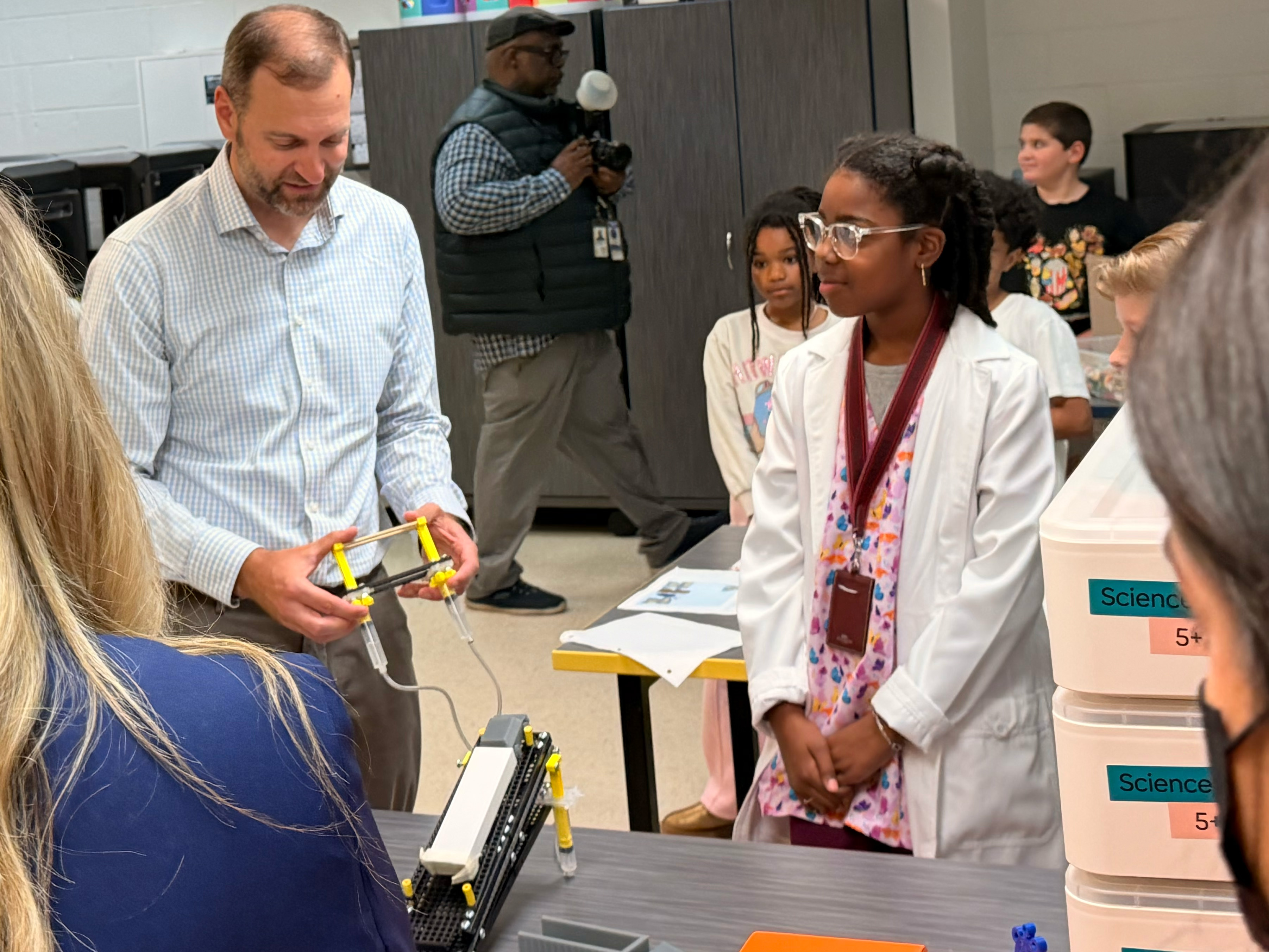
Caeden demonstrated an electronic eye model he programmed using LEGOEducation to replicate the technology that scans and sorts peanuts at the Birdsong Peanuts facility. Sincere and Greysyn used Ozobots to illustrate how peanuts move through the supply chain and travel around the world. Greysyn connected the lesson to Halloween, pointing out that without the supply chain, there would be no peanuts to make Reese’s peanut butter cups. Nylah and Andy presented their model of a dump truck’s hydraulic system, explaining how two hydraulic lines help raise the truck bed to unload peanuts into the facility.
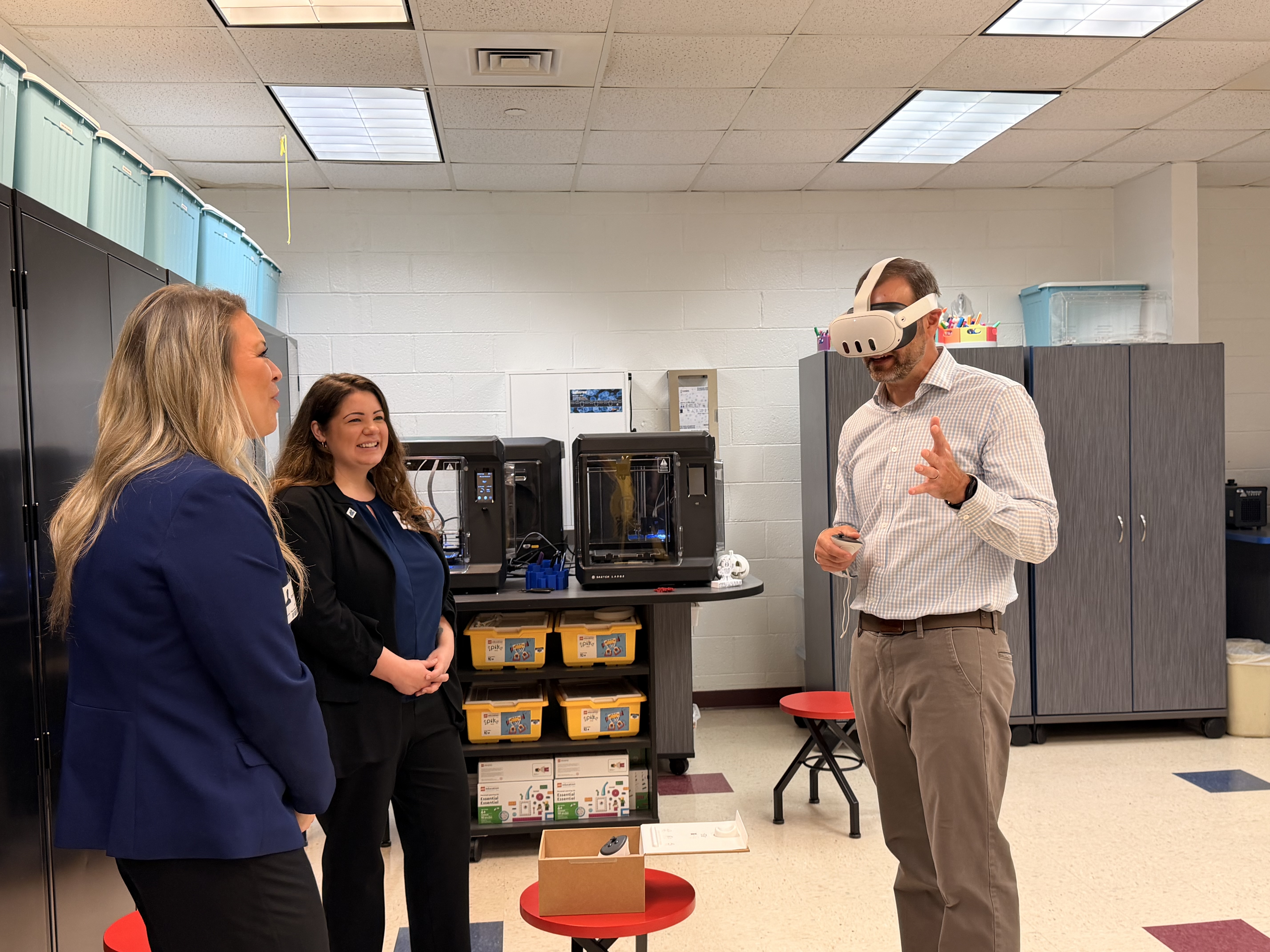
Spanberger also experienced the project’s virtual reality (VR) tour, which takes viewers through the Birdsong Peanuts shelling facilities in Suffolk, VA. The immersive experience helped students understand the peanut’s journey through the processing stages that inspired their models.
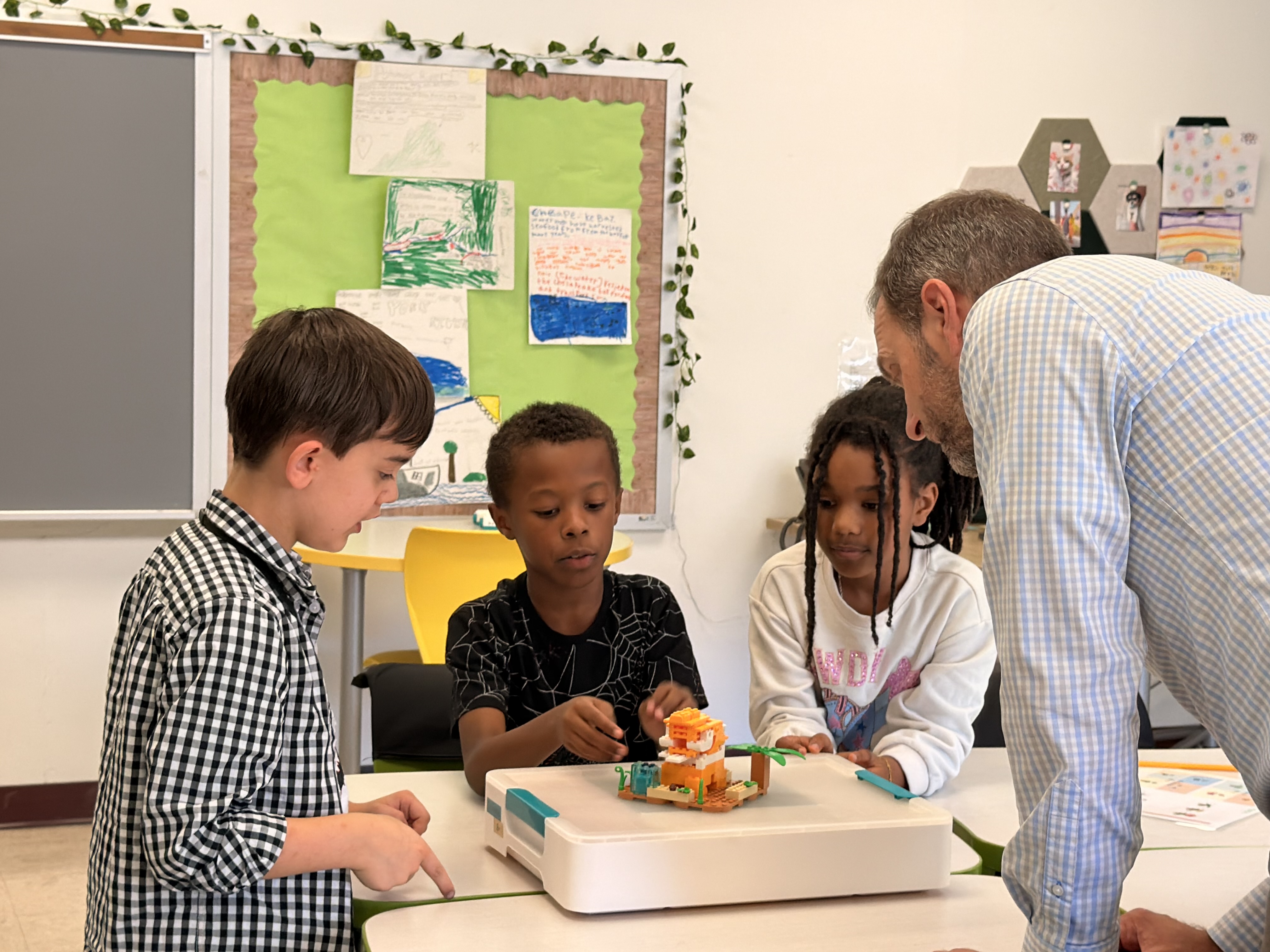
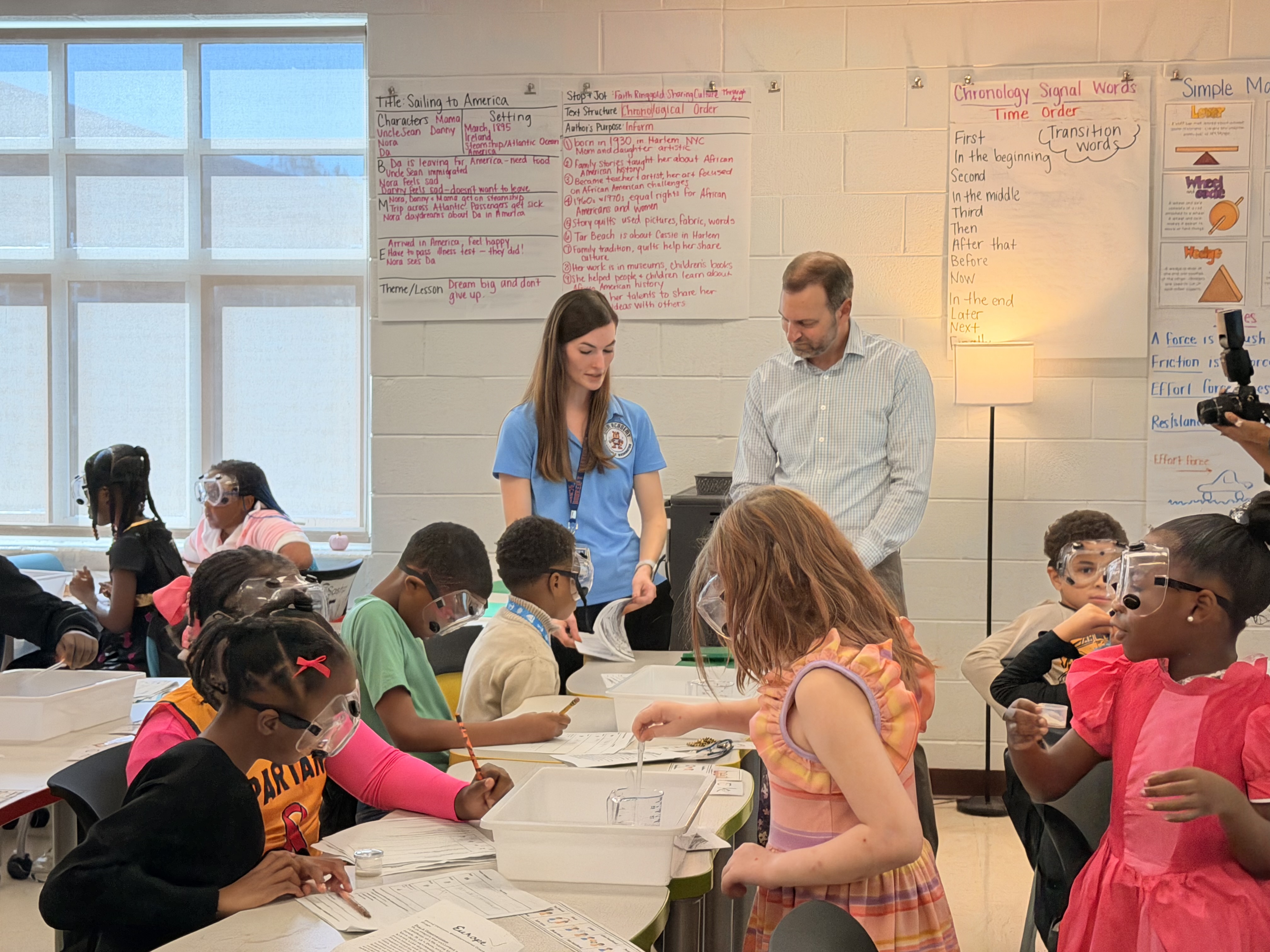
The learning walk also highlighted how students connect STEM with subjects across the curriculum. Third graders shared their learning through “Dr. Patel’s Field Journal,” an activity connected to AI-supported storylines. They investigated sand and clay in water and connected their observations to locations on a world map. Other classroom activities included first graders constructing devices that move and explaining their design choices, and fourth graders exploring “Plant Powers” through LEGO Science.
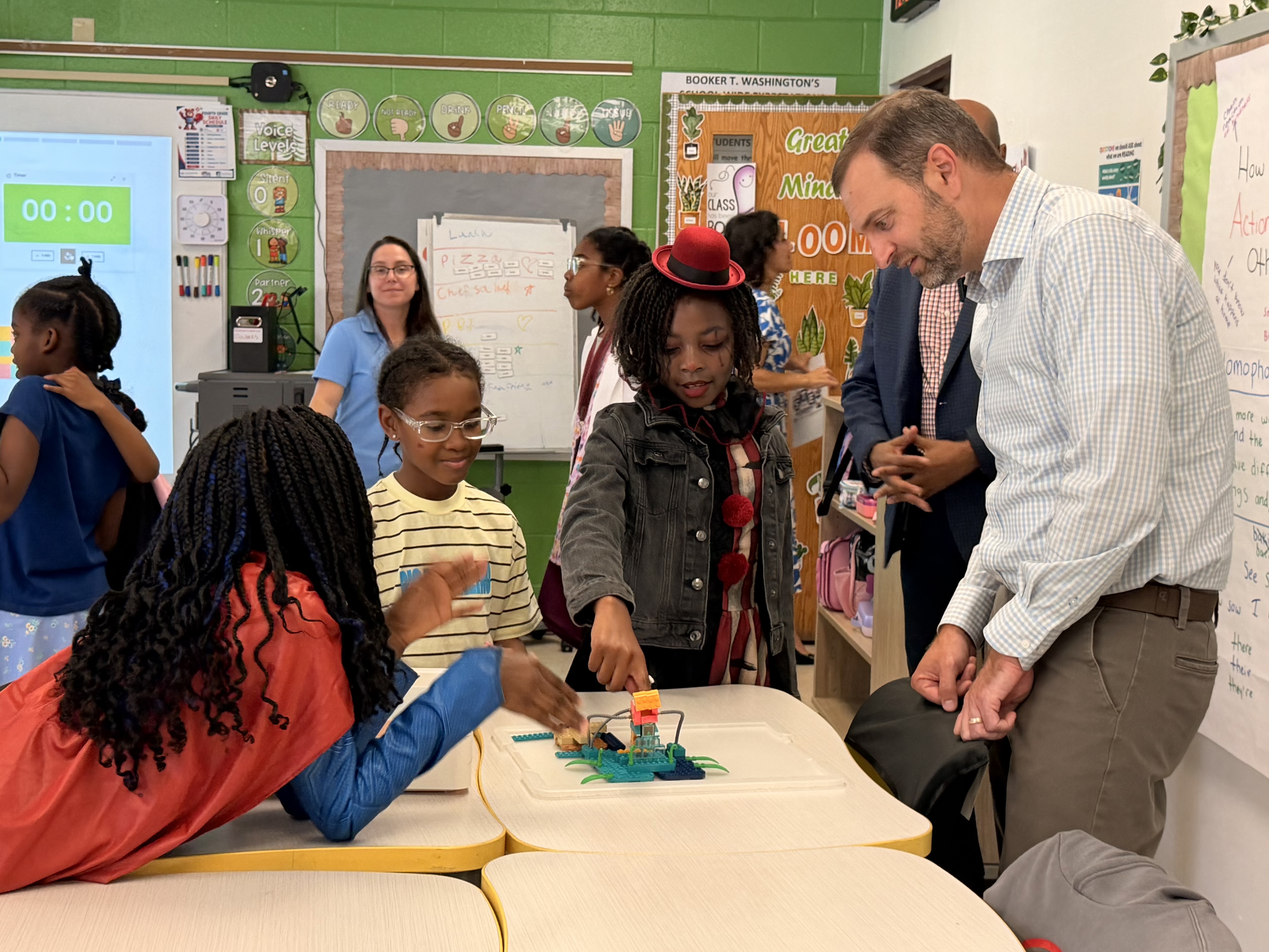
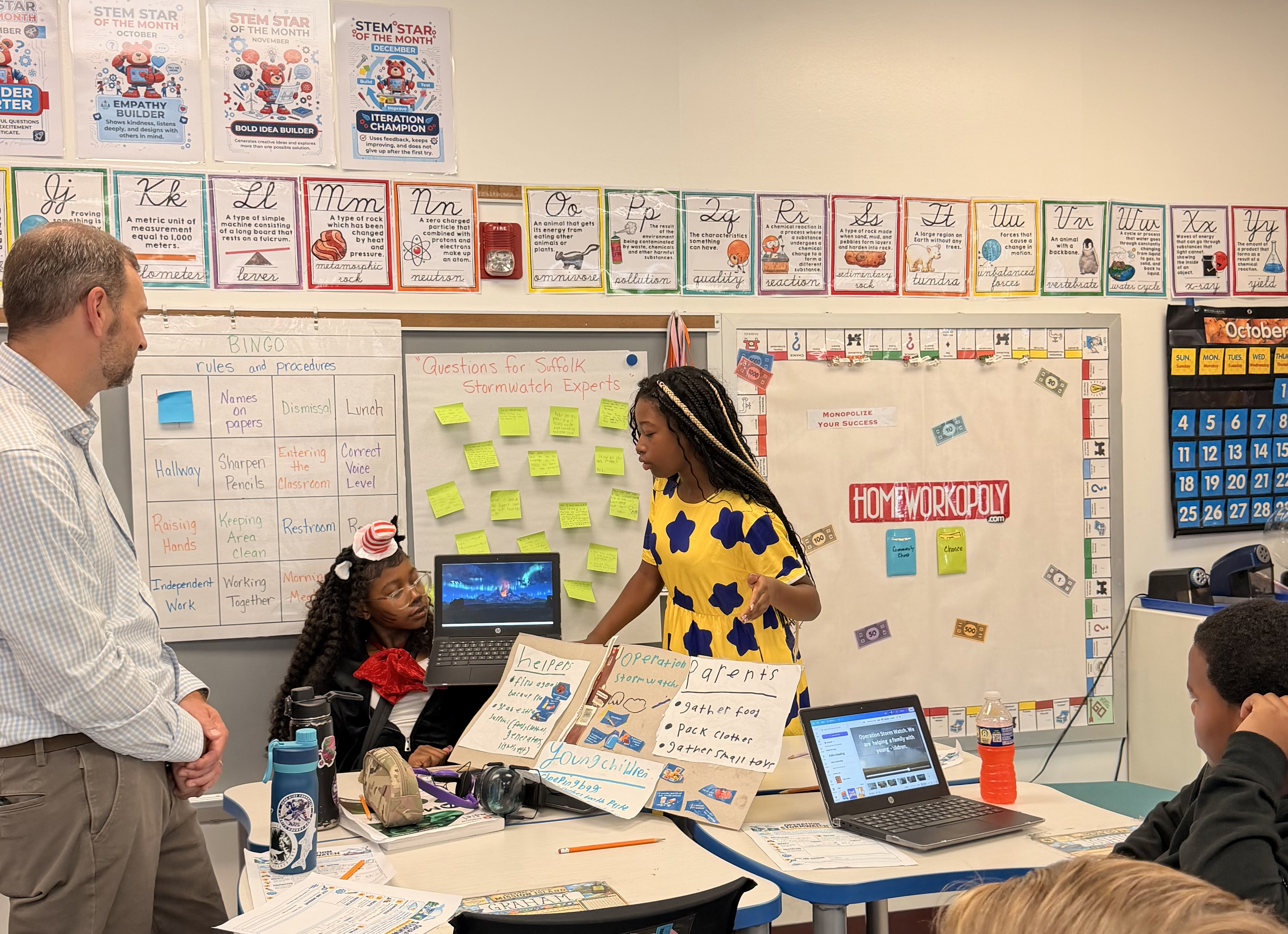
Fifth graders presented their work on their signature project, “Operation StormWatch,” a year-long, immersive learning experience in which students collaborate with local professionals and first responders in the City of Suffolk to explore how communities prepare for and respond to emergencies. Students shared how visits to WTKR’s weather station and the Suffolk Fire Department helped them understand the important roles weather forecasting and emergency response play in keeping their community safe. These field experiences gave students opportunities to observe professionals in action, ask questions, and identify needs they could address through their own designs. Students applied what they learned to develop storm-readiness solutions for a person or family, working together to test their ideas and make improvements through feedback.
Throughout the visit, students demonstrated their projects and shared the collaborative learning experiences behind their work. Classroom arrangements and group projects encourage students to exchange ideas, learn from one another, and contribute their strengths toward a shared goal. Students practice listening, supporting their classmates, and working through challenges together, building a sense of community along the way.
As an Old Dominion University lab school in partnership with Suffolk Public Schools, SABTW brings together academic learning, design thinking, and community and industry partnerships to help students investigate ideas, create solutions, and explain their thinking.
These experiences reflect SABTW’s emphasis on the 5Cs: creative thinking, critical thinking, collaboration, citizenship, and communication. Students practice these skills as they imagine possibilities, investigate questions, make decisions as a team, consider others’ needs, and explain their thinking.
For SABTW, growing curious minds means giving students opportunities to ask questions, try unfamiliar approaches, and recognize the value of their own contributions and those of their classmates. The visit offered a glimpse of that work in action, with students sharing both what they are creating and how they are learning and growing together.
Virginia’s First Gentleman, Adam Spanberger, listens as two STEM Academy fifth graders present Operation StormWatch.
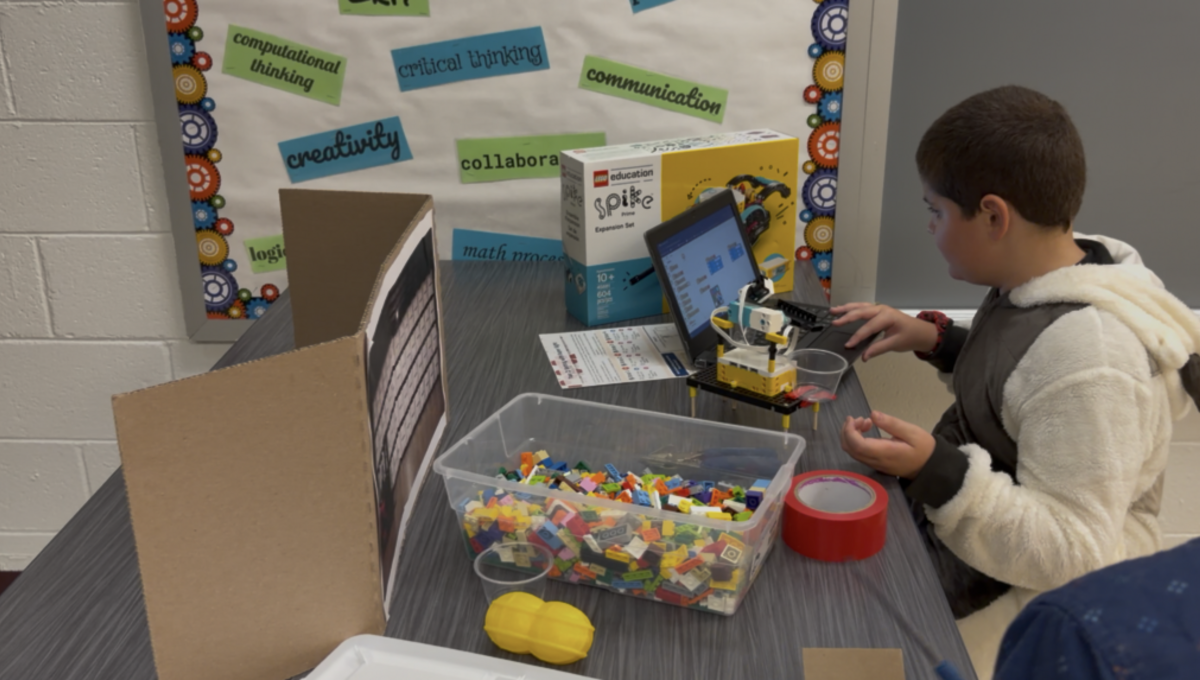
Caeden demonstrated an electronic eye model he programmed using LEGOEducation to replicate the technology that scans and sorts peanuts at the Birdsong Peanuts facility.
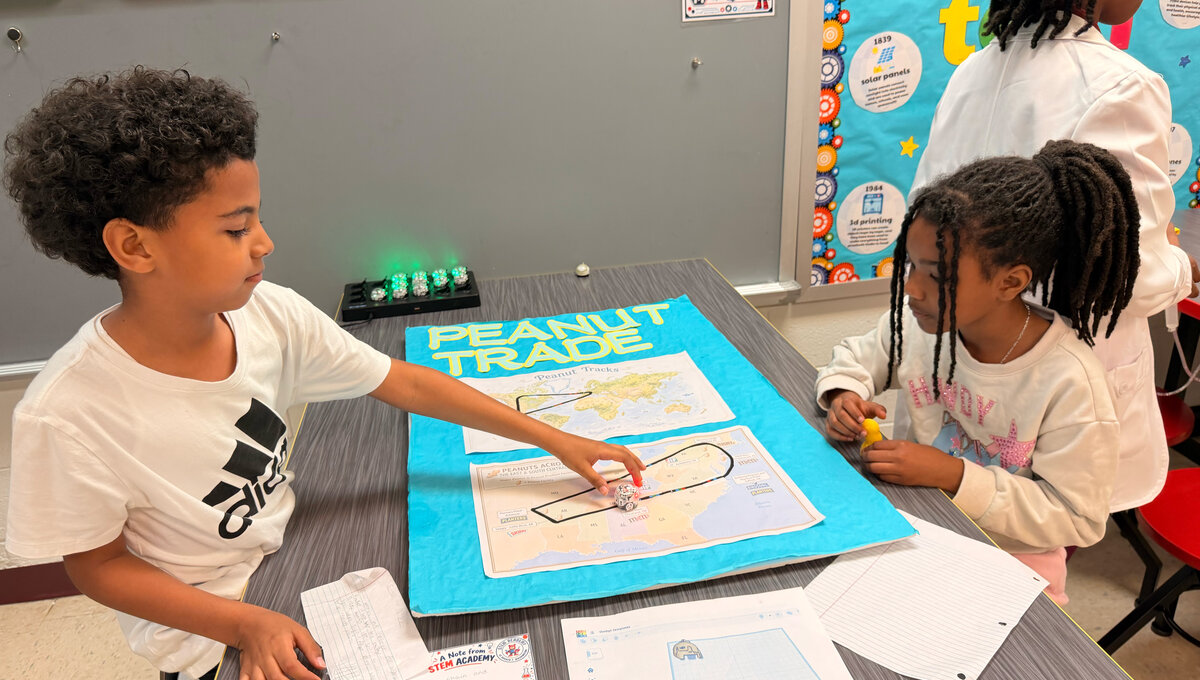
Sincere and Greysyn used Ozobots to illustrate how peanuts move through the supply chain and travel around the world.
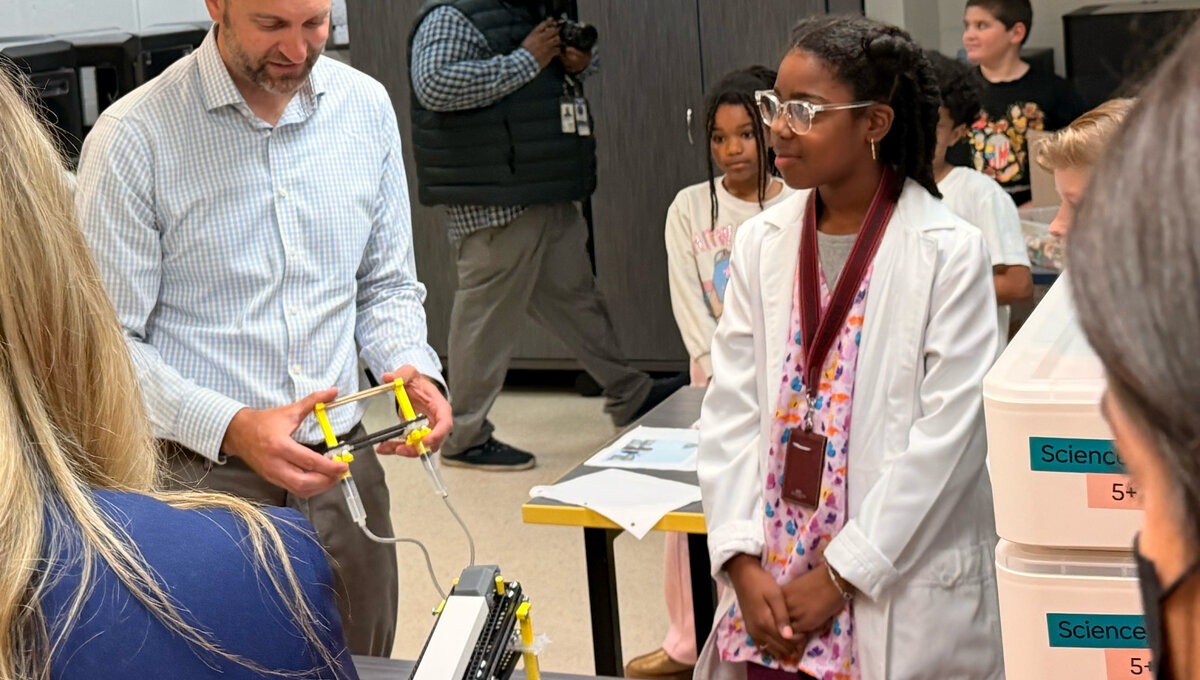
Virginia’s First Gentleman, Adam Spanberger, tests the hydraulic system on a model dump truck built by STEM Academy students Nylah and Andy.
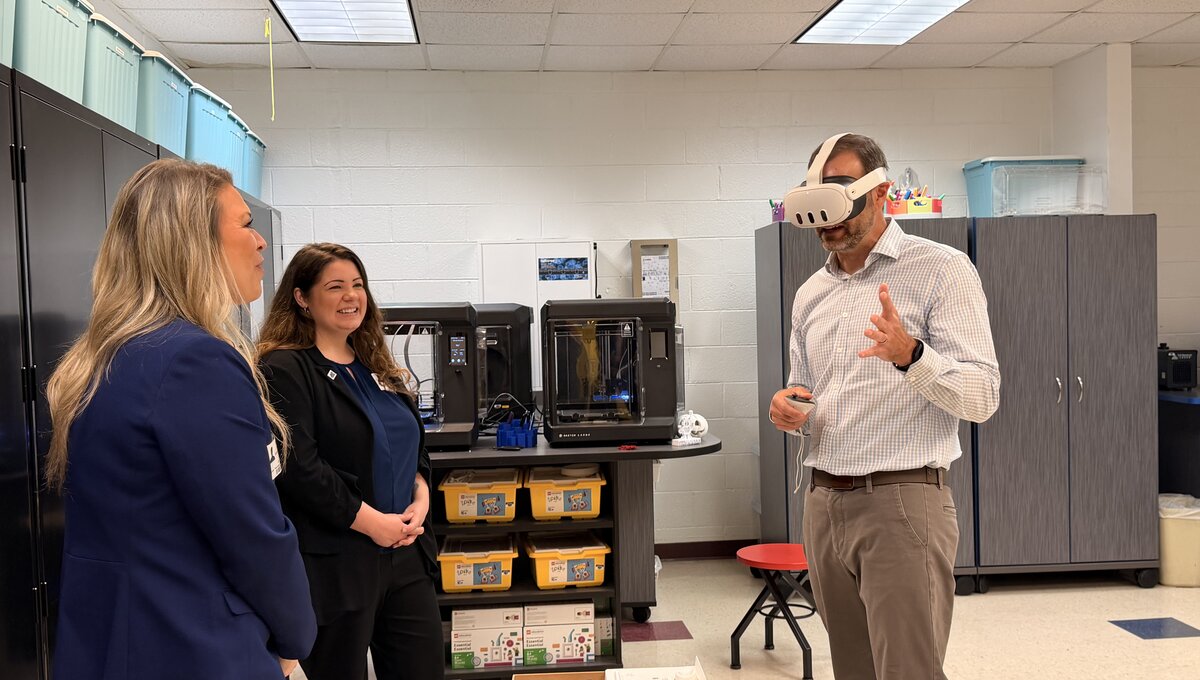
Kaitlyn McCoy and Kristen Duprey from ODU’s Center for Educational Innovation and Opportunity help Virginia’s First Gentleman, Adam Spanberger, use a VR headset to explore a virtual tour of the Birdsong Peanuts shelling facility.
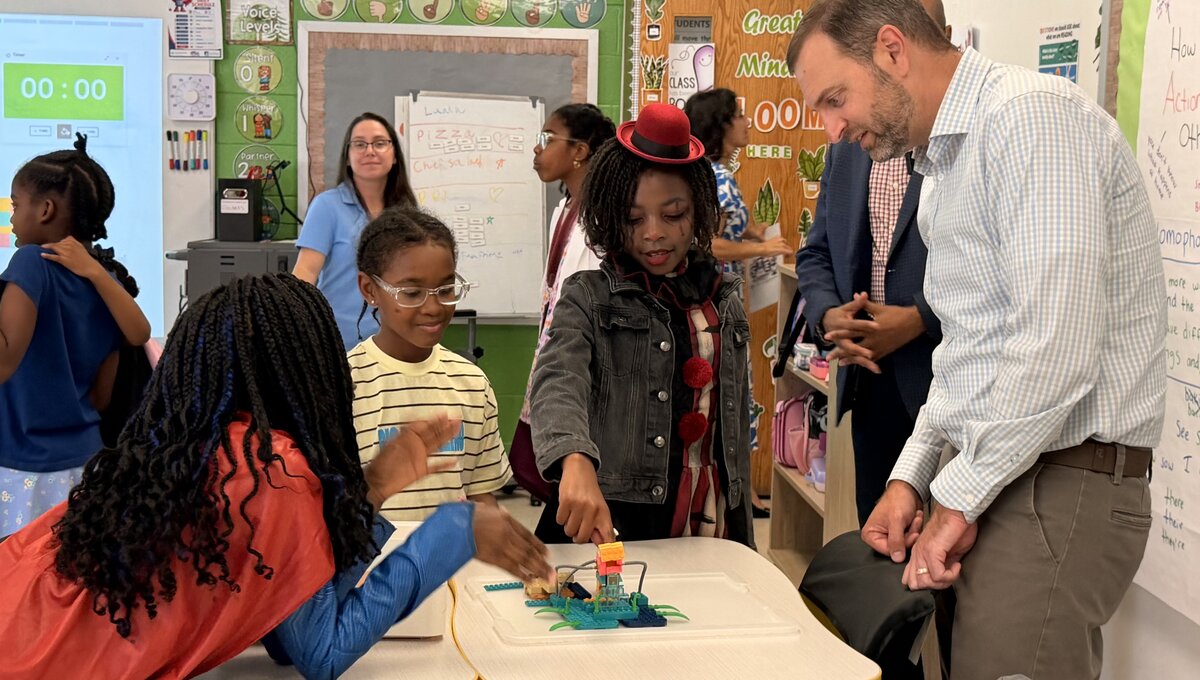
Three STEM Academy fourth graders demonstrate their LEGO Science “Plant Power” model to Virginia’s First Gentleman, Adam Spanberger, who leans forward to watch.
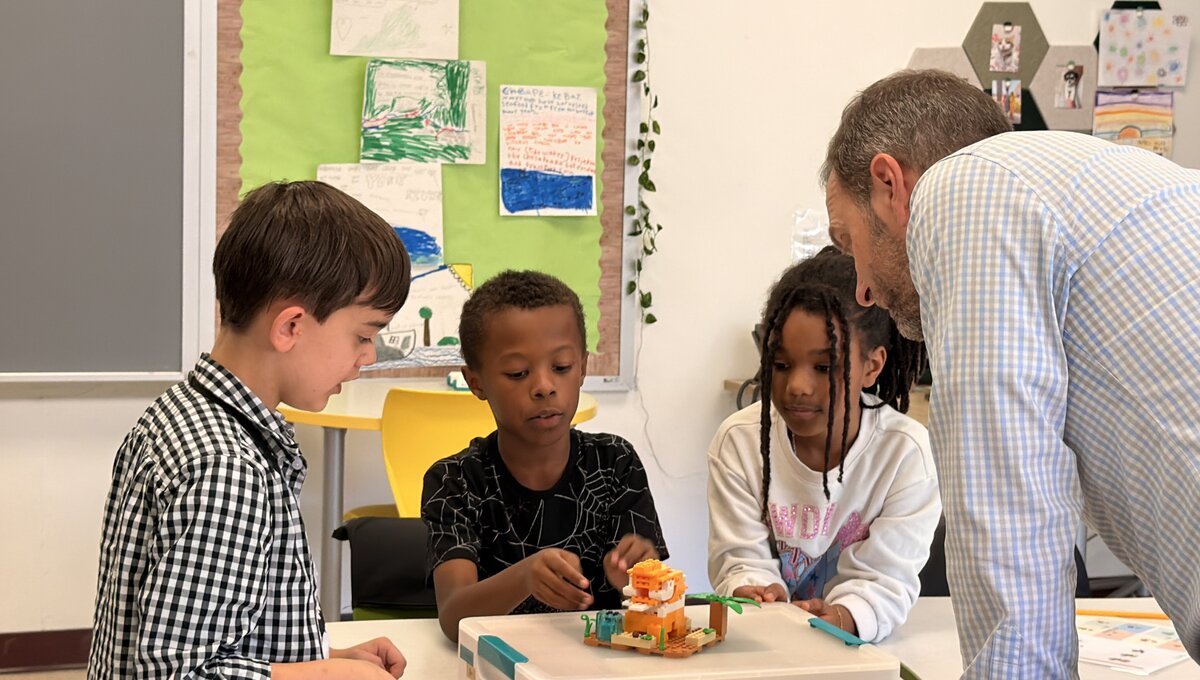
Three STEM Academy fourth graders demonstrate their LEGO Science “Plant Power” model to Virginia’s First Gentleman, Adam Spanberger, who leans forward to watch.
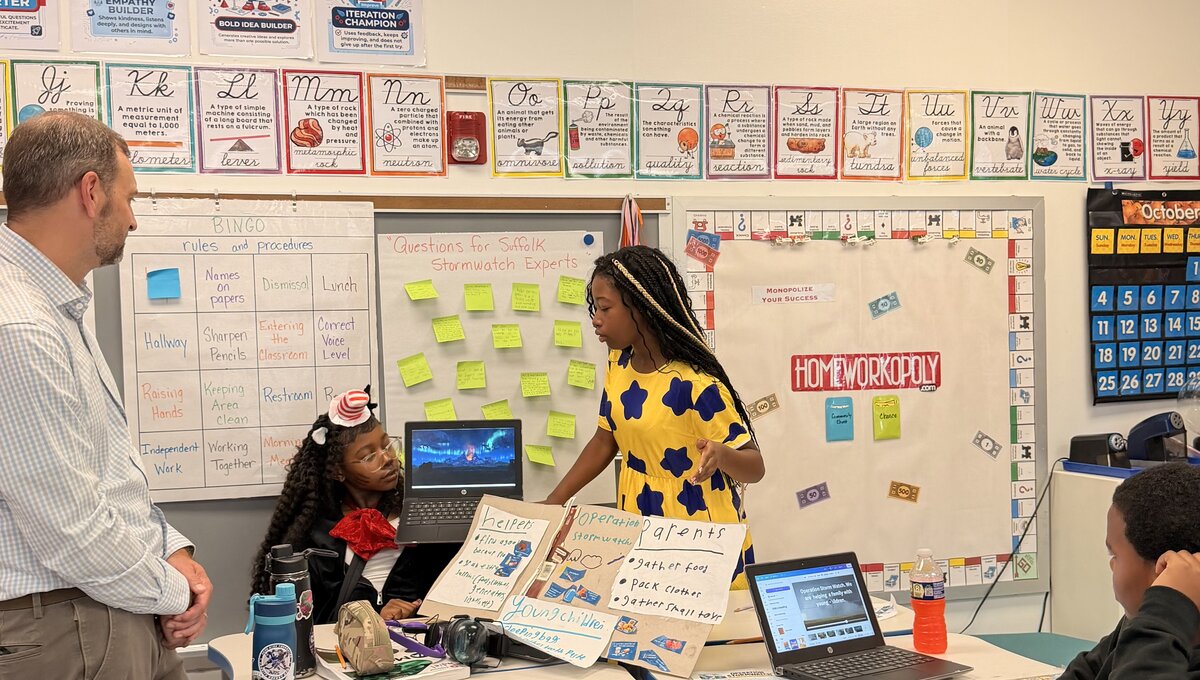
Virginia’s First Gentleman, Adam Spanberger, listens as a STEM Academy student in a Halloween costume presents an Operation StormWatch display with storm-preparation tips for families.
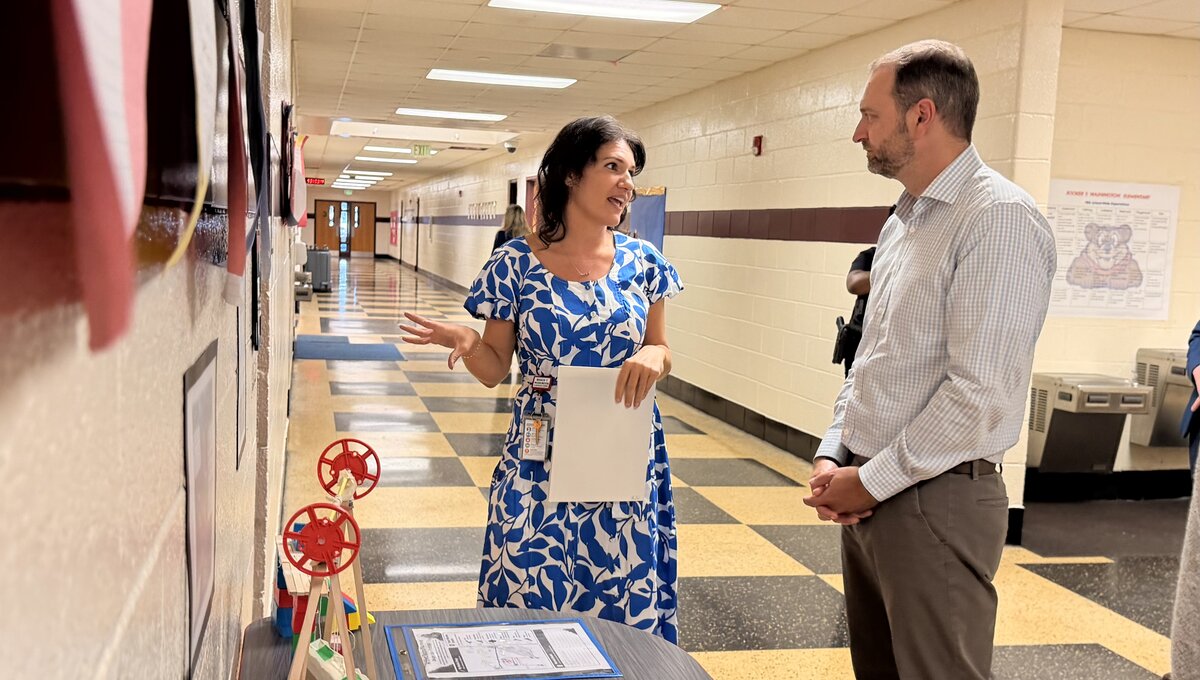
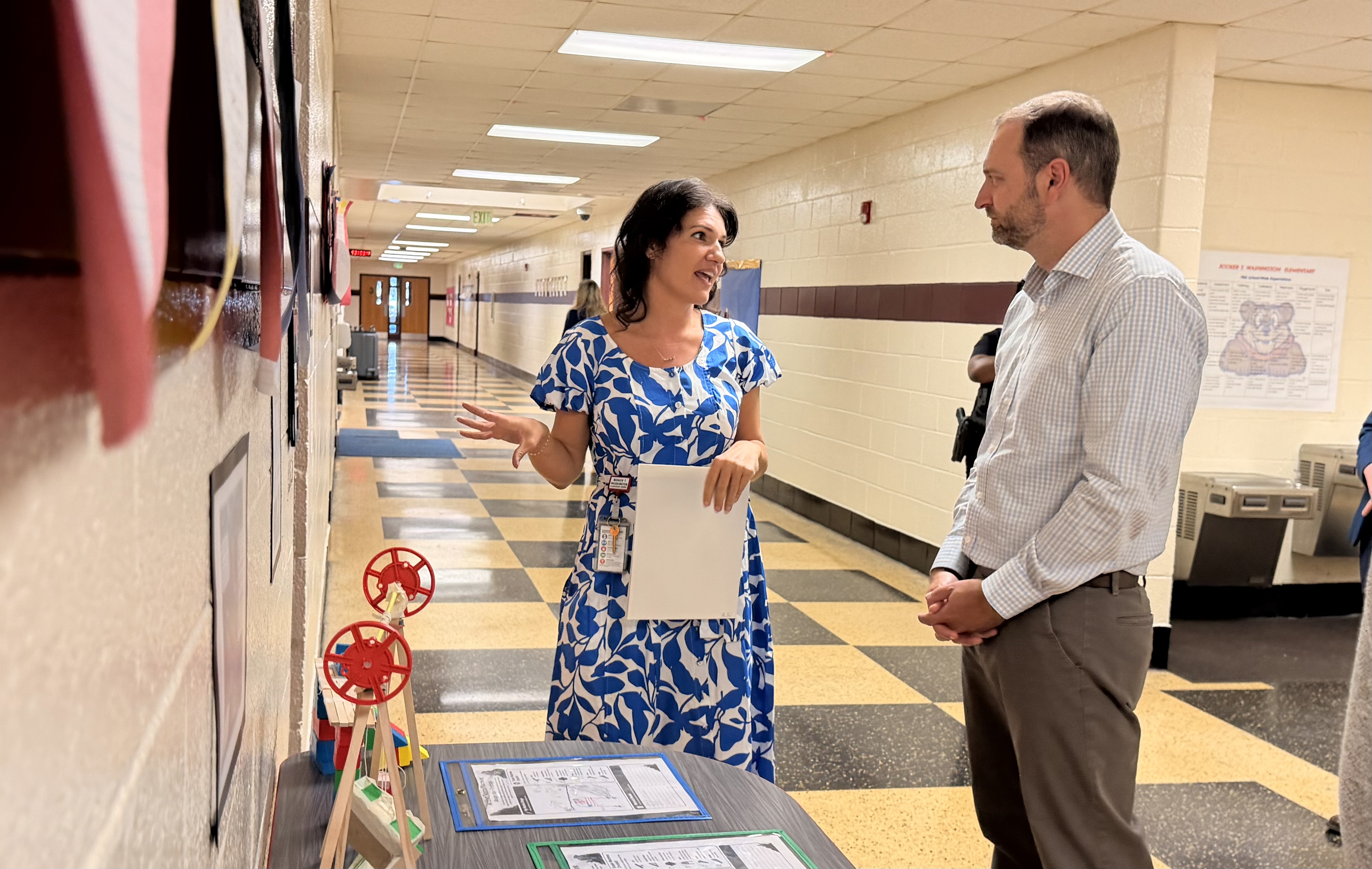
STEM Academy Director Rachele Hirsch-Brooks briefs Virginia’s First Gentleman, Adam Spanberger, in the hallway outside a third-grade classroom about the students’ project and what he can expect to see during his visit.
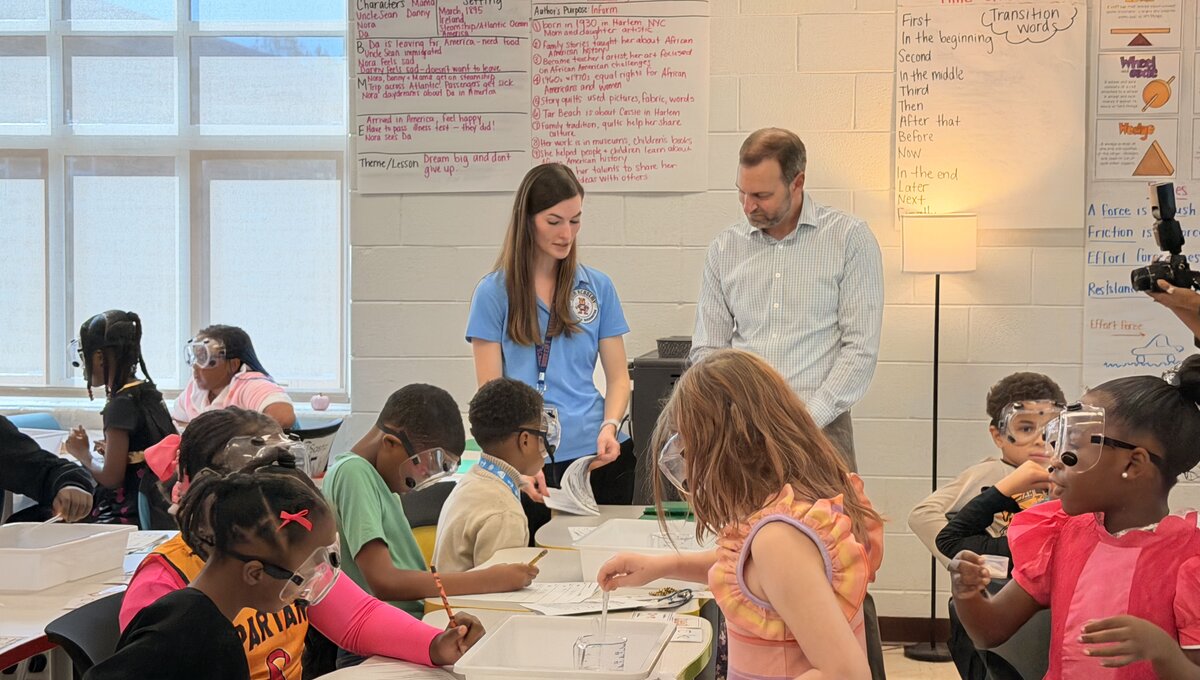
Third-grade teacher Evelyn Trent shows Virginia’s First Gentleman, Adam Spanberger, the AI Storylines activity “Dr. Patel’s Field Journal,” in which students investigate sand and clay in water and connect their observations to Africa and Australia on a world map.
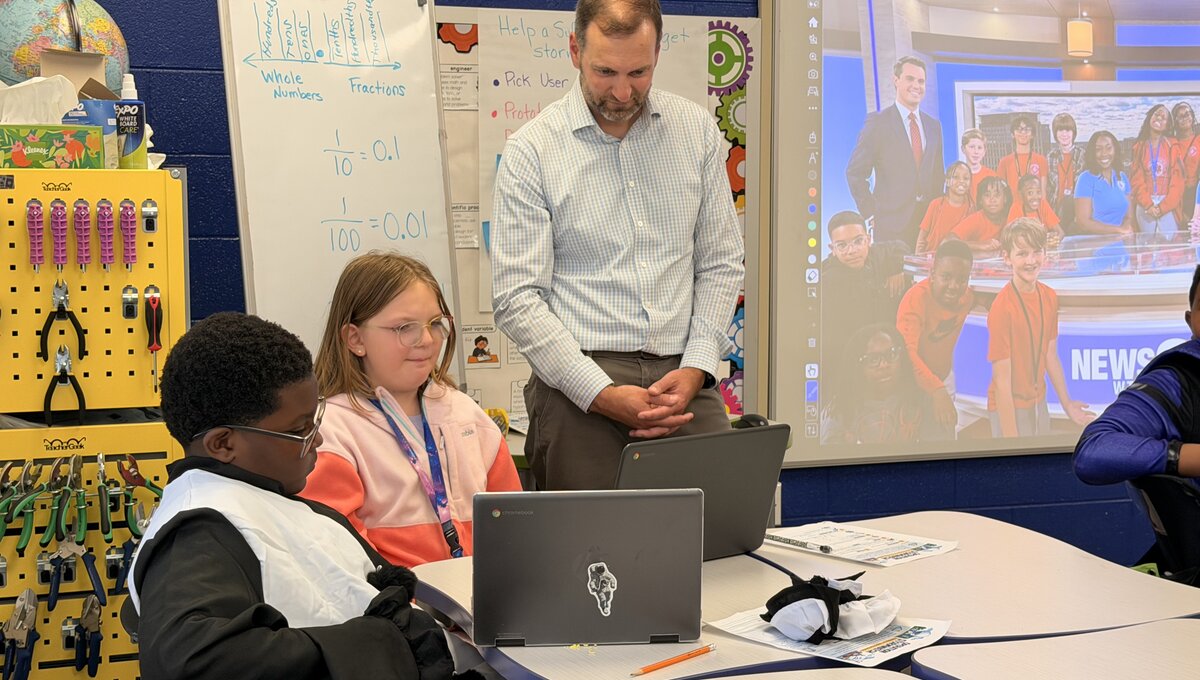
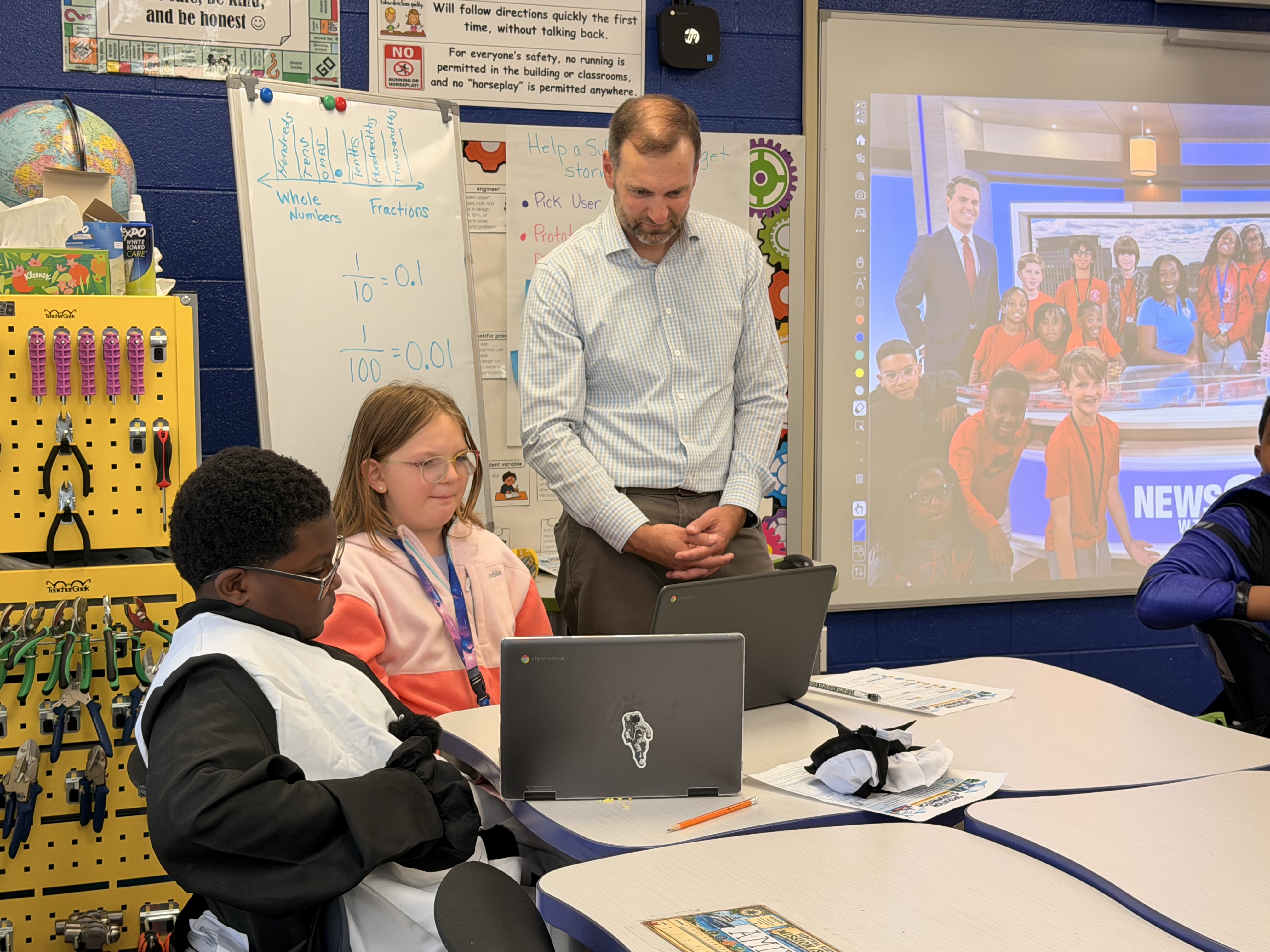
Virginia’s First Gentleman, Adam Spanberger, listens as two STEM Academy fifth graders share their Operation StormWatch presentations on their Chromebooks.
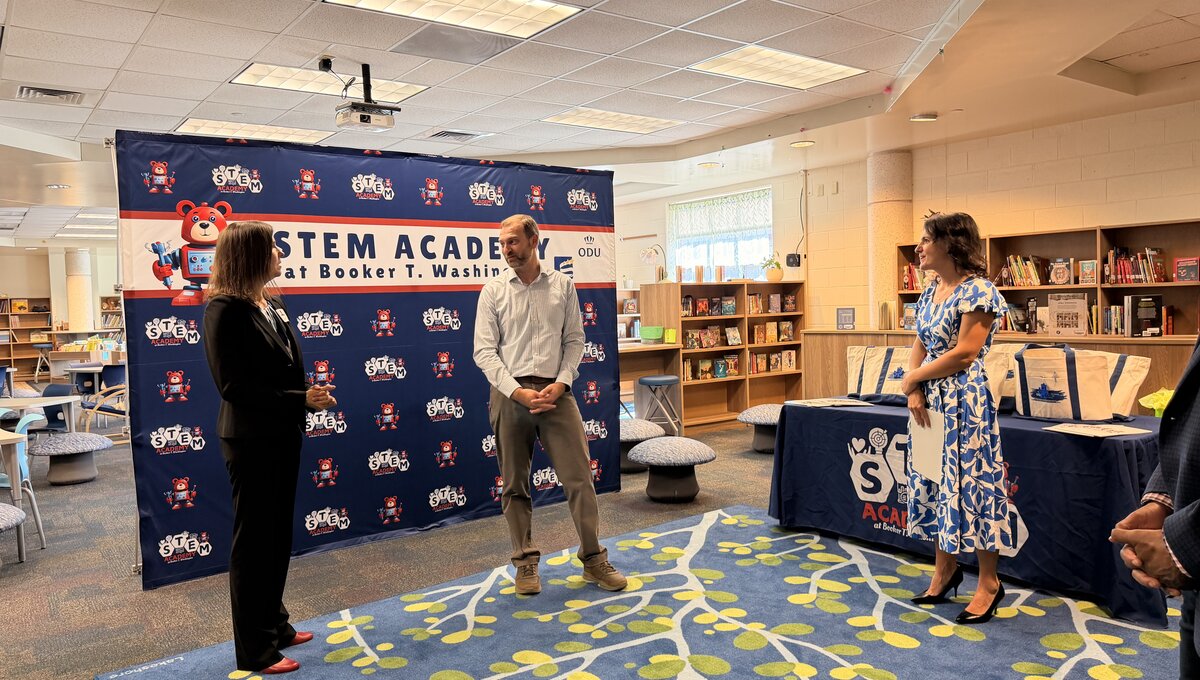
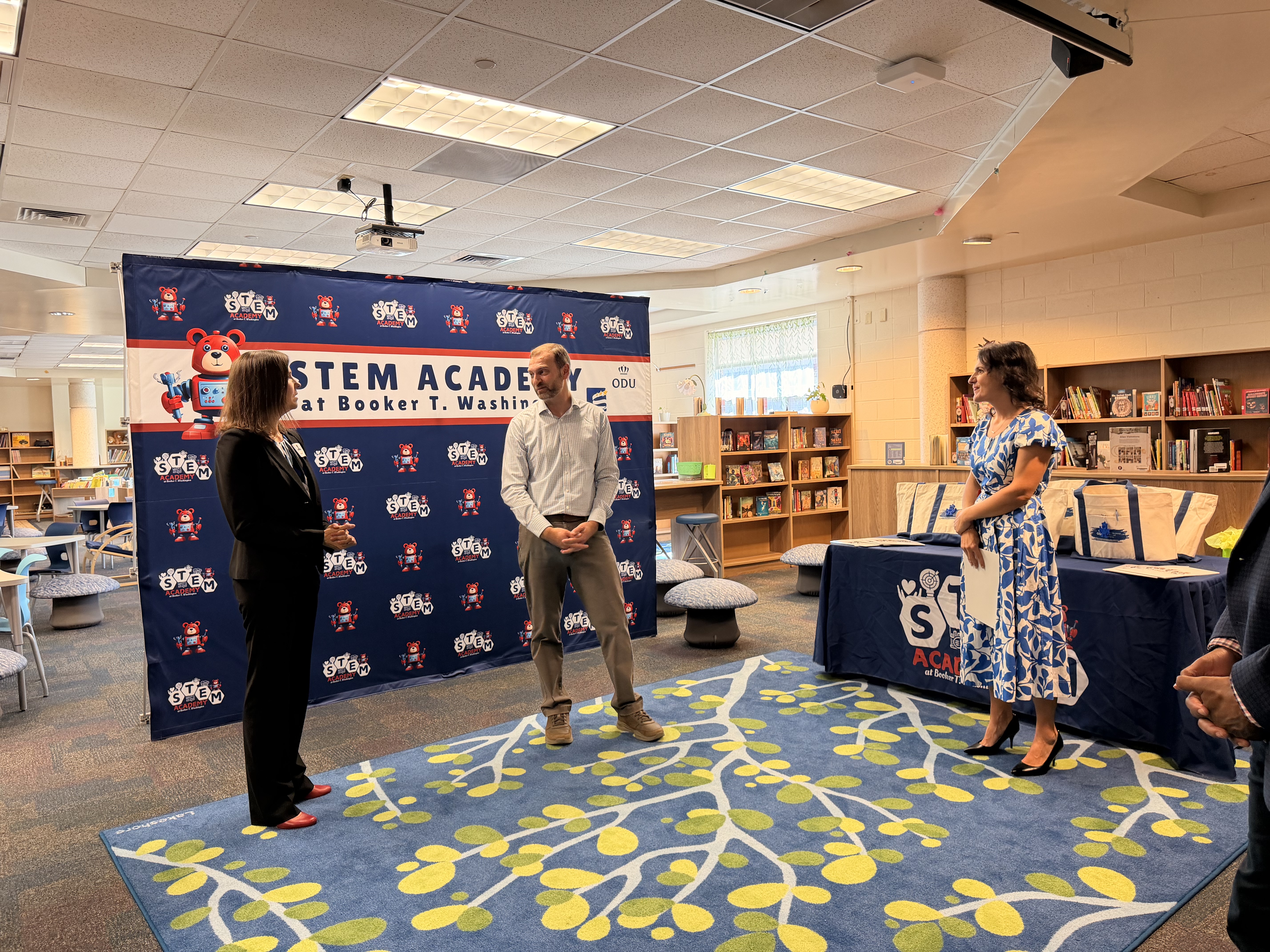
Dr. Karen Sanzo, executive director of ODU’s Center for Educational Innovation and Opportunity, speaks with Virginia’s First Gentleman, Adam Spanberger, in the STEM Academy library about ODU’s leadership in educational innovation and how partnerships with school divisions and community organizations support student learning.
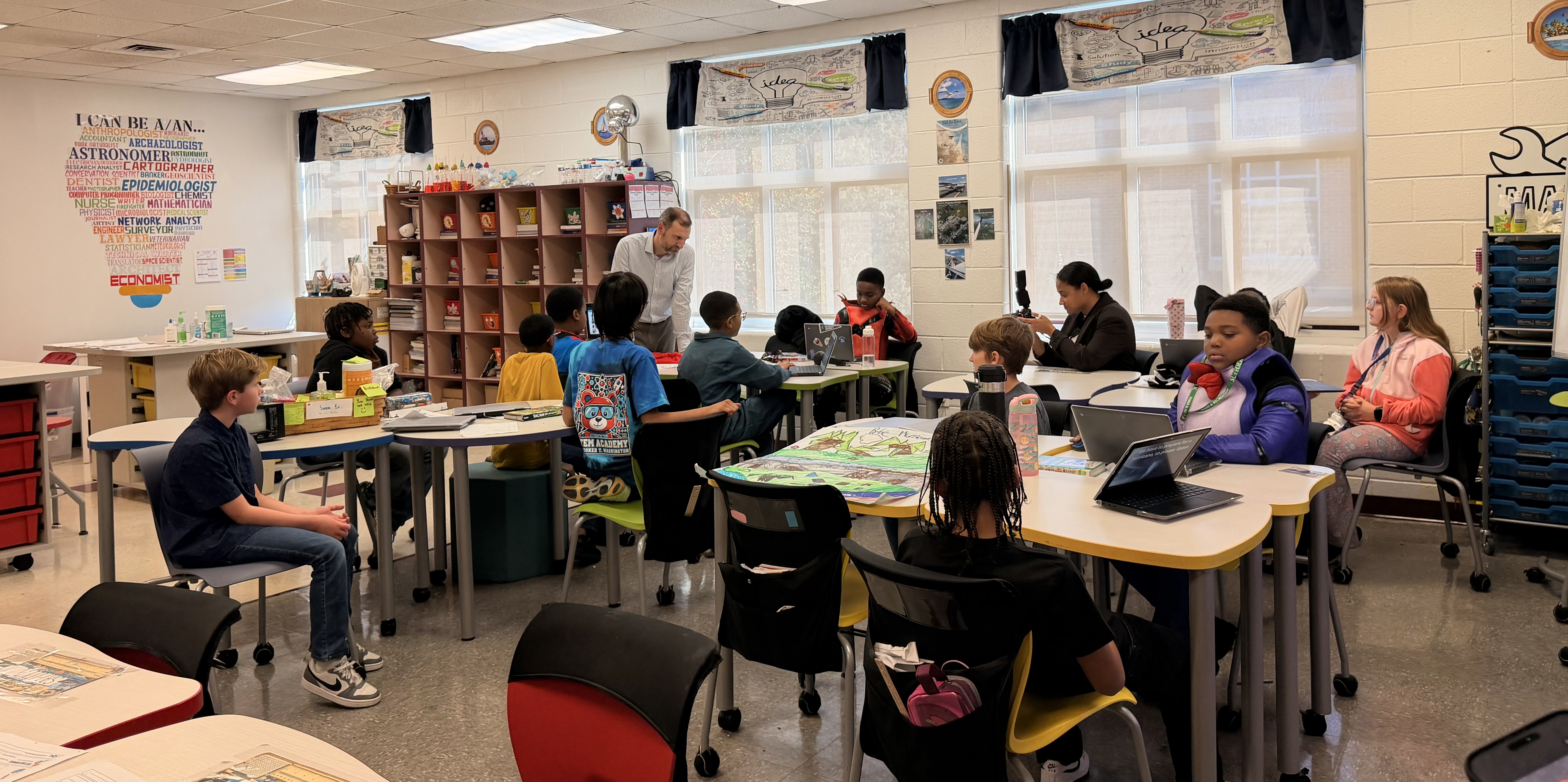
Virginia’s First Gentleman, Adam Spanberger, listens as two STEM Academy fifth graders present Operation StormWatch.
Caeden demonstrated an electronic eye model he programmed using LEGOEducation to replicate the technology that scans and sorts peanuts at the Birdsong Peanuts facility.
Sincere and Greysyn used Ozobots to illustrate how peanuts move through the supply chain and travel around the world.
Virginia’s First Gentleman, Adam Spanberger, tests the hydraulic system on a model dump truck built by STEM Academy students Nylah and Andy.
Kaitlyn McCoy and Kristen Duprey from ODU’s Center for Educational Innovation and Opportunity help Virginia’s First Gentleman, Adam Spanberger, use a VR headset to explore a virtual tour of the Birdsong Peanuts shelling facility.
Three STEM Academy fourth graders demonstrate their LEGO Science “Plant Power” model to Virginia’s First Gentleman, Adam Spanberger, who leans forward to watch.
Three STEM Academy fourth graders demonstrate their LEGO Science “Plant Power” model to Virginia’s First Gentleman, Adam Spanberger, who leans forward to watch.
Virginia’s First Gentleman, Adam Spanberger, listens as a STEM Academy student in a Halloween costume presents an Operation StormWatch display with storm-preparation tips for families.
STEM Academy Director Rachele Hirsch-Brooks briefs Virginia’s First Gentleman, Adam Spanberger, in the hallway outside a third-grade classroom about the students’ project and what he can expect to see during his visit.
Third-grade teacher Evelyn Trent shows Virginia’s First Gentleman, Adam Spanberger, the AI Storylines activity “Dr. Patel’s Field Journal,” in which students investigate sand and clay in water and connect their observations to Africa and Australia on a world map.
Virginia’s First Gentleman, Adam Spanberger, listens as two STEM Academy fifth graders share their Operation StormWatch presentations on their Chromebooks.
Dr. Karen Sanzo, executive director of ODU’s Center for Educational Innovation and Opportunity, speaks with Virginia’s First Gentleman, Adam Spanberger, in the STEM Academy library about ODU’s leadership in educational innovation and how partnerships with school divisions and community organizations support student learning.