



When you make a phone call, stream a video or rely on GPS to get where you’re going, you expect the network behind it to work — and to work securely. As wireless technology moves beyond 5G toward 6G, that expectation becomes even more important. These future networks will support everything from emergency response systems and connected vehicles to virtual reality and smart infrastructure.
At Old Dominion University, researchers are working to make sure the “brains” behind these networks can be trusted.
In a new scholarly book chapter, Sachin Shetty, Ph.D., a professor in the department of electrical and computer engineering and director of the University’s Center for Secure and Intelligent Critical Systems (CSICS), and Safdar Hussain Bouk, Ph.D., a research assistant professor, also at CSICS, explore a growing concern in future wireless systems: what happens if the artificial intelligence (AI) running the network is tricked?
To make this concept more accessible, the researchers point to one of the key innovations expected to power next-generation wireless systems: AI-driven network slicing, which allows a single network infrastructure to create multiple customized and secure virtual networks for different users and applications.

Modern wireless networks increasingly rely on AI to manage traffic and balance competing demands. One key tool is network slicing, which allows multiple virtual networks to run on the same physical system. That means first responders, hospitals, businesses and everyday users can all share the same network without interfering with one another and receive their respective tailored services.
“Imagine a highway where anyone is allowed to drive,” Dr. Shetty said. “Network slicing will instantly build private and invisible tunnels using the highway based on user preferences. For instance, a healthcare group would need a private and secure, high-speed tunnel for telehealth, while a social network group would get an isolated tunnel for sharing social media content. All the groups share the same road, but no one can see, cut off or steal data from your lane.”
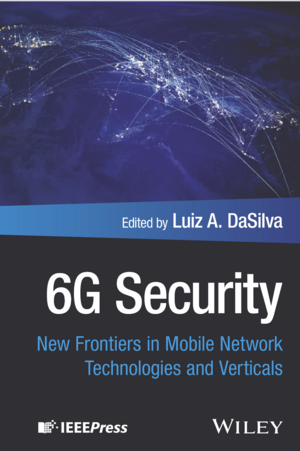
Their chapter, “Adversarial Machine Learning for Radio Access Network Slicing in NextG Communications,” appears in 6G Security: New Frontiers in Mobile Network Technologies and Verticals, a reference volume published by the Institute of Electrical and Electronics Engineers that brings together leading experts shaping the future of secure communications.
But, Dr. Shetty and Dr. Bouk show that the efficiency of network slicing comes with risks.
If bad actors learn how to confuse or manipulate the AI tool making these decisions, they could quietly degrade performance, disrupt critical services or weaken trust in systems people depend on every day. Rather than focusing only on how attacks might happen, the researchers also study how future networks can recognize when something is wrong and respond quickly to limit damage.
“Bad actors do not need to bring an entire network down to cause harm,” Dr. Bouk said. “Even small disruptions in how an AI system allocates resources can affect the services people rely on most. Our goal is to help future wireless networks detect those disruptions early, respond intelligently and continue operating when reliability matters most.”
The chapter was developed in collaboration with Drs. Yalin Sagduyu and Tugba Erpekte, both former Virginia Tech National Security Institute professors who are now scientists for Nexcepta, Inc., a technology research and development companythat specializes in advanced NextG communications, AI and cybersecurity.
The team’s work helps lay the foundation for wireless systems that are not only faster, but also dependable under pressure. As 6G networks take shape, the research highlights a simple, but vital goal: to ensure the invisible systems that keep society connected remain secure, resilient and ready when they’re needed most.
About the researchers
Dr. Shetty is no stranger to advancing innovation and research in technology and communications. He has authored and coauthored over 500 research articles in journals and conference proceedings and six books.
He has been developing models for detecting threats in cognitive radio networks, cloud auditing, moving target defense and blockchain-based data provenance. Currently, he is advancing cyber risk and resilience metrics to quantify and manage security posture in IT/OT environments.
Dr. Shetty has been named a 2026-2027 Old Dominion University Eminent Scholar, which is awarded tofull professors for exceptional contributions and exemplary service to the University. He has also been included in the top 2% most-cited scientists in the world, according to Stanford University’s ranking of the most influential subject matter experts.
Dr. Bouk has advanced the design, security and intelligence of wireless networks by bringing together networking, AI/ML, cybersecurity and intelligent infrastructure management to support secure, intelligent, adaptive and resilient next-generation networks.
He has published more than 125 journal and conference articles on wireless networks, AI/ML, IoT, cybersecurity and secure wireless infrastructures. Currently, he is involved in a funded project related to 5G testbeds, AI/ML-enabled O-RAN spectrum management and agentic AI-based threat modeling.
Bouk, S.H., Shetty, S., Sagduyu, Y. and Erpek, T. (2025). Securing Radio Access Network Slicing. In 6G Security: New Frontiers in Mobile Network Technologies and Verticals, L.A. DaSilva (Ed.). https://doi.org/10.1002/9781394292493.ch03