
Dental Hygiene Continuing Education Conference
Join us February 26-28, 2027 for our annual, intensive continuing education program. Earn 15 hours during one informational packed weekend. This is a virtual conference.
This year’s Winter Weekend courses will be offered virtually via live and recorded webinars. All sessions will be virtual.
All Winter Weekend attendees are invited to the in-person exhibit hall and reception event. The exhibit hall/reception will be on February 27, 2027 and open from 6:00 to 8:00 PM in the Priority Club. Refreshments will be provided!
Registration
Individual registration cost:
-
$200 Early bird (available until January 4, 2027)
-
$250 Standard (beginning January 5, 2027)
Registration open until February 12, 2027
If space is available, late registrations may be considered and a late fee will be added to the registration.
Session Information
Beyond the Operatory: Legislation, Professional Responsibility, and Patient Advocacy in Dental Hygiene
Friday, February 26, 2027
1:00-4:00 p.m. EST
Legislation and regulatory decisions influence the delivery of dental hygiene services, professional responsibilities, and patient access to safe, quality oral healthcare. This course examines current legislative developments affecting dental hygiene practice in Virginia and beyond, with an emphasis on scope of practice, delegation, licensure, patient safety, and ethical decision-making. Even if you are not a Virginia resident, the lessons learned and applications of this course extend beyond state lines.
Participants will explore the clinical implications of legislative changes, evaluate emerging challenges to professional practice, and examine the dental hygienist's role in communicating evidence-based information to policymakers and other stakeholders. Through case-based discussions and practical exercises, attendees will develop strategies for translating clinical knowledge into effective professional communication and patient-centered advocacy.
Objectives
- Identify current laws and regulations governing dental hygiene practice, including scope of practice, delegation, and professional responsibilities.
- Analyze recent legislative developments and their potential implications for clinical practice, patient safety, and access to oral healthcare.
- Evaluate ethical and clinical considerations associated with changes in dental workforce models, professional qualifications, and delegated services.
- Describe the relationship between professional responsibility, evidence-based practice, and patient-centered advocacy.
- Demonstrate effective strategies for communicating clinical evidence and patient safety considerations to legislators, policymakers, and other stakeholders.
- Apply legal, ethical, and clinical principles to case-based scenarios involving legislative and regulatory changes.
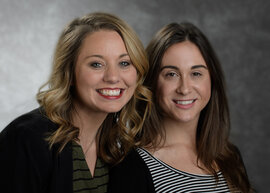
Presenters: Jessica Suedbeck, RDH, BSDH, MS, PhD(c) and Emily Ludwig, RDH, BSDH, MS, PhD(c)
Jessica Suedbeck, RDH, BSDH, MS, PhD(c) is an Associate Professor, Senior Clinic Coordinator, and Director of Clinical Education and Innovation in the Gene W. Hirschfeld School of Dental Hygiene at Old Dominion University (ODU). An educator, researcher, and passionate advocate for the dental hygiene profession, Jessica is dedicated to advancing clinical education, patient care, professional practice, and the well-being of dental hygienists. Her research focuses on occupational health and safety in dental hygiene, including ergonomics, musculoskeletal disorders, hearing loss, burnout, and implicit bias. Through interdisciplinary collaborations with experts in kinesiology, audiology, and public health, she has contributed to numerous peer-reviewed publications and presented her research at national and international conferences. She has received multiple research grants and professional recognitions, including the American Dental Hygienists' Association (ADHA) Standout Seven Researcher Award and the American Dental Education Association (ADEA) Gies Award for Junior Faculty Achievement. She is currently completing her PhD in Kinesiology and Rehabilitation Sciences.
Beyond academia, Jessica is actively involved in professional leadership and legislative advocacy at the state and national levels. She currently serves as President-Elect of the Virginia Dental Hygienists' Association (VDHA) and is a member of its Advocacy Committee, where she works alongside fellow dental hygiene professionals to address legislative and regulatory issues affecting scope of practice, professional standards, workforce development, and patient safety. Her involvement in advocacy reflects her commitment to protecting the integrity of dental hygiene practice, strengthening the profession's voice in healthcare policy, and promoting access to safe, high-quality oral healthcare. She is passionate about empowering dental hygienists to recognize their influence beyond the operatory and become informed, engaged advocates for their patients and profession.
Emily Ludwig, RDH, BSDH, MS, PhD(c) is an Assistant Professor and Undergraduate Program Director in the Gene W. Hirschfeld School of Dental Hygiene at Old Dominion University (ODU). Emily is committed to advancing dental hygiene education, evidence-based practice, and professional standards. Her research primarily focuses on ergonomics, musculoskeletal disorders, and diversity and implicit bias in oral healthcare. Her scholarly contributions also extend to dental workforce issues, including research examining professional attitudes toward dental therapists and emerging workforce models. Through interdisciplinary collaborations, she has contributed to numerous peer-reviewed publications, secured research funding, and presented at national and international conferences. Her professional recognitions include the American Dental Hygienists' Association (ADHA) Standout Seven Researcher Award and the American Dental Education Association (ADEA) William J. Gies Award for Junior Faculty Achievement in Allied Oral Health Education. She is currently completing her PhD in Kinesiology and Rehabilitation Sciences.
Beyond academia, Emily has demonstrated a longstanding commitment to professional leadership and advocacy at the local, state, and national levels. She has held numerous leadership positions within the Virginia Dental Hygienists' Association (VDHA) and Tidewater Dental Hygienists' Association (TDHA), including roles in membership leadership and professional representation. Her participation in legislative advocacy initiatives, combined with her research and mentorship related to emerging dental workforce models, reflects her interest in the relationship between professional regulation, education, and patient care. Emily is particularly passionate about promoting evidence-based decision-making, preserving professional standards, and encouraging dental hygienists to recognize their responsibility in shaping the future of the profession and advocating for safe, high-quality oral healthcare.
Part 1: White is Not a Diagnosis: Clinical Reasoning in the Interpretation of White Oral Lesions
Part 2: Reading Red: Why Red Oral Lesions Require Calm Clinical Reasoning
Friday, February 26, 2027
5:00 - 8:00 p.m.
White oral lesions are among the most frequently encountered findings in dental practice, yet they remain some of the most commonly misinterpreted. Their apparent simplicity often invites premature labeling, where surface appearance replaces biological reasoning. This CE reframes white oral lesions not as diagnoses, but as visible signals of underlying tissue response, microbial imbalance, or immune-mediated injury.
This presentation explores white oral changes through mechanism-based interpretation rather than visual assumption. Infectious, immune-mediated, reactive, and potentially dysplastic white lesions are examined as distinct biological processes that may share similar surface appearances while behaving very differently over time. Oral candidiasis is used as a central model to illustrate how microbial presence alone does not constitute disease, and how white coloration frequently reflects epithelial response rather than fungal burden. Immune-mediated conditions such as oral lichen planus are contrasted to highlight host-driven epithelial injury and the clinical risks of conflating fundamentally different mechanisms.
When dental professionals see red lesions, they might either feel concerned or completely overlook them. However, oral erythema is not a diagnosis in itself. Erythema is a visual sign that points to a tissue event, such as inflammation, thinning of the epithelium, infection, changes in blood vessels, trauma, or even dysplastic transformation. This course will help hygienists to go beyond memorization. By using real facts instead, participants will be able to build a more confident, organized approach to interpreting red oral lesions during patient care, using practical examples and visual guides. Participants will learn how to interpret behavior, surface changes, symptoms, patterns, and patient history, and turn uncertainty into clear clinical decisions rather than making quick diagnoses.
Objectives
- Identify common biological mechanisms that produce white oral lesions.
- Explain the biologic and vascular mechanisms responsible for the clinical appearance of oral erythema and red mucosal lesions.
- Explain why surface characteristics such as wipeability do not equate to diagnosis.
- Apply mechanism-based reasoning to differentiate infectious, immune-mediated, reactive, and potentially dysplastic white, erythematous and red-white lesions.
- Analyze clinical context, lesion behavior over time, and host factors when evaluating white oral findings.
- Evaluate when persistence or atypical behavior warrants referral or further investigation.
- Integrate descriptive documentation, risk assessment, and patient-centered communication strategies to support confident and clinically sound decision-making during oral pathology screening and comprehensive intraoral examinations.

Presenter: Andreina Sucre, RDH, MSc, International Dentist
Artificial Intelligence for Diagnosing and Classifying Periodontal Disease – The Future is Here
Saturday, February 27, 2027
9:00 a.m. - Noon EST
Artificial intelligence (AI) has the capability to improve the accuracy and efficiency of periodontal disease classification and diagnosis, which is vital to achieving the best outcomes for patient care. Currently, there has not been a significant improvement in the methodology for detecting bone loss and assessing the severity of attachment apparatus loss despite the recent updates in the periodontal classification system. This course introduces the clinician to artificial intelligence and its application to periodontal disease assessment. It provides an overview of AI concepts and terminology and explains how AI systems provide more efficient, reliable data configurations for appropriate therapy recommendations. Attendees will have an opportunity to visualize examples of AI applications depicting clinical attachment loss and compare the exam findings to non-AI periodontal charting.
Objectives:
- Describe how artificial intelligence (AI) is used in dentistry.
- Evaluate how AI-assisted radiographic analysis can help clinicians identify and quantify alveolar bone loss during periodontal assessment.
- Explain how AI can improve clinical efficiency and support calibration among clinicians when staging and grading periodontitis.
- Discuss how AI can help clinicians explain periodontal findings, support treatment acceptance, and inform individualized prognoses.
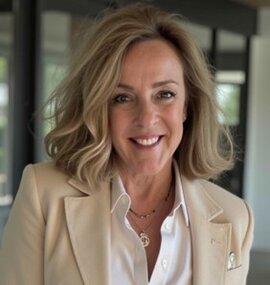
Presenter: Marianne Dryer, RDH, M.Ed
Marianne Dryer, RDH, M.Ed. is an international speaker, published author, and dental hygiene educator known for her expertise in periodontal instrumentation, ultrasonic technology, clinical calibration, and risk-based care. She earned her Bachelor of Science in Dental Hygiene from Old Dominion University and her Master of Education from Saint Joseph’s College of Maine. Marianne currently serves as the Program Director of Dental Hygiene at Cape Cod Community College in Massachusetts, where she leads curriculum innovation, faculty development, and competency-based clinical education. She is the 2025 Sunstar Award of Distinction recipient in Academia and the 2025 Dr. Esther Wilkins Distinguished Alumni Award honoree from the Forsyth School of Dental Hygiene. Marianne has authored multiple articles in dental hygiene journals and is recognized for her expertise in periodontal assessment, hand and ultrasonic instrumentation, and the use of artificial intelligence in periodontal care. She also leads faculty calibration seminars to help dental hygiene educators evaluate students’ clinical skills consistently.
Unleash the Power! Optimizing Ultrasonics for Individualized Periodontal Care
Saturday, February 27, 2027
1:00 - 4:00 p.m.
This unique session combines science and clinical demonstrations to explore the expanding world of ultrasonic debridement for the treatment of oral inflammation. Dani will focus on optimizing ultrasonic technology for the removal of biofilm, calculus and stain and provide ‘live’ demonstrations using a specialized camera. Emphasis will be placed on how to provide a positive patient experience while increasing the effectiveness and speed of an ultrasonic debridement procedure. You will be empowered to enhance your dental hygiene practice after completing this course!
Objectives
- Discuss when to use hand instruments, ultrasonic instruments, or both for supragingival and subgingival scaling.
- Identify and compare ultrasonic instrument designs and focus on matching tip selection to task - from biofilm to the most tenacious calculus.
- Analyze how the 3 A’s of ultrasonic technique influence the effectiveness, efficiency and comfort of an ultrasonic procedure.
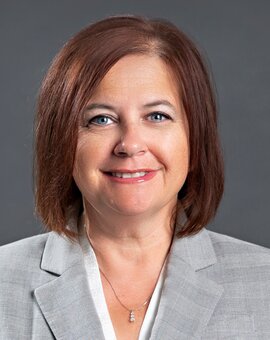
Presenter: Dani Botbyl, RDH
Dani Botbyl is an educator, author, and award-winning researcher and who been a trailblazer for the advancement of ultrasonic technology in dental hygiene practice and education in North America and abroad. The culmination of her knowledge and research has produced multiple publications in industry and peer-reviewed journals and textbooks. Dani has presented hundreds of courses to students, faculty and practicing clinicians nationally and internationally. Her passion for enhancing the expertise of dental hygienists creates learning experiences that are not to be missed!
Instrumentation Decoded: What Instrument to Use and When
Sunday, February 28, 2027
9:00 a.m. - Noon
Have you ever wondered what additional instruments are out there and how to use them? This comprehensive course will explore and compare a variety of sickle, curette, and diagnostic instruments including an evaluation of instrument design and how tooth and root morphology impact instrument selection. Through virtual demonstration, participants will expand their awareness of instruments outside of their region, state, or dental hygiene program gaining confidence and proficiency in selecting the correct instrument for improved patient outcomes.
Objectives
- Recall the composition of diagnostic, universal and area-specific instrument design including handle design, upper shank versus terminal shank, and adaptation of the cutting edge
- Expand diagnostic skills by utilizing advanced diagnostic instruments, enhancing participants’ ability to assess periodontal health with greater accuracy.
- Evaluate the specific uses, benefits, and limitations of dental instruments in a variety of patient case scenarios, improving instrument selection and clinical application
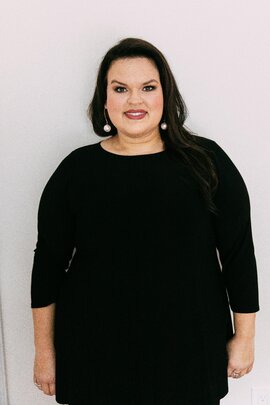
Presenter: L. Whitney Howerton, MDH, RDH, CDIPC
L. Whitney Howerton, MDH, RDH,CDIPC is a clinician, educator, international speaker and the VP, Sales & Marketing for Paradise Dental Technology. Whitney has shown her dedication to the dental hygiene profession through multiple leadership roles on a local, state, and national level. With experience as a full-time clinical and didactic instructor teaching a wide variety of courses including local anesthesia, head, neck and dental anatomy, special patient care, and advanced instrumentation, Whitney loves educating students and colleagues alike. In addition to her role at PDT, she currently serves as Adjunct Faculty in the Dental Hygiene Department at the University of Tennessee and practices clinically for a general dentist. She has built robust clinical education programs for both dental manufacturers and comprehensive healthcare centers focusing on the importance of improved patient outcomes and providing safe, quality care. In her free time, Whitney enjoys cooking, traveling, and getting lost in a great book.
For program questions, contact the School of Dental Hygiene at officeofodusodh@odu.edu.