


Inside We Talk About
- Welcome from Dr. Neukrug
- A conversation with Dr. Sylvia Nassar
- Updates from IIACT subdivisons
Welcome to the IIACT Summer 2026 Newsletter
from the Executive Director, Dr. Ed Neukrug
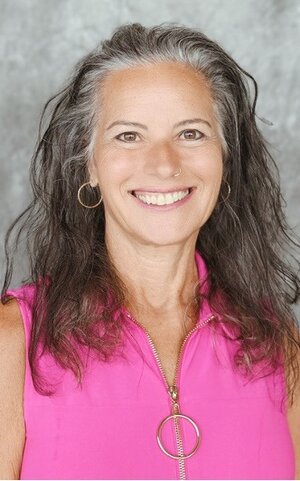
Welcome to the Summer IIACT newsletter! I’m delighted to share my interview with Dr. Sylvia Nassar, one of the architects of the Multicultural and Social Justice Counseling Competencies (MSJCC). Throughout her distinguished career as a counselor educator, Dr. Nassar has been a leading voice on multicultural issues, with particular expertise in the experiences of Arab Americans. Her insights are both timely and thoughtful, and I think you’ll find her perspective on the current state—and future direction—of multiculturalism in counseling both engaging and thought-provoking.
What I found especially compelling was our discussion about counseling theory. At a time when some question whether theory still has a meaningful place in practice, Dr. Nassar offers a nuanced perspective on why theory continues to matter and how every counseling theory is shaped by culture and cultural context. Whether you are a seasoned clinician, educator, or student, her reflections challenge us to think more deeply about the relationship between theory, culture, and effective counseling.
I hope you enjoy the interview as much as I enjoyed the opportunity to conduct it. As always, thank you for being part of the IIACT community. I hope you find something in this issue that informs, inspires, and perhaps even challenges your thinking.
Join IIACT For Free!
Stay connected with emerging research, new developments in counseling theory, and global and multicultural perspectives. Receive updates on professional resources, videos, podcasts, mini-grants, and other opportunities designed to deepen how we understand and apply theory in the counseling profession.
Join our free mailing list here, or view our website for free resources.
Biography
Dr. Nassar is currently a Professor of Counselor Education and Research Methods Coordinator for the College of Education at North Carolina State University. She earned her Ph.D. in Counseling and Counselor Education from the University of North Carolina at Greensboro in 1994 and her Master’s degree in Guidance & Counseling in 1984. She has served in a variety of clinical mental health, school, and college settings over the past 30 years, and her initiatives have included promoting the professionalism of counseling and counselor education.
Dr. Nassar’s scholarship spans multicultural, gender, and career development issues, with a special focus on Arab American acculturation and ethnic identity development. She has published approximately 100 books, refereed articles, and other instructional materials and delivered countless professional presentations.
Dr. Nassar recently served on the Association for Multicultural Counseling and Development’s Multicultural Counseling Competencies Revision Committee and on the Council for the Accreditation of Counseling and Related Educational Programs 2016 Standards Revision Committee. She has served as a board member for the Census Information Center Advisory Board to the Arab American Institute, the National Board for Certified Counselors, and the North Carolina Board of Licensed Professional Counselors. She is also a Senior Associate Editor for the Journal of Counseling & Development.
Culture, Context, and Counseling Theory
A Conversation with Dr. Sylvia Nassar
“Growing up between cultures taught me something that has stayed with me throughout my career: identity is rarely simple.”
Ed: Sylvia, I'd like to begin by asking how you first became interested in multicultural counseling. Was there a particular experience that led you in that direction?
Sylvia: I think my interest began long before I entered the counseling profession. Even as a child, I knew my life experience was different from many of my peers. My parents came from two very different cultures, and I grew up in the United States, attending American schools while living in a household shaped by very different traditions and values.
Looking back, I realize I was constantly moving between cultures. Although I lived in an American community, I also belonged to two cultural worlds at home. That experience shaped the way I came to understand people and eventually the way I understood counseling.
By the time I entered the profession, I had come to appreciate that counseling is always contextual. It isn't simply about applying techniques or theories. It's about understanding the person sitting in front of you—their family, culture, history, community, and worldview. What may be helpful for one individual may not fit another because every person's experience is filtered through those contexts.
Ed: It sounds as though growing up with parents from two different cultures left you feeling as though you never completely belonged to either community.
Sylvia: That's exactly right. My mother and grandmother raised me in a German-speaking household, and German was actually my first language. But because only one of my parents was German, I wasn't viewed as fully German. My father was Palestinian, and I had a similar experience there. I never completely fit into either community.
Growing up between cultures taught me something that has stayed with me throughout my career: identity is rarely simple. It isn't a single category. It's layered, evolving, and deeply influenced by context.
Ed: Another important part of your story is that both of your parents were refugees, not simply immigrants.
Sylvia: Yes, and that distinction profoundly shaped my understanding of the world. People often use the terms immigrant and refugee interchangeably, but they represent very different experiences. Many immigrants choose to leave their countries in search of opportunity. Refugees leave because they have little or no choice.
Both of my parents were refugees, and the uncertainty, loss, and adaptation that accompany that experience shaped our family throughout my childhood. Their lives were also deeply influenced by international politics and the relationship between the United States and the regions from which they came. As a result, I developed a perspective that differed from many of my peers, even those from immigrant families.
Ed: Your father's story seems fairly straightforward—he was Palestinian. But your mother's history is a little more complicated.
Sylvia: It is. For much of my life, I believed my mother was ethnically German. It wasn't until I was about fifty that I traveled with her to Europe to visit her birthplace and learned her story was much more complex.
She had been born in Eastern Europe, fled to Germany as a refugee after the war, and was eventually sponsored to immigrate to the United States when she was seventeen. Learning that history transformed my understanding of my own identity. It reinforced something I had already come to believe as a counselor: identity development never truly ends.
Ed: It sounds as though those experiences naturally led you toward multicultural counseling.
Sylvia: Absolutely. As I began working as a counselor, I recognized that questions of identity lie at the center of so many people's lives. Gender, ethnicity, culture, family, and community all contribute to how people understand themselves and, for those afforded the privilege to do so, the educational and career trajectories they choose.
Those interests initially drew me toward work in women's centers, career development, and international student services. Although those settings appeared very different, I eventually realized they were connected by a common theme: helping people understand who they were within the intersectional context of their lives.
As I became a counselor educator, those same interests shaped my scholarship, which expanded into multicultural counseling, advocacy, public policy, interdisciplinary collaboration, and social justice. Looking back, I can see that all of those areas grew from the same early experiences of navigating multiple cultures and trying to understand how identity develops.
Ed: One thing that strikes me is that your work seems to have moved from individual counseling toward broader advocacy and leadership.
Sylvia: I think that's true, and it's probably a natural progression for many counselor educators. You begin by helping individual clients.
Over time, you begin asking larger questions: How do we improve systems? How do we influence policy? How do we create environments where more people can thrive?
For me, advocacy wasn't a departure from counseling. It became another way of practicing counseling by addressing the conditions that affect people's lives before they ever enter our offices.
Ed: As your career developed, your scholarship increasingly focused on Arab American clients and communities. How did that become such an important part of your work?
Sylvia: It grew directly from my own experiences. Early in my career, I came to appreciate how profoundly ethnicity shapes people's lives, but I also realized that people of Arab ancestry were often misunderstood within American society.
Public perceptions have long been shaped by politics and media portrayals that reduce a rich and diverse group of people to a handful of stereotypes. As both a counselor and someone with Palestinian heritage, I wanted to help counselors understand Arab clients as individuals rather than through preconceived notions.
Ed: It seems your work has always been about helping counselors see the person before they see the stereotype.
Sylvia: Exactly. Stereotypes encourage us to make assumptions before we've taken the time to understand someone's lived experience. Counseling asks us to do exactly the opposite. It requires curiosity, humility, and a willingness to understand another person's worldview.
That's what multicultural counseling has always meant to me—not memorizing cultural facts, but approaching every client with genuine openness.
Ed: One thing I've always admired is that you've influenced the profession quietly. You've written extensively, served in leadership positions, and helped shape the field, yet you've never seemed interested in drawing attention to yourself.
Sylvia: That's probably accurate. One of my external reviewers for tenure and promotion once wrote that I do my work quietly, and that has always resonated with me. Although I've written extensively throughout my career, I've generally believed that my greatest influence has been through my leadership, policy work, collaboration, and capacity building.
I've never believed that facilitating change requires the loudest voice. Even thoughtful writing can be remarkably persuasive because it invites people to consider a different perspective without becoming defensive. That's always been more consistent with who I am.
Ed: Many people immediately think of your work on the Multicultural and Social Justice Counseling Competencies. How did your involvement in MSJCC begin?
Sylvia: By that point in my career, I'd already spent years working on professional standards-setting and policy development at the state and national levels. When the opportunity arose to help develop the competencies, it felt like the convergence of everything I cared about. It brought together multicultural counseling, advocacy, leadership, and professional policy into a single project.
Working with such an outstanding group of colleagues made the experience especially meaningful. We challenged one another intellectually while remaining focused on a common goal: helping counselors think more intentionally about culture, identity, privilege, and social justice. Looking back, it remains one of the most rewarding collaborations of my career.
Ed: I've always thought of the competencies as one of your lasting legacies. Few people have the opportunity to shape something that influences counselor education around the world.
Sylvia: Thank you. That's very kind. The competencies certainly became an important part of my professional life, but what I value most is the collaborative process that created them. It truly was a labor of love.
Ed: One of the themes I keep hearing is that culture isn't something we add to counseling theory—it's part of the lens through which we understand every client. How did that realization influence your thinking about counseling theories?
Sylvia: It gradually became clear to me that every counseling theory carries assumptions about people, relationships, change, and psychological health. Those assumptions may fit some clients very well, but not necessarily everyone.
Early in my career, I interviewed therapists who worked almost exclusively with clients and communities of Arab descent. One of the questions I asked was which counseling theories they found most effective. Their responses made me realize that theories aren't culturally neutral. Some fit certain populations more naturally than others.
That changed the question for me. Instead of asking, Which theory is best? I began asking, Which theory best fits this client within this cultural context?
Ed: Can you give an example?
Sylvia: Certainly. Take insight-oriented approaches. They can be tremendously valuable, but they assume that insight itself is highly valued. In some cultures, that isn't necessarily the case. If someone comes from a worldview that emphasizes family, collective responsibility, or practical action over individual self-exploration, then an exclusively insight-oriented approach may not resonate and can even be counterproductive.
Here's another example. In working with refugees, clinicians must be mindful that many have experienced persecution, displacement, and trauma. They may appear hypervigilant or suspicious, but those reactions often reflect lived experience rather than irrational thinking. If we interpret those responses only through a Western diagnostic lens or apply logic based on Western culture or worldview, we risk misunderstanding the client's experience. For me, theory has to begin with context.
Ed: So rather than asking clients to fit the theory, the theory should fit the client.
Sylvia: Exactly. Theories are valuable because they give us ways of understanding human behavior, but they should never become filters that prevent us from seeing the individual sitting in front of us.
Ed: That raises another question. If every theory has limitations, are there elements of counseling that are universal?
Sylvia: I think there are. Empathy is certainly one of them. But I don't think empathy simply means reflecting feelings or demonstrating warmth. Genuine empathy requires a sincere effort to understand another person's worldview.
To me, that's what multicultural counseling has always emphasized. It isn't about becoming an expert on every culture. It's about approaching each client with enough humility to recognize that they are the expert on their own experience. Without that attitude, I don't think any theory is likely to be fully effective.
Ed: Many people associate empathy primarily with person-centered counseling, yet you're describing it as something much broader.
Sylvia: I do think it's broader. Empathy is the foundation that allows every other intervention to work. Before we decide what theoretical approach is appropriate, we first have to understand how the client makes meaning of their world.
That's one reason I've always appreciated constructivist and postmodern approaches. They begin by inviting clients to describe their own realities rather than assuming the therapist already knows how those realities should be interpreted. Those approaches encourage curiosity rather than certainty.
Ed: Yet you've never suggested abandoning theory altogether.
Sylvia: Not at all. I've always considered myself intentionally eclectic. Counselors should understand theories well enough to appreciate both their strengths and their limitations. The operative word is intentional. We shouldn't borrow theoretical approaches or techniques randomly. We should know why we're choosing a particular intervention for a particular client at a particular moment. Theory should guide our thinking, but it should never replace thoughtful clinical judgment.
Ed: Listening to you, I'm struck by the fact that your work has never really been about particular cultural groups. It's really about learning how to approach every client.
Sylvia: Yes, I’d say that’s true. One of the things I appreciated most about developing the Multicultural and Social Justice Counseling Competencies was that they underscored a simple truth: every counseling relationship is new. Every client and every counselor brings a unique history, identity, family, community, and worldview into the counseling room.
Sometimes multicultural counseling is misunderstood as learning facts about different cultures. That isn’t the goal. The goal is to develop the ability to approach every person with openness, curiosity, cultural humility, and respect. When we do that, we’re not making exceptions for particular clients—we’re practicing good counseling.
I think that’s one of the enduring messages of the competencies.
Ed: Looking back over your career, what gives you the greatest satisfaction?
Sylvia: That's an interesting question. I'm certainly grateful for the publications, leadership opportunities, and the work on the competencies. But when I think about what has mattered most, I keep coming back to the people. The students I've taught and mentored, the colleagues I've collaborated with, and the counselors I've met throughout the world have enriched my life in ways no professional accomplishment ever could.
I also hope I've encouraged others to remain curious throughout their careers. Counseling is a profession that keeps asking us to learn—to question our assumptions, to listen carefully, and to keep growing alongside the people we serve. If I've helped foster that spirit in even a few counselors, I'm deeply grateful.
Ed: As I've listened to your story today, one phrase keeps coming to mind: quiet leadership. You've had a profound influence on counselor education through your teaching, scholarship, mentoring, and professional service, but you've never seemed interested in personal recognition.
Sylvia: I've always believed that the most meaningful contributions often happen one conversation, one student, or one collaboration at a time. Most of us won't change our profession through a single accomplishment. We change it by investing in people, sharing ideas generously, and helping others continue the work. That's always felt like the most rewarding part of this profession.
Ed: After knowing you for more than thirty years, I discovered there was still so much I didn't know about your story. Thank you for sharing it.
Sylvia: Thank you, Ed. I've enjoyed reflecting on this journey with you. Looking back reminds me how fortunate I've been to learn from so many remarkable people. In the end, that's what I hope endures—not simply the work itself, but the relationships, the shared learning, and the opportunity to help others carry the profession forward.
Division Updates
Directed by Drs. Chris Sink & Mike Kalkbrenner
The Research Subdivision is developing Spanish and Simplified Chinese translations of Ed Neukrug’s Theoretical Orientation Survey (ENTOS, 2026), a standardized tool that measures a clinician’s primary theoretical approach to counseling. The English version is up and running. It can be accessed here >.
See our recent publication on the validity of the new instrument:
Neukrug, E. S., Kalkbrenner, M. T., Sink, C. A., & Kubilus, R. (2026). Development and initial validation of scores on Ed Neukrug’s Theoretical Orientation Survey (ENTOS): A national survey of counselors and counselors-in-training (C/Ts). Measurement and Evaluation in Counseling and Development, 1-20. https://doi.org/10.1080/07481756.2026.2658015
The research subdivision is about to launch a study to identify the most influential counseling theorists of the 21st century and the theoretical orientation most clinicians adhere to. The data collection phase will soon be underway. For more information or interest in supporting these projects, please get in touch with Mike Kalkbrenner or Chris Sink.
Directed by Drs. Courtland Lee & Barbara Herlihy
The Global Affairs Subgroup's proposal for its South American research project was accepted for presentation at the 2026 International Association for Counseling Conference, which will be held in Punta del Este, Uruguay, from November 20–22, 2026. The presentation title is "South American Perceptions of Counseling Theoretical Approaches."
Directed by Dr. Sylvia Nassar
Plans continue to move forward for Cognella Academic Press to offer continuing education credit for eight vodcasts produced by Drs. Sylvia Nassar and Daniel Gutierrez. Featuring several prominent counselors and counselor educators, the videos will be hosted on the Cognella website, which will be accessible via a link on the IIACT website. These low-cost continuing education credits will be available to the public and will include:
- Theory in Context: Clinical Practice with Latine and Immigrant Communities
- Theory in Context: Clinical Practice using Internal Family Systems with LGBTQ+ Communities
- Theory in Context: Clinical Practice with Asian LGBTQ+ Communities Theory in Context: Clinical Practice with Guyanese Diasporic Communities
- Theory in Context: Clinical Practice with African American/Black Men Theory in Context: Clinical Practice of Black Mental Health
- Theory in Context: Clinical Practice with Black Families
- Theory in Context: Clinical Practice with Black/African American Adolescent Boys
Dr. John Norcross
Dr. Norcross recently co-authored the 2026–2028 edition of Insider’s Guide to Graduate Programs in Clinical and Counseling Psychology with Dr. Michael Sayette. In addition to the new publication, Dr. Norcross continues to prepare updated editions of his other books and deliver professional talks.
Norcross, J. C., & Sayette, M. A. (2026). Insider’s guide to graduate programs in clinical and counseling psychology: 2026–2028 edition. Guilford Press.
Dr. Danica Hays
Dr. Hays, together with Dr. Bradley Erford, has authored the fifth edition of Developing Multicultural Counseling Competence: A Systems Approach, scheduled for release in early fall. The updated textbook incorporates the latest scholarship on applying counseling theories and interventions with multicultural populations.
Hays, D. G., & Erford, B. T. (2027). Developing multicultural counseling competence: A systems approach (5th ed.). Pearson.
Dr. Bruce Wampold
Dr. Wampold was recently quoted in an article in the New York Times:
“Bruce Wampold, an author of The Great Psychotherapy Debate, told me that the most durable finding is that talk therapy works (whew!) at least as well as antidepressants but often with longer-lasting benefit and fewer side effects. But research has also found that some therapists — supershrinks, in the literature — were much better than others for reasons that did not correlate with whether they had a Ph.D. in psychology or a master’s in social work, their preferred theory of therapy, or even how long they’d practiced.”
Duane, D. (2026, August 9). Therapy needs therapy. Neuroscience can help. The New York Times. https://www.nytimes.com/2026/08/09/opinion/therapy-neuroscience-perception.html
What is Your Theoretical Orientation?
In addition to research, IIACT houses theoretical resources. For instance, you will find an instrument in which you can assess your theoretical orientation.
This instrument, currently under revision and validation, examines the values and beliefs associated with 13 theories (15 in the revised version) and enables respondents to identify the theories and theoretical schools to which they are most closely affiliated. The theoretical orientation scale is available in English, Spanish, and Simplified Chinese (Mandarin).