


For more than three decades, advances in antiretroviral therapy (ART) have transformed HIV from a fatal disease into a manageable chronic condition. Individuals who consistently take their medications can achieve undetectable viral loads, allowing them to live long, healthy lives while preventing transmission of the virus. Yet one of the greatest remaining challenges is not the effectiveness of the medications themselves – it is ensuring that patients are able to take them consistently.
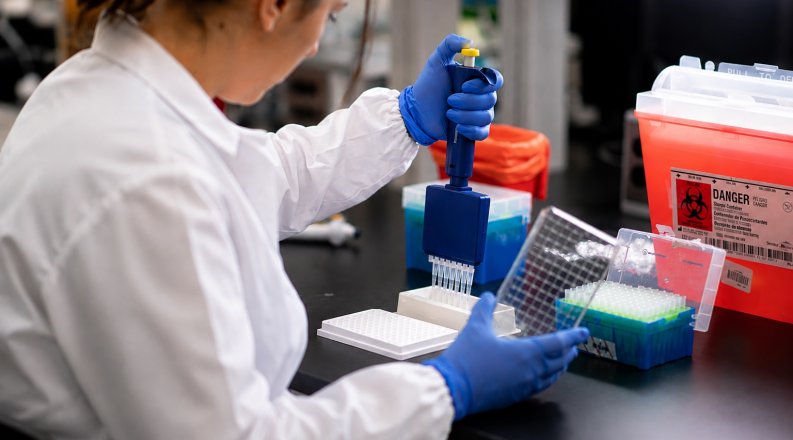
For clinicians working in Ryan White-funded clinics, community health centers, and public health programs, accurately monitoring medication adherence remains difficult. Current approaches often rely on patient self-report, pharmacy refill records, or centralized laboratory testing. Viral load testing, while highly effective, requires specialized laboratory infrastructure and often takes days or weeks to return results. By the time clinicians receive those results, valuable opportunities to intervene may already have been lost.
To address this challenge, an interdisciplinary team at the Center for Bioelectronics at Old Dominion University, led by Principal Investigator Dr. Gymama Slaughter, is developing the e-Chip – a low-cost, point-of-care diagnostic designed to measure antiretroviral drug levels from a simple urine sample during a routine clinic visit. Supported by a $200,000 Virginia Innovation Partnership Corporation (VIPC) Commonwealth Commercialization Fund (CCF) award including institutional match, the project builds upon more than a decade of federally supported research in bioelectronics and electrochemical biosensing, translating laboratory innovations into practical tools for HIV care. The technology is designed to provide quantitative results in less than 10 minutes with greater than 95% sensitivity and specificity.
Unlike conventional laboratory testing, the e-Chip is designed to operate much like a portable glucometer, providing rapid results with the potential for mobile connectivity and electronic health record integration. By delivering objective adherence information during the patient visit, clinicians can immediately identify individuals who may be struggling with treatment adherence and provide personalized counseling or support before they leave the clinic.
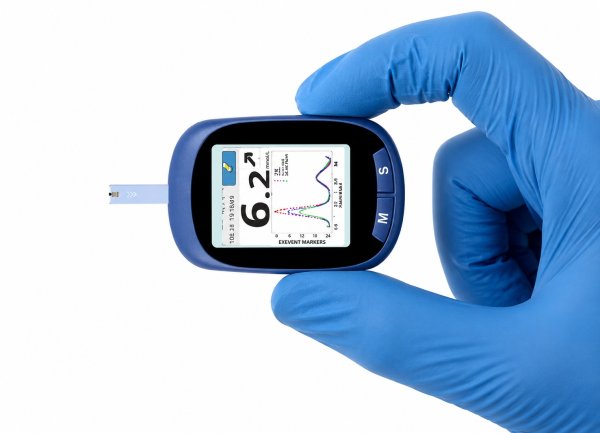
The technology combines advances in electrochemical biosensing, molecular recognition, and low-cost printed electronics to create a portable platform that can be deployed in a variety of healthcare settings. The goal is to make objective adherence monitoring accessible not only in large medical centers but also in community clinics and resource-limited environments where rapid decision-making is especially important.
Improving adherence has implications far beyond individual patient care. Consistent ART use reduces the risk of treatment failure and drug resistance, lowers healthcare costs associated with hospitalization and advanced disease, and supports national efforts to reduce HIV transmission. Earlier identification of adherence challenges also enables healthcare providers to intervene before health outcomes worsen, improving long-term patient retention in care.
In collaboration with Old Dominion University's Office of Innovation and Commercialization, the research team is completing product optimization while preparing for clinical validation and future FDA 510(k) submission. Long-term implementation through Ryan White-funded clinics, state health departments, and community healthcare organizations could provide clinicians with a practical tool for improving treatment adherence while generating real-world data to inform public health policy and strengthen efforts to end the HIV epidemic.
As healthcare increasingly shifts toward decentralized, patient-centered models, technologies such as the e-Chip illustrate how point-of-care diagnostics can bridge the gap between laboratory innovation and everyday clinical practice. Meeting patients where they are – both geographically and clinically – has the potential to improve health equity, strengthen HIV care, and bring the nation one step closer to ending the HIV epidemic.