


Researchers at Old Dominion University are turning to an overlooked source to better understand and address persistent gaps in maternal health: doulas.
Doulas assist families before, during and after childbirth, offering emotional support, education and advocacy. They are trained, nonmedical birth support professionals who do not replace medical providers, but instead complement clinical care. Doulas help clients navigate decisions, ask questions and feel supported throughout the birthing process.
A Hampton Roads-based research project is examining how doulas are working alongside families and healthcare providers, and how their experiences could help improve reproductive health across the region and beyond.
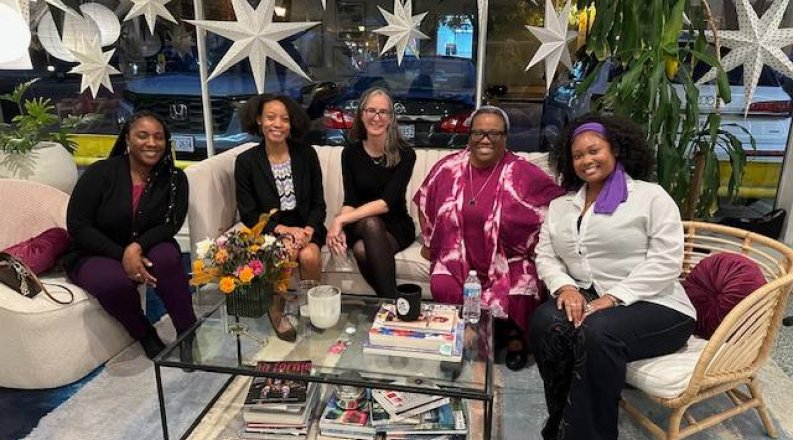
The research is led by Elizabeth Groeneveld, Ph.D., professor and chair of the Department of Women’s and Gender Studies within the College of Arts and Letters, and DaShaunda Taylor, Ph.D., assistant professor in the Department of Epidemiology, Biostatistics and Environmental Health within the Joint School of Public Health at Old Dominion University, a partnership with Norfolk State University.
“A birth doula provides a presence in the room when labor is taking place: when everything is going smoothly, a doula might be cheering on the family and taking lots of pictures; and if things are not going quite so smoothly, a doula can be a calming presence who creates a bit of space for asking questions,” Dr. Groeneveld said.
The study combines surveys and in-depth interviews with doulas in Hampton Roads, focusing on their training, relationships with health systems and the barriers they face in their work. Early findings point to a diverse workforce, including Black, white and Hispanic doulas many of whom are highly educated, but encounter challenges, such as inconsistent insurance reimbursement, financial strain and difficulties balancing work and family life, and how that affects care provided to patients. The study seeks to understand how doulas training, background and integration into local healthcare systems can improve maternal mortality rates.
Those challenges exist against a backdrop of stark and persistent disparities in maternal and infant health. In the United States, maternal mortality rates remain significantly higher than in other high-income countries, and the burden falls disproportionately on Black women. National data shows Black women are more than twice as likely to die from pregnancy-related causes as white women. In Virginia, similar disparities persist across outcomes, including preterm birth, low birth weight and infant mortality. That connection remains even after factoring in variables, such as smoking, education and income levels among parents.
Dr. Taylor emphasized that these gaps are not explained by individual behaviors or education levels. Instead, the gaps point to broader systemic issues, including unequal access to quality care and economic inequality. Researchers say doulas can be especially beneficial for marginalized populations, helping clients advocate for themselves and better understand their options during pregnancy and childbirth.
The team plans to share its findings with advocacy groups that are working to expand doula access and integration into healthcare systems. While it is too early to predict specific policy outcomes, researchers hope the project will encourage greater acceptance of doulas in clinical settings and inform efforts to reduce disparities.
Beyond traditional data collection, the research also incorporates community storytelling. Last November, researchers partnered with local writers to share doulas’ firsthand experiences through a public photography exhibition, storytelling and online resources.
The goal, researchers said, is to make the data more accessible and more human.
“We wanted to bring the data to life,” Dr. Groeneveld said. “A lot of people don’t realize the impact doulas have. Hearing real stories helps people understand why this work matters.”
Those stories highlight not only the practical support doulas provide, but also the importance of cultural connection. Researchers found that shared identity and cultural understanding between doulas and clients can help build trust and improve communication during a deeply personal and sometimes stressful experience.
They also see their work as a potential model for other regions.
“We hope that the research provides a useful model for other research groups seeking to amplify doula voices in their communities,” Dr. Groeneveld said.
By bridging the gap between rigorous academic research and the deeply human experiences of doulas, Drs. Groeneveld and Taylor are paving the way for a more equitable healthcare system, ensuring that every mother receives the safe and compassionate care they deserve.