


For many children born with a serious heart defect, surgery is only the beginning of their journey. Even after successful treatment, many go on to develop hypertension and other cardiovascular complications later in life.
An Old Dominion University researcher believes there may be a critical opportunity to change that outcome.
Based on data from the Centers for Disease Control and Prevention (CDC), congenital heart defects affect nearly 40,000 babies in the United States each year, and more than 2,000 are born with coarctation of the aorta (CoA). It is one of the most critical, but common forms of congenital heart disease. Children with CoA have an average life expectancy of around 60 years.
These patients often undergo surgery early in life and are considered successfully treated in most cases. However, although surgical advancements have improved average life expectancy, survival remains reduced, because many patients develop late complications, most commonly hypertension, which is often called the “silent killer” as it can progress for years without noticeable symptoms, while gradually damaging the heart, blood vessels, brain and kidneys.
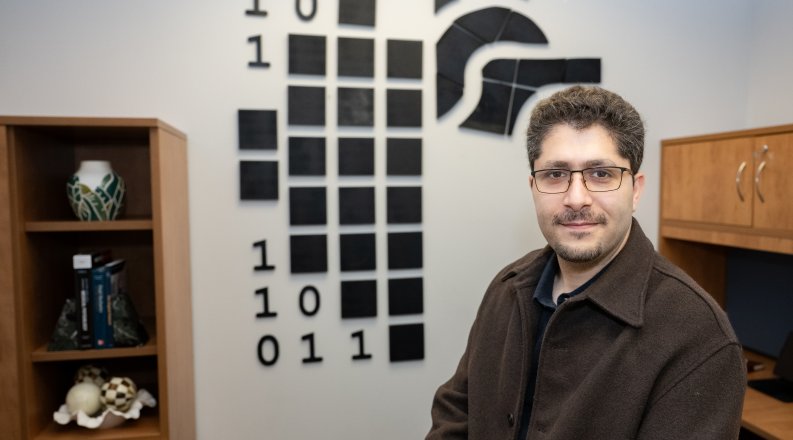
Arash Ghorbannia, Ph.D., an Old Dominion University research assistant professor, who specializes in medical modeling and simulation, is working to change that trajectory.
A “Golden Window” for Treatment
Just four years after finishing his Ph.D. in 2022, Dr. Ghorbannia earned a 2026 American Heart Association (AHA) Career Development Award. The award is a three-year, $231,000 grant supporting his research in hypertension prevention, with a period of performance from April 1, 2026, through March 31, 2029.
Over the past six years of working in higher education, Dr. Ghorbannia has collected valuable data by tracking clinical evidence of hypertension progression in children with congenital heart defects, particularly CoA, where the aorta is narrower than normal and makes it harder for blood to flow from the heart to the rest of the body.
“In early childhood, there’s a golden window of aortic plasticity when the aorta is still growing and adapting that remains underutilized in treatment,” Dr. Ghorbannia said. “Usually, kids who are diagnosed early with congenital heart disease have surgery and then are often considered cured until they develop hypertension later in life. If hypertension has not yet reached a clinically diagnosable stage, researchers and clinicians may have a critical opportunity to intervene early and reduce the risk of serious long-term complications.”
Hypertension is a major risk factor for coronary artery disease, heart failure, ventricular hypertrophy, stroke and aneurysm. It is a major reason cardiovascular disease remains the leading cause of death worldwide.
Preventing Hypertension Before It Starts
The first phase of Dr. Ghorbannia’s project for AHA will use wearable devices, such as smartwatches, to identify the types of activities and lifestyles that can help these young patients prevent hypertension.
“With the assistance of AI, we can collect data from wearable devices and build digital twin models, so we can model or track progression over time and learn, for example, what type of activities they are doing that are beneficial and which ones are not,” Dr. Ghorbannia said.
These devices will help Dr. Ghorbannia track how a person's blood flow changes throughout the day and identify early signs that could lead to high blood pressure. He will use this information to build a personalized system, called iTwin, which creates a virtual model of a person's heart and blood vessels to help predict and improve their heart health. The goal is to give patients personalized, real-time strategies to help lower their health risks and ultimately prevent hypertension.
“Our aim is to improve these patients’ quality of life and long-term health, helping them to live healthier and longer lives,” Dr. Ghorbannia said.
Building a Long-Term Picture of Heart Health
The next phase of the project will focus on using the same monitoring approaches to better understand how patients’ heart health changes over time after early surgery.
“Eventually, we hope to expand this work through collaboration with the Children’s Hospital of The King’s Daughters and patients who have had the first CoA surgery,” Dr. Ghorbannia said. “By analyzing their activity patterns and collecting long-term health data, we can continue to train AI models to identify personalized adjustments that may improve their health outcomes and mitigate the risk of hypertension later in life.”
About The Researcher
Dr. Ghorbannia works at Old Dominion University with Health, Education and AI Learning (HEAL), which partners with the National Center for Collaboration in Medical Modeling and Simulation (NCCMMS). Both organizations operate under the umbrella of the University’s Office of Enterprise Research and Innovation (OERI).
Dr. Ghorbannia’s work is supported by the AHA through a grant for “Digital Twin Guided Prevention of Hypertension in Coarctation of the Aorta Survivors,” under grant 26CDA1588384.