

Spring 2026
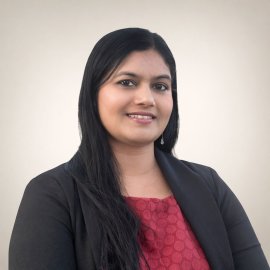
Dr. Sujatha Alla is a Professor of Human Systems Engineering whose interdisciplinary work encompasses systems engineering, robotics, artificial intelligence, and public health. Her research is focused on building collaborative partnerships across ODU and beyond to develop innovative, scalable solutions to complex healthcare challenges.
Dr. Alla’s current projects reflect a commitment to real-world impact. She is developing adaptive path planning for nanosurgical robots aimed at precision cancer drug delivery, as well as a programmable service robot system that models hospital traffic, RFID interaction, and robotic readiness. She is also in the process of establishing a nano-surgical robotics lab at ODU!
In the classroom, Dr. Alla emphasizes applied learning and systems thinking. She views teaching as a dynamic, reflective process that requires continuous learning and adaptation. She encourages students and early-career scholars to stay curious, seek out interdisciplinary collaboration, and remain open to evolving ideas and approaches.
Beyond campus, Dr. Alla serves her community as a volunteer EMT with Virginia Beach Volunteer Rescue, bringing the same commitment to care and service that shapes her research and teaching.
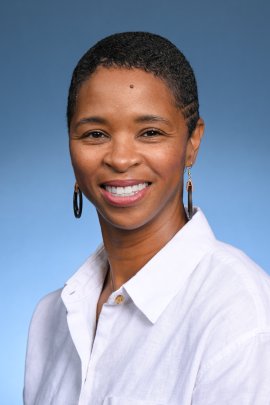
Dr. DeAnne Davis Brooks, Director of the Doctor of Applied Science in Kinesiology program, brings a dynamic blend of scholarship, teaching, and community engagement to her work. Her academic path began in exercise science and developed further during her EdD, where she balanced research with coaching collegiate track and field. A pivotal moment came when a professor invited her to serve as a teaching assistant—an experience that sparked her interest in education. As she puts it, she was drawn to “the idea of being a scholar” while also building a meaningful career.
Dr. Brooks’s teaching philosophy centers on empowerment and inclusivity. She describes her approach as “all about helping students find their own voice,” and sees herself as a facilitator who creates opportunities for students to grow and succeed. Influenced by critical pedagogy, she emphasizes active, relevant, and responsive learning and the importance of adapting to students’ needs, noting that “if students aren’t learning, then you’re not teaching.”
Beyond the classroom, Dr. Brooks is dedicated to expanding access to kinesiology education for practitioners and connecting academic work to real-world impact, particularly through promoting lifelong physical activity. She maintains balance through strong time management and intentional boundaries. Her advice to emerging scholars is to “be authentic and know your worth.”
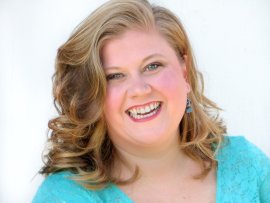
Kate Clemons is the Theatre Program Director and Lecturer in the Department of Communication and Theatre Arts. Coming from a family of artists, she saw teaching as a way to pair creative work with stability. “For me, there is nothing more rewarding than being able to put food on the table for my family while having a job that I love,” she says. Academia, she adds, allows her to remain a lifelong student while mentoring others toward meaningful careers.
Kate’s early training in conservatory and professional theatre shaped her teaching philosophy. In an apprenticeship-based field, she experienced firsthand how access to mentors can determine opportunity. “I want to become the mentor to my students that I didn’t have,” she explains, emphasizing her commitment to guiding students through both the artistic and professional realities of the industry.
Her approach to teaching centers on passion, community, and love. “My goal is to help create people I would want to work with in the industry,” Kate says. She believes great teachers lead with love—love for the subject, the students, and the work itself. “Love is always the strongest choice,” she says. Her advice to students and new faculty is to build community and seek collaboration. “Academia can be siloed,” Kate notes, “but if you reach out, someone will most likely reach back.”
Outside the classroom and off stage, Kate spends her time raising two toddlers with her husband and rescue dog. A self-described recovering perfectionist, she is now working to define success on her own terms. “I am not just a professor,” she says. “I am also a human, a mom, and a wife.”
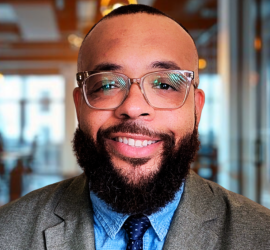
Dr. Carrington Faulk brings a dynamic and purpose driven perspective to the Strome College of Business, where he teaches marketing courses on campus while also running an online business as a content creator and digital marketing strategist. After more than a decade of teaching at Heritage High School and working in the advertising industry, Dr. Faulk transitioned from K–12 education to higher education, guided by a deep belief that he was called to teach. A Google for Education Certified Trainer and proud fraternity member, he views teaching as the foundation of all professions, noting that teaching begets everything.
A strong advocate of the Socratic method, Dr. Faulk is passionate about helping students think differently and more creatively. As he shared, “I want to help students change their thinking. We stopped asking questions. We need to ask more questions.” He believes great teaching is about awakening students and sparking curiosity, creativity, and imagination, and he is particularly interested in Black futurism and its possibilities within education and business. As the first Black faculty member in the Thurmond School of Professional Sales and Negotiations, Dr. Faulk is intentional about presence, purpose, and impact.
Outside the classroom, Dr. Faulk centers himself through working out, music, and family life. He is a gospel artist and producer who enjoys hiking, cooking, eating, and grilling, and he and his wife are raising four children together. His advice to new faculty is to actively onboard themselves by seeking resources and support, recognizing that everyone’s needs are different. He also encourages reflection beyond titles and roles, challenging faculty to ask if work were taken away, who would we be.
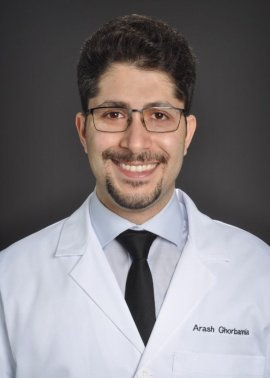
Dr. Arash Ghorbannia is a Research Assistant Professor of Medical Modeling and Simulation, working across the Virginia Health Sciences (VHS) and the Office of Enterprise Research and Innovation (OERI). His interdisciplinary training spans mechanical, aerospace, and biomedical engineering, shaping his research grounded in collaboration and real-world impact.
Dr. Ghorbannia was drawn to academia by the opportunity to pursue meaningful research at the intersection of health and education, particularly in areas like cardiovascular diseases, where engineering can directly support clinicians and improve outcomes for children. His work focuses on developing computational “digital twins” of biological systems, integrating artificial intelligence, high-performance computing, and physics-based modeling to support diagnosis, treatment planning, and medical education. He emphasizes flexibility and responsiveness, adapting to the needs of his projects and the capacity of his team, leveraging expertise through integration.
Dr. Ghorbannia views mentorship as an evolving process, supporting students with both short- and long-term goals as they grow in their careers. He encourages active learning through real-time feedback, helping identify where students are thriving or struggling and adjusting accordingly. For him, great teaching is collaborative, reflective, and student-centered.
To maintain balance, he breaks long-term goals into manageable steps and values collaboration with others to navigate complex challenges. His advice to new faculty and graduate students is to stay focused, seek out partnerships, and avoid getting overwhelmed by the vastness of information as progress comes through steady, intentional work.
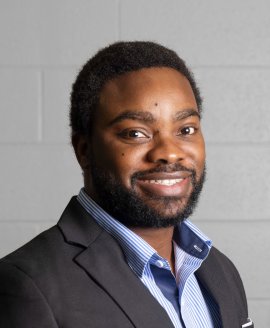
Dr. Temitope Idowu is an Assistant Professor in the Department of Civil and Environmental Engineering, where his work focuses on coastal sustainability, resilience, and adaptation. His research integrates flood risk modeling, GIS, remote sensing, and machine learning to address environmental challenges and strengthen coastal communities.
His path to academia was shaped by both industry and teaching experiences. After initially working in the industry, he discovered a passion for teaching and research, encouraged by mentors who recognized his strengths in both areas. Across Nigeria, Kenya, and the United States, influential advisors helped shape his trajectory, instilling in him a strong work ethic, a commitment to impactful research, and a deep appreciation for mentorship.
Dr. Idowu’s teaching philosophy is experiential, practical, and grounded in empathy. He believes students learn best by actively engaging with real-world problems and values supporting them through challenges both inside and outside the classroom. For him, a great teacher leaves a lasting, positive impact, and is someone students remember as having truly made a difference. Beyond academia, he sees his work as contributing to a more resilient world while preparing the next generation of engineers to solve pressing societal challenges.
As a new faculty member, he maintains balance by focusing fully on each role he embodies—educator, researcher, husband and dad to his young son. His advice is to love what you do, build meaningful connections, and take time to rest.
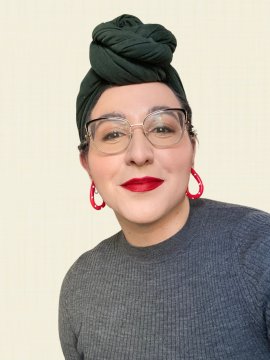
Maddy Mikovits, the Education Librarian at Old Dominion University, found her path to academia through early experiences in university libraries. As an undergraduate volunteer, she built close relationships with librarians who became mentors, sparking her passion for supporting students and helping them navigate academic spaces. These experiences inspired her to pursue a career rooted in mentorship, teaching, and access to information.
Maddy credits mentors who “gave [her] every opportunity to learn about librarianship,” and whose guidance continues to shape how she works with students today. These influences inform her approach, which centers on creating a supportive environment where students feel comfortable learning through trial and error. She aims to be “a non-judgmental place where students can learn and make mistakes.”
Maddy believes great teaching involves fostering trust and open dialogue, encouraging students to ask difficult questions and engage deeply with research. Her work extends beyond academia by equipping students with critical research skills and helping shape future librarians through her role at Virginia’s only Library and Information Studies school.
As she continues to grow in her career, Maddy prioritizes balance by setting boundaries, unplugging from work when possible, and spending quality time with her partner and friends. Her advice to others reflects her own journey: it’s okay not to have all the answers, “no one is born knowing a culture,” and learning comes from curiosity and asking questions.
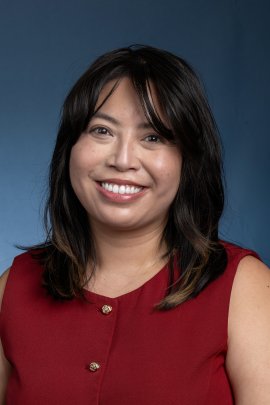
Linh Nguyen is the Sciences Librarian at Old Dominion University, supporting faculty, staff, and students with research consultations. An ODU alumna, she earned her Master of Library and Information Science in 2024 and is pursuing a Master of Public Health with a focus on Health Behavior and Health Promotion. Linh’s approach emphasizes flexibility and partnership. “There is no one way of teaching—it’s very creative,” she explained, encouraging students to ask questions and embrace uncertainty. She believes great teaching is collaborative: “Being a great teacher is being a partner.”
Mentorship has shaped Linh’s growth, from supervisors and colleagues to students themselves. She is passionate about information literacy and helping students navigate misinformation: “The important part is knowing what’s real, what’s not, and how to evaluate what you’re seeing.” She also encourages using library resources fully.
Beyond academia and through her MPH program, she aims to educate healthcare professionals on intercultural communication and cultural awareness. Having grown up translating for her family, she is deeply motivated to help make healthcare systems more accessible and inclusive.
Balancing professional responsibilities with personal life remains a learning process. Linh takes intentional breaks by walking, reading outdoors, and stepping away from her computer. Her advice to new faculty and graduate students: “Prioritize your mental health and well-being.” Outside of work, Linh enjoys exploring new restaurants and festivals, recently attending her first Renaissance festival. She’s also training for a marathon and working toward a personal goal of reading 100 books by the end of the year!
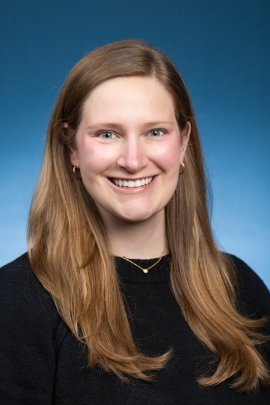
Emily Regan is a Clinical Assistant Professor in the School of Dental Hygiene. Emily’s path to academia was shaped by her desire to make a broader impact beyond individual patient care. After working full-time as a clinical hygienist, she realized she could reach more people by educating future practitioners and helping them develop both technical skills and patient-centered approaches.
Her teaching philosophy blends cognitive and behavioral strategies, emphasizing active student involvement, hands-on learning, and positive reinforcement. She strives to create an environment where students feel comfortable asking questions, receiving feedback, and growing both inside and outside the clinic. For her, a great teacher is someone who listens, is approachable, and genuinely cares about student success.
Mentorship has played an important role in her journey, with former professors now turned colleagues and friends who supported her growth, encouraged reflection, and modeled collaboration and resilience. These experiences shape how she now supports her own students.
Her work extends beyond academia through a focus on interprofessional collaboration and communication, helping position dental hygiene as an integral part of holistic healthcare and improving patient outcomes.
To maintain balance, she structures her week intentionally and sets boundaries between work and home. Her advice to new faculty and graduate students is to set long-term goals, stay open to growth, and give themselves grace while navigating the demands of academia.
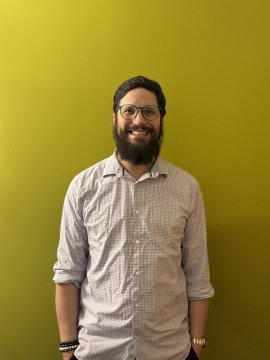
Dr. Aaron Shames is a faculty member in the Department of Counseling & Human Services. He was drawn to academia through a lifelong connection to education, influenced by both family and professional experience. With a background as a psychotherapist and counselor, and a mother who taught for over 30 years, education has always felt like a natural path. His passion lies in teaching what he loves while helping students make meaning of their own experiences.
His teaching philosophy is grounded in a collaborative, constructivist approach that emphasizes narrative, mindfulness, and real-world application. Dr. Shames encourages students to engage with ambiguity, reflect deeply, and co-create knowledge through discussion and lived experience. For him, great teaching requires humility and the understanding that learning is mutual and ongoing.
Dr. Shames’s work extends beyond academia through a focus on human connection, compassion, and awareness, particularly in areas like social media and its impact on mental health. His advice to new faculty and graduate students is to read and write often, ask for help, build meaningful relationships, and stay grounded.
To maintain balance, Dr. Shames intentionally incorporates mindfulness and prioritizes being present, both in and outside the classroom. Time with family, cultural and spiritual engagement, and disconnecting from technology are all essential practices that support well-being. He describes, “faculty in my department are like family,” a value that extends beyond the workplace. Deeply family-oriented, he is intentional about spending time outside of work with his three daughters and prioritizing meaningful connections with loved ones and his community.
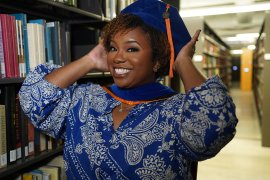
Dr. Kimberly Williams is an Assistant Professor of English whose work centers on African American rhetoric, sound studies, Black literature, and pop culture. Originally from Ettrick (VA), Dr. Williams brings a deep appreciation for the transformative power of education, shaped by mentors who believed in her early on and affirmed her potential.
Dr. Williams’s research explores African American rhetorical traditions through sound, examining how voice, expression, and cultural memory function as powerful forms of knowledge and connection. Her teaching philosophy emphasizes creating classrooms where students feel genuinely welcomed, seen, and invested in their learning. She approaches teaching as an evolving practice: “Teaching is like a muscle,” she says, grounded in continual reflection, adaptation, and care. By incorporating movement, improvisation, and multimodal design, she encourages students to engage texts in dynamic and meaningful ways while building cultural awareness and rhetorical skill.
Dr. Williams values the collaborative, community-oriented nature of academic life. She encourages new faculty and graduate students to meet with people across campus, build community intentionally, and attend events beyond their department or field, emphasizing the importance of intercultural connection. Outside the classroom, she enjoys local concerts, movie theaters, and spending time at the Norfolk Botanical Gardens. She also has a well-known sweet tooth and a love for Angie’s Bakery in Virginia Beach.
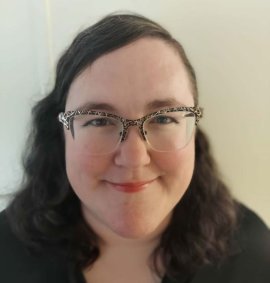
Dr. Charmaine N. Willis is an Assistant Professor in the Department of Political Science & Geography and the Graduate Program in International Studies at Old Dominion University. She centers her academic career on a passion for teaching and mentorship. Inspired during her graduate studies, she recalls, “I really love the opportunity to work with students,” emphasizing that “the teaching aspect is why [she is] here.”
Her research focuses on contentious politics and U.S. foreign policy, particularly in East and Southeast Asia—a regional interest cultivated by undergraduate mentors who fostered her love for East Asia and encouraged her to pursue graduate school.
Dr. Willis’s teaching philosophy highlights active and experiential learning. She believes “people learn better if they are doing something,” and strives to help students apply theoretical concepts to real-world contexts. For her, great teaching goes beyond expertise: “a great teacher is one who is interested in becoming a good teacher,” someone who can “meet students where they are, listen to them, and understand them.”
She maintains balance by structuring her time and prioritizing well-being, noting that “we are all more efficient in our work if we have those times where we don’t work on research or teaching.” Dr. Willis also mentors students through collaborative research. Her advice to emerging scholars is to “ask for help if you need it” and “communicate as much as you can.”
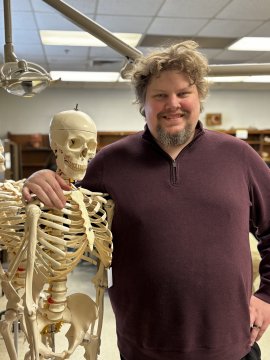
Dr. Caleb Wyckoff is a Lecturer in the Department of Biological Sciences at Old Dominion University. For him, teaching is more than a profession, it’s a calling rooted in connection, curiosity, and care. His path began as an undergraduate, when tutoring and later teaching at ECPI revealed a deep love for helping others learn.
“Teaching allows you to make a lasting impact,” Dr. Wyckoff says. He credits much of his journey to the mentors who believed in him, particularly an undergraduate professor who remains a close colleague today. “He was always available, always supportive,” Dr. Wyckoff reflects. “His belief in me kept me going.” That sense of support shaped Dr. Wyckoff’s own approach to academia. In the classroom, his philosophy centers on enthusiasm and empathy. “When students see that you love what you do, they feel it,” he says. He emphasizes respect and trust, believing that real learning happens when students feel recognized as adults and they are met with respect.
Dr. Wyckoff’s research in regenerative medicine and mitochondrial genetics developed during graduate school. “If you had told me I’d be studying mitochondrial genetics, I would have laughed. Now I love it,” he says. His advice to students and new faculty is simple but powerful: once you’ve grown into a place where you’re happy, give back. “That’s where meaning comes from,” he says. “When you give students the power to create, you’re creating something bigger than yourself.”
Outside the lab and classroom, Dr. Wyckoff is deeply committed to balance and well-being. A devoted husband and father, he intentionally schedules time for family and hobbies. “Being a father is non-negotiable,” he says.
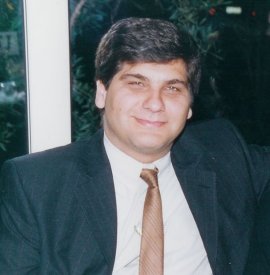
Dr. Nikolas Xiros is a Professor of Engineering Technology and Mechanical & Aerospace Engineering at Old Dominion University whose work bridges theory and application in electromechanical systems and marine engineering. With training in Electrical and Computer Engineering, Mathematics, Applied Physics, and a doctorate in Naval Architecture and Marine Engineering, he brings a rigorous, multi-physics perspective to complex challenges such as marine propulsion, energy conversion, and autonomous systems.
He has authored numerous publications and monographs on topics including ship propulsion control and wave energy systems, and serves as Chief Editor of the Springer Handbook of Ocean Engineering. His work reflects what he values most about academia: “freedom to pursue research on interesting topics” and a collaborative environment with engaged students.
In the classroom, Dr. Xiros emphasizes connection and inclusivity. He strives “to engage with students” and ensure that no student gets left behind. His teaching philosophy is approachable, “be fun, exciting, engaging,” and grounded in genuine care for student learning.
He believes great teaching stems from passion and interest, combined with the ability to connect meaningfully with students. Reflecting on his path and his father’s advice to him, he advises early-career academics: “Do what you like and be who you want to be…you will be successful because you like what you are doing.”
Dr. Sujatha Alla is a Professor of Human Systems Engineering whose interdisciplinary work encompasses systems engineering, robotics, artificial intelligence, and public health. Her research is focused on building collaborative partnerships across ODU and beyond to develop innovative, scalable solutions to complex healthcare challenges.
Dr. Alla’s current projects reflect a commitment to real-world impact. She is developing adaptive path planning for nanosurgical robots aimed at precision cancer drug delivery, as well as a programmable service robot system that models hospital traffic, RFID interaction, and robotic readiness. She is also in the process of establishing a nano-surgical robotics lab at ODU!
In the classroom, Dr. Alla emphasizes applied learning and systems thinking. She views teaching as a dynamic, reflective process that requires continuous learning and adaptation. She encourages students and early-career scholars to stay curious, seek out interdisciplinary collaboration, and remain open to evolving ideas and approaches.
Beyond campus, Dr. Alla serves her community as a volunteer EMT with Virginia Beach Volunteer Rescue, bringing the same commitment to care and service that shapes her research and teaching.
Dr. DeAnne Davis Brooks, Director of the Doctor of Applied Science in Kinesiology program, brings a dynamic blend of scholarship, teaching, and community engagement to her work. Her academic path began in exercise science and developed further during her EdD, where she balanced research with coaching collegiate track and field. A pivotal moment came when a professor invited her to serve as a teaching assistant—an experience that sparked her interest in education. As she puts it, she was drawn to “the idea of being a scholar” while also building a meaningful career.
Dr. Brooks’s teaching philosophy centers on empowerment and inclusivity. She describes her approach as “all about helping students find their own voice,” and sees herself as a facilitator who creates opportunities for students to grow and succeed. Influenced by critical pedagogy, she emphasizes active, relevant, and responsive learning and the importance of adapting to students’ needs, noting that “if students aren’t learning, then you’re not teaching.”
Beyond the classroom, Dr. Brooks is dedicated to expanding access to kinesiology education for practitioners and connecting academic work to real-world impact, particularly through promoting lifelong physical activity. She maintains balance through strong time management and intentional boundaries. Her advice to emerging scholars is to “be authentic and know your worth.”
Kate Clemons is the Theatre Program Director and Lecturer in the Department of Communication and Theatre Arts. Coming from a family of artists, she saw teaching as a way to pair creative work with stability. “For me, there is nothing more rewarding than being able to put food on the table for my family while having a job that I love,” she says. Academia, she adds, allows her to remain a lifelong student while mentoring others toward meaningful careers.
Kate’s early training in conservatory and professional theatre shaped her teaching philosophy. In an apprenticeship-based field, she experienced firsthand how access to mentors can determine opportunity. “I want to become the mentor to my students that I didn’t have,” she explains, emphasizing her commitment to guiding students through both the artistic and professional realities of the industry.
Her approach to teaching centers on passion, community, and love. “My goal is to help create people I would want to work with in the industry,” Kate says. She believes great teachers lead with love—love for the subject, the students, and the work itself. “Love is always the strongest choice,” she says. Her advice to students and new faculty is to build community and seek collaboration. “Academia can be siloed,” Kate notes, “but if you reach out, someone will most likely reach back.”
Outside the classroom and off stage, Kate spends her time raising two toddlers with her husband and rescue dog. A self-described recovering perfectionist, she is now working to define success on her own terms. “I am not just a professor,” she says. “I am also a human, a mom, and a wife.”
Dr. Carrington Faulk brings a dynamic and purpose driven perspective to the Strome College of Business, where he teaches marketing courses on campus while also running an online business as a content creator and digital marketing strategist. After more than a decade of teaching at Heritage High School and working in the advertising industry, Dr. Faulk transitioned from K–12 education to higher education, guided by a deep belief that he was called to teach. A Google for Education Certified Trainer and proud fraternity member, he views teaching as the foundation of all professions, noting that teaching begets everything.
A strong advocate of the Socratic method, Dr. Faulk is passionate about helping students think differently and more creatively. As he shared, “I want to help students change their thinking. We stopped asking questions. We need to ask more questions.” He believes great teaching is about awakening students and sparking curiosity, creativity, and imagination, and he is particularly interested in Black futurism and its possibilities within education and business. As the first Black faculty member in the Thurmond School of Professional Sales and Negotiations, Dr. Faulk is intentional about presence, purpose, and impact.
Outside the classroom, Dr. Faulk centers himself through working out, music, and family life. He is a gospel artist and producer who enjoys hiking, cooking, eating, and grilling, and he and his wife are raising four children together. His advice to new faculty is to actively onboard themselves by seeking resources and support, recognizing that everyone’s needs are different. He also encourages reflection beyond titles and roles, challenging faculty to ask if work were taken away, who would we be.
Dr. Arash Ghorbannia is a Research Assistant Professor of Medical Modeling and Simulation, working across the Virginia Health Sciences (VHS) and the Office of Enterprise Research and Innovation (OERI). His interdisciplinary training spans mechanical, aerospace, and biomedical engineering, shaping his research grounded in collaboration and real-world impact.
Dr. Ghorbannia was drawn to academia by the opportunity to pursue meaningful research at the intersection of health and education, particularly in areas like cardiovascular diseases, where engineering can directly support clinicians and improve outcomes for children. His work focuses on developing computational “digital twins” of biological systems, integrating artificial intelligence, high-performance computing, and physics-based modeling to support diagnosis, treatment planning, and medical education. He emphasizes flexibility and responsiveness, adapting to the needs of his projects and the capacity of his team, leveraging expertise through integration.
Dr. Ghorbannia views mentorship as an evolving process, supporting students with both short- and long-term goals as they grow in their careers. He encourages active learning through real-time feedback, helping identify where students are thriving or struggling and adjusting accordingly. For him, great teaching is collaborative, reflective, and student-centered.
To maintain balance, he breaks long-term goals into manageable steps and values collaboration with others to navigate complex challenges. His advice to new faculty and graduate students is to stay focused, seek out partnerships, and avoid getting overwhelmed by the vastness of information as progress comes through steady, intentional work.
Dr. Temitope Idowu is an Assistant Professor in the Department of Civil and Environmental Engineering, where his work focuses on coastal sustainability, resilience, and adaptation. His research integrates flood risk modeling, GIS, remote sensing, and machine learning to address environmental challenges and strengthen coastal communities.
His path to academia was shaped by both industry and teaching experiences. After initially working in the industry, he discovered a passion for teaching and research, encouraged by mentors who recognized his strengths in both areas. Across Nigeria, Kenya, and the United States, influential advisors helped shape his trajectory, instilling in him a strong work ethic, a commitment to impactful research, and a deep appreciation for mentorship.
Dr. Idowu’s teaching philosophy is experiential, practical, and grounded in empathy. He believes students learn best by actively engaging with real-world problems and values supporting them through challenges both inside and outside the classroom. For him, a great teacher leaves a lasting, positive impact, and is someone students remember as having truly made a difference. Beyond academia, he sees his work as contributing to a more resilient world while preparing the next generation of engineers to solve pressing societal challenges.
As a new faculty member, he maintains balance by focusing fully on each role he embodies—educator, researcher, husband and dad to his young son. His advice is to love what you do, build meaningful connections, and take time to rest.
Maddy Mikovits, the Education Librarian at Old Dominion University, found her path to academia through early experiences in university libraries. As an undergraduate volunteer, she built close relationships with librarians who became mentors, sparking her passion for supporting students and helping them navigate academic spaces. These experiences inspired her to pursue a career rooted in mentorship, teaching, and access to information.
Maddy credits mentors who “gave [her] every opportunity to learn about librarianship,” and whose guidance continues to shape how she works with students today. These influences inform her approach, which centers on creating a supportive environment where students feel comfortable learning through trial and error. She aims to be “a non-judgmental place where students can learn and make mistakes.”
Maddy believes great teaching involves fostering trust and open dialogue, encouraging students to ask difficult questions and engage deeply with research. Her work extends beyond academia by equipping students with critical research skills and helping shape future librarians through her role at Virginia’s only Library and Information Studies school.
As she continues to grow in her career, Maddy prioritizes balance by setting boundaries, unplugging from work when possible, and spending quality time with her partner and friends. Her advice to others reflects her own journey: it’s okay not to have all the answers, “no one is born knowing a culture,” and learning comes from curiosity and asking questions.
Linh Nguyen is the Sciences Librarian at Old Dominion University, supporting faculty, staff, and students with research consultations. An ODU alumna, she earned her Master of Library and Information Science in 2024 and is pursuing a Master of Public Health with a focus on Health Behavior and Health Promotion. Linh’s approach emphasizes flexibility and partnership. “There is no one way of teaching—it’s very creative,” she explained, encouraging students to ask questions and embrace uncertainty. She believes great teaching is collaborative: “Being a great teacher is being a partner.”
Mentorship has shaped Linh’s growth, from supervisors and colleagues to students themselves. She is passionate about information literacy and helping students navigate misinformation: “The important part is knowing what’s real, what’s not, and how to evaluate what you’re seeing.” She also encourages using library resources fully.
Beyond academia and through her MPH program, she aims to educate healthcare professionals on intercultural communication and cultural awareness. Having grown up translating for her family, she is deeply motivated to help make healthcare systems more accessible and inclusive.
Balancing professional responsibilities with personal life remains a learning process. Linh takes intentional breaks by walking, reading outdoors, and stepping away from her computer. Her advice to new faculty and graduate students: “Prioritize your mental health and well-being.” Outside of work, Linh enjoys exploring new restaurants and festivals, recently attending her first Renaissance festival. She’s also training for a marathon and working toward a personal goal of reading 100 books by the end of the year!
Emily Regan is a Clinical Assistant Professor in the School of Dental Hygiene. Emily’s path to academia was shaped by her desire to make a broader impact beyond individual patient care. After working full-time as a clinical hygienist, she realized she could reach more people by educating future practitioners and helping them develop both technical skills and patient-centered approaches.
Her teaching philosophy blends cognitive and behavioral strategies, emphasizing active student involvement, hands-on learning, and positive reinforcement. She strives to create an environment where students feel comfortable asking questions, receiving feedback, and growing both inside and outside the clinic. For her, a great teacher is someone who listens, is approachable, and genuinely cares about student success.
Mentorship has played an important role in her journey, with former professors now turned colleagues and friends who supported her growth, encouraged reflection, and modeled collaboration and resilience. These experiences shape how she now supports her own students.
Her work extends beyond academia through a focus on interprofessional collaboration and communication, helping position dental hygiene as an integral part of holistic healthcare and improving patient outcomes.
To maintain balance, she structures her week intentionally and sets boundaries between work and home. Her advice to new faculty and graduate students is to set long-term goals, stay open to growth, and give themselves grace while navigating the demands of academia.
Dr. Aaron Shames is a faculty member in the Department of Counseling & Human Services. He was drawn to academia through a lifelong connection to education, influenced by both family and professional experience. With a background as a psychotherapist and counselor, and a mother who taught for over 30 years, education has always felt like a natural path. His passion lies in teaching what he loves while helping students make meaning of their own experiences.
His teaching philosophy is grounded in a collaborative, constructivist approach that emphasizes narrative, mindfulness, and real-world application. Dr. Shames encourages students to engage with ambiguity, reflect deeply, and co-create knowledge through discussion and lived experience. For him, great teaching requires humility and the understanding that learning is mutual and ongoing.
Dr. Shames’s work extends beyond academia through a focus on human connection, compassion, and awareness, particularly in areas like social media and its impact on mental health. His advice to new faculty and graduate students is to read and write often, ask for help, build meaningful relationships, and stay grounded.
To maintain balance, Dr. Shames intentionally incorporates mindfulness and prioritizes being present, both in and outside the classroom. Time with family, cultural and spiritual engagement, and disconnecting from technology are all essential practices that support well-being. He describes, “faculty in my department are like family,” a value that extends beyond the workplace. Deeply family-oriented, he is intentional about spending time outside of work with his three daughters and prioritizing meaningful connections with loved ones and his community.
Dr. Kimberly Williams is an Assistant Professor of English whose work centers on African American rhetoric, sound studies, Black literature, and pop culture. Originally from Ettrick (VA), Dr. Williams brings a deep appreciation for the transformative power of education, shaped by mentors who believed in her early on and affirmed her potential.
Dr. Williams’s research explores African American rhetorical traditions through sound, examining how voice, expression, and cultural memory function as powerful forms of knowledge and connection. Her teaching philosophy emphasizes creating classrooms where students feel genuinely welcomed, seen, and invested in their learning. She approaches teaching as an evolving practice: “Teaching is like a muscle,” she says, grounded in continual reflection, adaptation, and care. By incorporating movement, improvisation, and multimodal design, she encourages students to engage texts in dynamic and meaningful ways while building cultural awareness and rhetorical skill.
Dr. Williams values the collaborative, community-oriented nature of academic life. She encourages new faculty and graduate students to meet with people across campus, build community intentionally, and attend events beyond their department or field, emphasizing the importance of intercultural connection. Outside the classroom, she enjoys local concerts, movie theaters, and spending time at the Norfolk Botanical Gardens. She also has a well-known sweet tooth and a love for Angie’s Bakery in Virginia Beach.
Dr. Charmaine N. Willis is an Assistant Professor in the Department of Political Science & Geography and the Graduate Program in International Studies at Old Dominion University. She centers her academic career on a passion for teaching and mentorship. Inspired during her graduate studies, she recalls, “I really love the opportunity to work with students,” emphasizing that “the teaching aspect is why [she is] here.”
Her research focuses on contentious politics and U.S. foreign policy, particularly in East and Southeast Asia—a regional interest cultivated by undergraduate mentors who fostered her love for East Asia and encouraged her to pursue graduate school.
Dr. Willis’s teaching philosophy highlights active and experiential learning. She believes “people learn better if they are doing something,” and strives to help students apply theoretical concepts to real-world contexts. For her, great teaching goes beyond expertise: “a great teacher is one who is interested in becoming a good teacher,” someone who can “meet students where they are, listen to them, and understand them.”
She maintains balance by structuring her time and prioritizing well-being, noting that “we are all more efficient in our work if we have those times where we don’t work on research or teaching.” Dr. Willis also mentors students through collaborative research. Her advice to emerging scholars is to “ask for help if you need it” and “communicate as much as you can.”
Dr. Caleb Wyckoff is a Lecturer in the Department of Biological Sciences at Old Dominion University. For him, teaching is more than a profession, it’s a calling rooted in connection, curiosity, and care. His path began as an undergraduate, when tutoring and later teaching at ECPI revealed a deep love for helping others learn.
“Teaching allows you to make a lasting impact,” Dr. Wyckoff says. He credits much of his journey to the mentors who believed in him, particularly an undergraduate professor who remains a close colleague today. “He was always available, always supportive,” Dr. Wyckoff reflects. “His belief in me kept me going.” That sense of support shaped Dr. Wyckoff’s own approach to academia. In the classroom, his philosophy centers on enthusiasm and empathy. “When students see that you love what you do, they feel it,” he says. He emphasizes respect and trust, believing that real learning happens when students feel recognized as adults and they are met with respect.
Dr. Wyckoff’s research in regenerative medicine and mitochondrial genetics developed during graduate school. “If you had told me I’d be studying mitochondrial genetics, I would have laughed. Now I love it,” he says. His advice to students and new faculty is simple but powerful: once you’ve grown into a place where you’re happy, give back. “That’s where meaning comes from,” he says. “When you give students the power to create, you’re creating something bigger than yourself.”
Outside the lab and classroom, Dr. Wyckoff is deeply committed to balance and well-being. A devoted husband and father, he intentionally schedules time for family and hobbies. “Being a father is non-negotiable,” he says.
Dr. Nikolas Xiros is a Professor of Engineering Technology and Mechanical & Aerospace Engineering at Old Dominion University whose work bridges theory and application in electromechanical systems and marine engineering. With training in Electrical and Computer Engineering, Mathematics, Applied Physics, and a doctorate in Naval Architecture and Marine Engineering, he brings a rigorous, multi-physics perspective to complex challenges such as marine propulsion, energy conversion, and autonomous systems.
He has authored numerous publications and monographs on topics including ship propulsion control and wave energy systems, and serves as Chief Editor of the Springer Handbook of Ocean Engineering. His work reflects what he values most about academia: “freedom to pursue research on interesting topics” and a collaborative environment with engaged students.
In the classroom, Dr. Xiros emphasizes connection and inclusivity. He strives “to engage with students” and ensure that no student gets left behind. His teaching philosophy is approachable, “be fun, exciting, engaging,” and grounded in genuine care for student learning.
He believes great teaching stems from passion and interest, combined with the ability to connect meaningfully with students. Reflecting on his path and his father’s advice to him, he advises early-career academics: “Do what you like and be who you want to be…you will be successful because you like what you are doing.”
Fall 2025
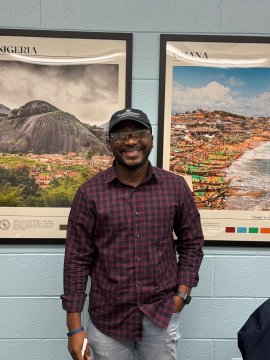
Mr. Agyare Asante is a lecturer in Engineering Technology and a Ph.D. student in Civil Engineering at Old Dominion University. Originally from Ghana, Mr. Asante was raised in a coastal area that sparked his lifelong interest in the environment and climate change—interests that now guide his research on lithium battery extraction and sustainable technologies. Before joining ODU, he spent three years teaching English in China, an experience that strengthened his appreciation for cultural diversity and global education. His teaching philosophy centers on fostering an inclusive learning environment: “I believe in creating an atmosphere where students can actively engage in my classes and feel comfortable expressing themselves without fear of judgment or bias.” Mr. Asante views great teachers as mentors who nurture growth—helping students not only succeed academically but also develop personally. Outside of academia, he finds balance in fishing and building community through his church and connections with fellow Africans. An interesting fact about him is that he is wonderful with children and enjoys babysitting—he looks forward to becoming a father one day.
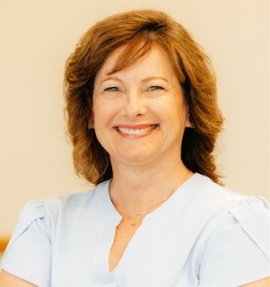
Dr. Chrissy Blanchard-Alworth, Lecturer in Human Movement Studies and Special Education and licensed special education educator, is dedicated to supporting the wellness, social, and emotional growth of both youth and adults. Her research focuses on the relationship between physical activity, movement, dance, and exercise with socialization among individuals with autism. Over the summer, she celebrated the acceptance of two manuscripts for publication, reflecting her ongoing commitment to advancing knowledge in her field. Guided by a teaching philosophy centered on collegiality and shared learning, Dr. Blanchard-Alworth strives to create an environment where collaboration enhances growth and understanding. She encourages new faculty and graduate students to get involved and build connections as they begin their professional journeys.
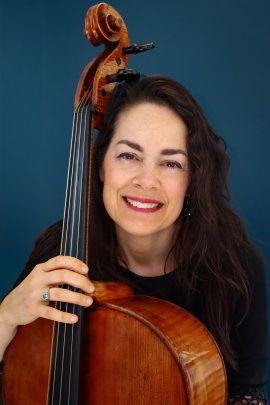
Rebecca Gilmore is a talented cellist who performs full-time with the Virginia Symphony Orchestra, carrying on a proud family tradition—her mother is also a cellist, and music has always been part of her life. In addition to her performance career, Rebecca teaches a master’s-level student and leads a Baroque Ensemble, bringing her passion for music and mentorship to the classroom. A mother of two boys, Rebecca finds joy in teaching because she “loves places where people want to learn.” Her teaching philosophy reflects her grounded, long-term approach: “It’s hard work, and if you’re in it for the long game, then you’re in the right place.” Rebecca is also a certified yoga instructor who believes great teachers are approachable, friendly, and treat students as whole people. To stay balanced, she enjoys cooking and taking peaceful walks—simple practices that help her stay centered and inspired, both on and off the stage.
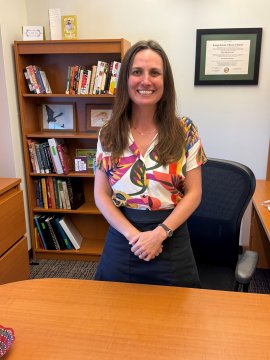
Laura comes to ODU as a tenure track assistant professor in biology, specializing in microbiomes and wild animal systems. Her research has taken her around the globe, from studying bats in Sudan to baboon microbiomes in Kenya. A William and Mary alum, Laura earned her PhD in microbiomes and has worked as an Assistant Professor in Canada before moving to Virginia this summer. Coming from a family of teachers, she is deeply committed to helping students learn to think like scientists, even if they pursue other careers. She appreciates ODU’s balance of research and teaching and is excited to build local field stations and mentor students. When she’s not in the lab or classroom, Laura enjoys being outdoors with her husband and two young children.
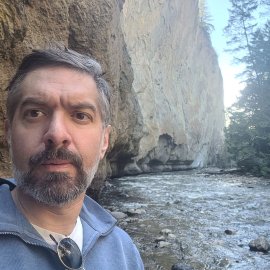
Dr. Ethan Guagliardo, Senior Lecturer in the English Department, is a Renaissance literature scholar with a focus on Shakespeare and John Milton, exploring the intersections of politics, religion, and aesthetics. He has published widely, recently completing a book and beginning a new project on horror in Renaissance literature. Originally from Louisiana, Dr. Guagliardo’s academic journey has taken him across the globe, from the Midwest to Istanbul, Turkey, and British Columbia, before returning to the South, bringing a wealth of diverse experiences that enrich both his teaching and scholarship.
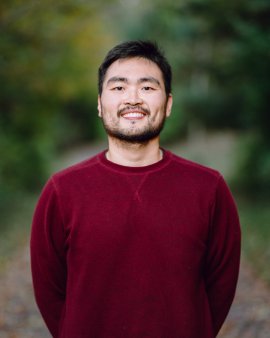
Dr. Jae Lee, Assistant Professor of Mechanical Engineering, brings a unique perspective to academia with a background in mathematics and professional experience at the U.S. Food and Drug Administration. His research centers on computational modeling and simulation, particularly in physiological systems and medical devices. Dr. Lee views every student as “a flower for growth,” reflecting his belief in nurturing potential through positivity, knowledge, and transparency. His path to academia, shaped by both federal and research experience, informs his collaborative and forward-thinking approach to teaching. He encourages graduate students to remain open to new ideas as they develop their own careers and contributions to the field.
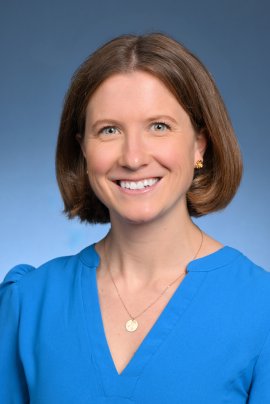
Abby, a clinical assistant professor for occupational therapy, brings her passion for neuroscience and restorative wellness to the classroom and clinic. After beginning at ODU as an adjunct and later stepping in as an emergency hire, she is thrilled to now be part of the faculty full-time. Abby has worked extensively with patients from infants to adults and integrates her certification and research in nutrition, self-care, and wellness through active engaging experiences. A former high school science teacher and lacrosse player, Abby is also intentional about managing her own well-being, drawing on resilience after recovering from a head injury. She encourages new colleagues and students alike to embrace the overwhelming parts of starting fresh, with assurance that balance and confidence grow with time.
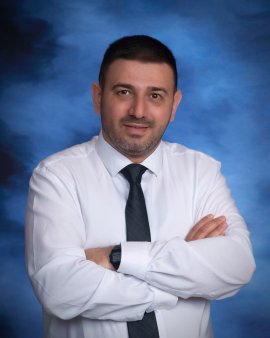
Dr. Mahmoud Nazzal is an Assistant Professor in the Department of Computer Science with a joint appointment in the School of Cybersecurity, joining ODU as a tenure-track faculty member after completing his Ph.D. at the New Jersey Institute of Technology, where he received the Hashimoto Prize for research excellence. His work focuses on the security, robustness, and real-world deployment of advanced AI models, including Graph Neural Networks and Large Language Models. Dr. Nazzal’s research spans adversarial robustness, prompt optimization, and practical applications in areas such as secure code generation, hardware design automation, transportation analytics, and internet security. Passionate about teaching and mentorship, he seeks to engage students in machine learning and cybersecurity courses and to build a research lab at the intersection of AI, security, and societal impact. His academic journey, which has taken him across multiple countries, reflects a commitment to collaboration, interdisciplinary research, and applying AI to real-world challenges. Outside of academia, he is dedicated to his family and enjoys exploring new communities and cultures.
Dr. Ertunga Ozelkan, known to his students as “Dr. Oz,” serves as Department Chair and Professor of Engineering Management and Systems Engineering. His teaching and research are in the areas of production planning, supply chain management, decision and risk analysis, and lean six sigma. He believes in applied learning and the importance of balancing theory with real-world practice. Dr. Oz emphasizes that a great professor remembers they were once a student, which helps them understand their audience. He acknowledges that finding strong resources can be challenging, so he encourages networking as a way to overcome these obstacles. His advice to new faculty and graduate students is to be patient, listen carefully, stay focused, and enjoy the learning journey.
R.J. Risueño is an Assistant Professor in Speech-Language Pathology, with a Master of Science in Communication Disorders from Arizona State University and a Bachelor of Arts from Utah State University. His research focuses on the early identification and intervention of dyslexia and developmental language disorder in both monolingual and multilingual children, conditions that affect roughly two children in every classroom and can have lifelong impacts on wellbeing. Risueño takes an interdisciplinary approach, collaborating with pediatricians, speech-language pathologists, educators, parents, and individuals with disabilities to support early detection and to implement evidence-based interventions that improve learning, communication, and overall wellbeing. His work aims to enhance academic, social, and mental health outcomes, helping children thrive in and beyond the classroom.
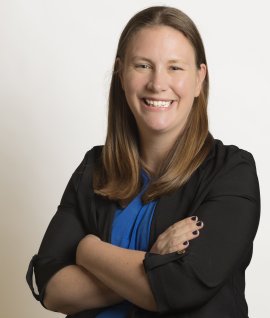
Dr. Samantha Scarneo-Miller, PhD, ATC, is passionate about advancing emergency preparedness in athletic training, particularly in preventing and managing catastrophic sport-related injuries. Her research focuses on reducing sudden death in sport by making lifesaving policies and procedures more accessible to students and healthcare professionals. She was the lead author of the National Athletic Trainers’ Association’s most recent Position Statement: Emergency Action Plan Development and Implementation in Sport and is currently leading a project to develop customizable emergency action plan templates for clinical use. Her work has been recognized nationally for its impact on policy development and interprofessional collaboration in sports medicine education. Additional research interests include exertional heat stroke, cardiac arrest, and the broader understanding of catastrophic sport injuries. Outside of work, Dr. Scarneo-Miller enjoys spending time with her husband, two children, and their dog. As a big basketball and football family, much of their free time is spent cheering from the sidelines or catching games together. She is excited to bring her expertise, energy, and passion for athlete safety to the ODU community.
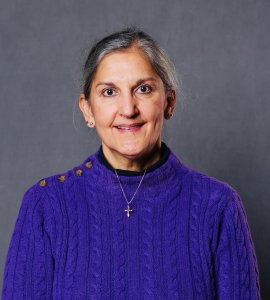
Sangita Seaburg, a new full-time clinical nursing faculty member, brings both heart and life experience to her teaching. After the passing of her husband, Sangita transformed her grief into purpose, pursuing a nursing career at Sentara Virginia Beach General Hospital—a story shared in Positively HR. Once a stay-at-home mother of three (and now proud grandmother of two), Sangita first discovered her teaching gift while homeschooling her children and later through leading and mentoring roles in nursing. Her teaching philosophy, “To help my students be the kind of nurse that I would want to take care of me,” guides her approach to developing compassionate, policy-respectful nurses—what she affectionately calls “Granny Panty Nurses,” who “cover the whole butt.” With about five years of teaching experience, she emphasizes listening, modeling professionalism, and empowering students to advocate for themselves. Outside the classroom, Sangita finds joy and balance in crocheting, traveling with friends, and spending cherished time with her family. https://www.wtkr.com/positivelyhr/widow-transforms-her-grief-into-nursing-career-at-sentara-virginia-beach-general-hospital
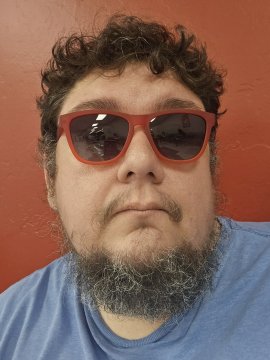
Mitchell Wilson joined ODU’s math faculty this year after completing all his studies and teaching experience in Arizona, where he earned both his bachelor’s degrees in engineering and mathematics and a master’s in applied math with a focus on statistics. A proud Mexican American and first-generation college student, Mitchell knew as early as kindergarten that he wanted to be a teacher. His teaching philosophy centers on compassion, motivation, and the belief that every student can succeed. He has already made an impact on students, with one inviting him to visit NASA where they now work. Outside of the classroom, Mitchell enjoys karaoke on Granby Street, video games, and travel. He even once competed on Wheel of Fortune!
Mr. Agyare Asante is a lecturer in Engineering Technology and a Ph.D. student in Civil Engineering at Old Dominion University. Originally from Ghana, Mr. Asante was raised in a coastal area that sparked his lifelong interest in the environment and climate change—interests that now guide his research on lithium battery extraction and sustainable technologies. Before joining ODU, he spent three years teaching English in China, an experience that strengthened his appreciation for cultural diversity and global education. His teaching philosophy centers on fostering an inclusive learning environment: “I believe in creating an atmosphere where students can actively engage in my classes and feel comfortable expressing themselves without fear of judgment or bias.” Mr. Asante views great teachers as mentors who nurture growth—helping students not only succeed academically but also develop personally. Outside of academia, he finds balance in fishing and building community through his church and connections with fellow Africans. An interesting fact about him is that he is wonderful with children and enjoys babysitting—he looks forward to becoming a father one day.
Dr. Chrissy Blanchard-Alworth, Lecturer in Human Movement Studies and Special Education and licensed special education educator, is dedicated to supporting the wellness, social, and emotional growth of both youth and adults. Her research focuses on the relationship between physical activity, movement, dance, and exercise with socialization among individuals with autism. Over the summer, she celebrated the acceptance of two manuscripts for publication, reflecting her ongoing commitment to advancing knowledge in her field. Guided by a teaching philosophy centered on collegiality and shared learning, Dr. Blanchard-Alworth strives to create an environment where collaboration enhances growth and understanding. She encourages new faculty and graduate students to get involved and build connections as they begin their professional journeys.
Rebecca Gilmore is a talented cellist who performs full-time with the Virginia Symphony Orchestra, carrying on a proud family tradition—her mother is also a cellist, and music has always been part of her life. In addition to her performance career, Rebecca teaches a master’s-level student and leads a Baroque Ensemble, bringing her passion for music and mentorship to the classroom. A mother of two boys, Rebecca finds joy in teaching because she “loves places where people want to learn.” Her teaching philosophy reflects her grounded, long-term approach: “It’s hard work, and if you’re in it for the long game, then you’re in the right place.” Rebecca is also a certified yoga instructor who believes great teachers are approachable, friendly, and treat students as whole people. To stay balanced, she enjoys cooking and taking peaceful walks—simple practices that help her stay centered and inspired, both on and off the stage.
Laura comes to ODU as a tenure track assistant professor in biology, specializing in microbiomes and wild animal systems. Her research has taken her around the globe, from studying bats in Sudan to baboon microbiomes in Kenya. A William and Mary alum, Laura earned her PhD in microbiomes and has worked as an Assistant Professor in Canada before moving to Virginia this summer. Coming from a family of teachers, she is deeply committed to helping students learn to think like scientists, even if they pursue other careers. She appreciates ODU’s balance of research and teaching and is excited to build local field stations and mentor students. When she’s not in the lab or classroom, Laura enjoys being outdoors with her husband and two young children.
Dr. Ethan Guagliardo, Senior Lecturer in the English Department, is a Renaissance literature scholar with a focus on Shakespeare and John Milton, exploring the intersections of politics, religion, and aesthetics. He has published widely, recently completing a book and beginning a new project on horror in Renaissance literature. Originally from Louisiana, Dr. Guagliardo’s academic journey has taken him across the globe, from the Midwest to Istanbul, Turkey, and British Columbia, before returning to the South, bringing a wealth of diverse experiences that enrich both his teaching and scholarship.
Dr. Jae Lee, Assistant Professor of Mechanical Engineering, brings a unique perspective to academia with a background in mathematics and professional experience at the U.S. Food and Drug Administration. His research centers on computational modeling and simulation, particularly in physiological systems and medical devices. Dr. Lee views every student as “a flower for growth,” reflecting his belief in nurturing potential through positivity, knowledge, and transparency. His path to academia, shaped by both federal and research experience, informs his collaborative and forward-thinking approach to teaching. He encourages graduate students to remain open to new ideas as they develop their own careers and contributions to the field.
Abby, a clinical assistant professor for occupational therapy, brings her passion for neuroscience and restorative wellness to the classroom and clinic. After beginning at ODU as an adjunct and later stepping in as an emergency hire, she is thrilled to now be part of the faculty full-time. Abby has worked extensively with patients from infants to adults and integrates her certification and research in nutrition, self-care, and wellness through active engaging experiences. A former high school science teacher and lacrosse player, Abby is also intentional about managing her own well-being, drawing on resilience after recovering from a head injury. She encourages new colleagues and students alike to embrace the overwhelming parts of starting fresh, with assurance that balance and confidence grow with time.
Dr. Mahmoud Nazzal is an Assistant Professor in the Department of Computer Science with a joint appointment in the School of Cybersecurity, joining ODU as a tenure-track faculty member after completing his Ph.D. at the New Jersey Institute of Technology, where he received the Hashimoto Prize for research excellence. His work focuses on the security, robustness, and real-world deployment of advanced AI models, including Graph Neural Networks and Large Language Models. Dr. Nazzal’s research spans adversarial robustness, prompt optimization, and practical applications in areas such as secure code generation, hardware design automation, transportation analytics, and internet security. Passionate about teaching and mentorship, he seeks to engage students in machine learning and cybersecurity courses and to build a research lab at the intersection of AI, security, and societal impact. His academic journey, which has taken him across multiple countries, reflects a commitment to collaboration, interdisciplinary research, and applying AI to real-world challenges. Outside of academia, he is dedicated to his family and enjoys exploring new communities and cultures.
Dr. Ertunga Ozelkan, known to his students as “Dr. Oz,” serves as Department Chair and Professor of Engineering Management and Systems Engineering. His teaching and research are in the areas of production planning, supply chain management, decision and risk analysis, and lean six sigma. He believes in applied learning and the importance of balancing theory with real-world practice. Dr. Oz emphasizes that a great professor remembers they were once a student, which helps them understand their audience. He acknowledges that finding strong resources can be challenging, so he encourages networking as a way to overcome these obstacles. His advice to new faculty and graduate students is to be patient, listen carefully, stay focused, and enjoy the learning journey.
R.J. Risueño is an Assistant Professor in Speech-Language Pathology, with a Master of Science in Communication Disorders from Arizona State University and a Bachelor of Arts from Utah State University. His research focuses on the early identification and intervention of dyslexia and developmental language disorder in both monolingual and multilingual children, conditions that affect roughly two children in every classroom and can have lifelong impacts on wellbeing. Risueño takes an interdisciplinary approach, collaborating with pediatricians, speech-language pathologists, educators, parents, and individuals with disabilities to support early detection and to implement evidence-based interventions that improve learning, communication, and overall wellbeing. His work aims to enhance academic, social, and mental health outcomes, helping children thrive in and beyond the classroom.
Dr. Samantha Scarneo-Miller, PhD, ATC, is passionate about advancing emergency preparedness in athletic training, particularly in preventing and managing catastrophic sport-related injuries. Her research focuses on reducing sudden death in sport by making lifesaving policies and procedures more accessible to students and healthcare professionals. She was the lead author of the National Athletic Trainers’ Association’s most recent Position Statement: Emergency Action Plan Development and Implementation in Sport and is currently leading a project to develop customizable emergency action plan templates for clinical use. Her work has been recognized nationally for its impact on policy development and interprofessional collaboration in sports medicine education. Additional research interests include exertional heat stroke, cardiac arrest, and the broader understanding of catastrophic sport injuries. Outside of work, Dr. Scarneo-Miller enjoys spending time with her husband, two children, and their dog. As a big basketball and football family, much of their free time is spent cheering from the sidelines or catching games together. She is excited to bring her expertise, energy, and passion for athlete safety to the ODU community.
Sangita Seaburg, a new full-time clinical nursing faculty member, brings both heart and life experience to her teaching. After the passing of her husband, Sangita transformed her grief into purpose, pursuing a nursing career at Sentara Virginia Beach General Hospital—a story shared in Positively HR. Once a stay-at-home mother of three (and now proud grandmother of two), Sangita first discovered her teaching gift while homeschooling her children and later through leading and mentoring roles in nursing. Her teaching philosophy, “To help my students be the kind of nurse that I would want to take care of me,” guides her approach to developing compassionate, policy-respectful nurses—what she affectionately calls “Granny Panty Nurses,” who “cover the whole butt.” With about five years of teaching experience, she emphasizes listening, modeling professionalism, and empowering students to advocate for themselves. Outside the classroom, Sangita finds joy and balance in crocheting, traveling with friends, and spending cherished time with her family. https://www.wtkr.com/positivelyhr/widow-transforms-her-grief-into-nursing-career-at-sentara-virginia-beach-general-hospital
Mitchell Wilson joined ODU’s math faculty this year after completing all his studies and teaching experience in Arizona, where he earned both his bachelor’s degrees in engineering and mathematics and a master’s in applied math with a focus on statistics. A proud Mexican American and first-generation college student, Mitchell knew as early as kindergarten that he wanted to be a teacher. His teaching philosophy centers on compassion, motivation, and the belief that every student can succeed. He has already made an impact on students, with one inviting him to visit NASA where they now work. Outside of the classroom, Mitchell enjoys karaoke on Granby Street, video games, and travel. He even once competed on Wheel of Fortune!